
 EN



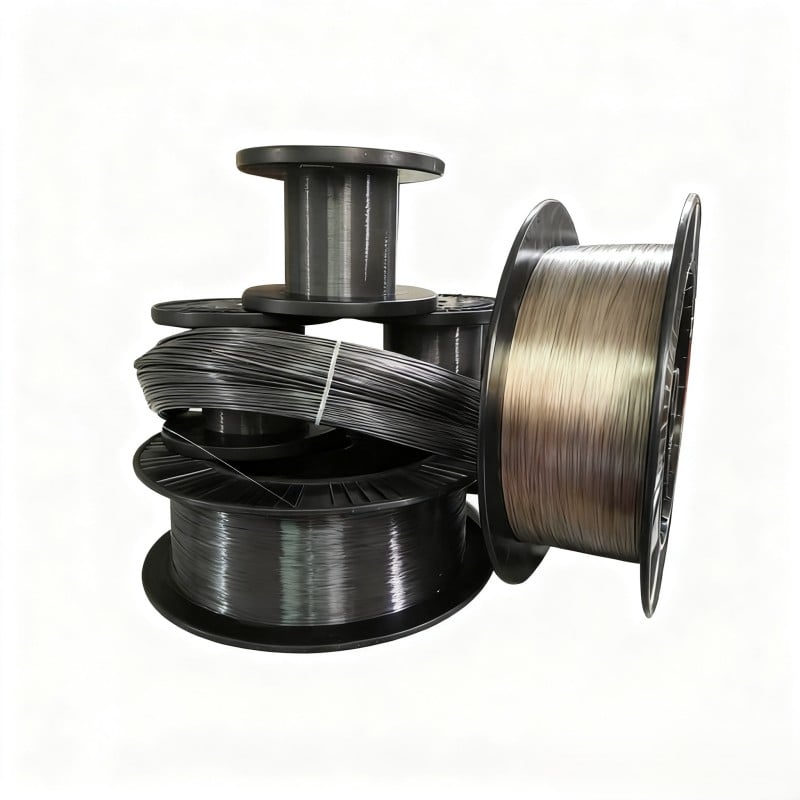
Nickel titanium wire simplifies structures by making the material itself perform movements that might otherwise require separate springs, hinges, or actuators. Its shape memory effect allows nickel titanium wire to recover a trained form when heated, while its superelastic response lets the wire flex and return under suitable conditions. These behaviors can help designers reduce component count, package mechanisms into tight spaces, and build structures that adapt to changing loads. The benefit is not automatic: engineers still need to define operating temperatures, forces, geometry, and cycle requirements.
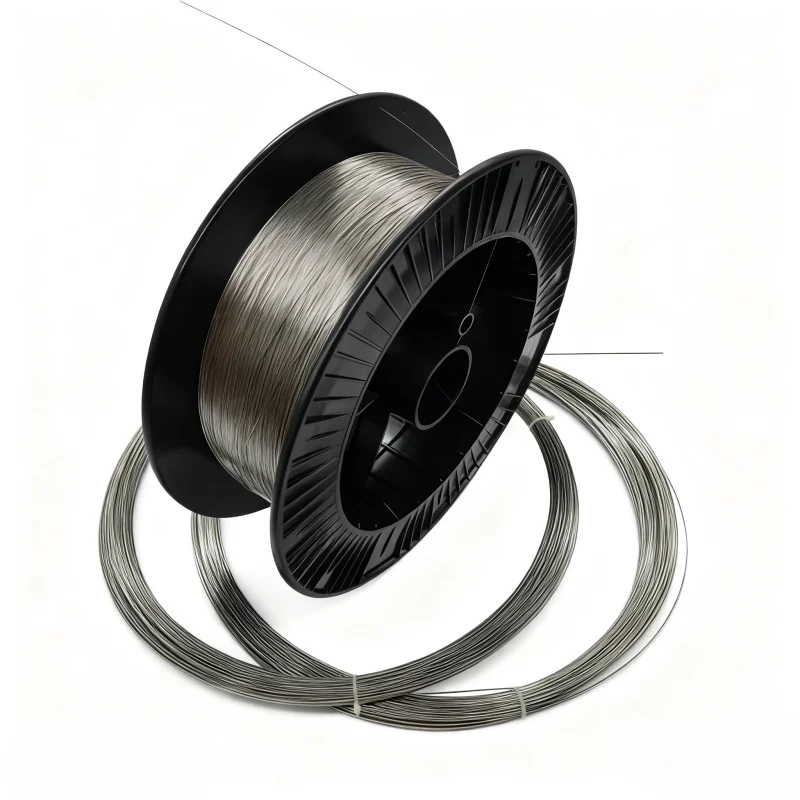
The practical simplification comes from integrating motion and support into one functional element. Instead of assembling multiple parts to create a response, a designer can use nickel titanium wire as a compact member that changes shape or accommodates deformation. This can reduce interfaces that need alignment and may ease routing through confined assemblies. However, nickel titanium wire is not a universal replacement for conventional mechanisms; its value depends on how well its transformation behavior matches the structure’s task and environment.
How memory effects replace mechanical complexity
Shape recovery creates motion within the material
Shape memory begins when nickel titanium wire is processed and trained to favor a particular geometry. After deformation in a lower-temperature state, heating through the relevant transformation range can prompt nickel titanium wire to recover that remembered shape. In an assembly, the recovery can provide movement without a separate return spring or bulky linkage. The wire does not make energy, though: the system must supply heat and account for the force and travel available during recovery.
This direct response can simplify a structure when the required movement is predictable and limited. For example, nickel titanium wire may be formed as a small actuator that pulls a latch, changes an opening, or tensions a flexible member after a temperature trigger. One active element can take the place of several connected pieces, making packaging easier. Designers should still check that nickel titanium wire can deliver adequate stroke and force across the actual load range, rather than relying on an unloaded demonstration.
Fewer interfaces can make assemblies easier to manage
Every joint, fastener, and sliding contact adds a design interface that may need space, alignment, and inspection. Using nickel titanium wire to create motion at the functional element can remove some of those interfaces and simplify the surrounding frame. A continuous wire path may also fit routes where a rigid mechanism would be difficult to install. The resulting design still needs secure terminations and strain control, since nickel titanium wire can be sensitive to local stress and bending geometry.
Part reduction can also change how a team handles assembly and maintenance. Fewer separate moving parts may mean fewer opportunities for misalignment, but the wire’s condition and connections become more important to system performance. Nickel titanium wire should therefore be specified with the end-use shape, transformation behavior, and attachment method in mind. A simpler component count is useful only when the remaining element is accessible, manufacturable, and straightforward to verify during production.
How superelasticity supports compact structures
Large reversible deflection enables flexible forms
Above its transformation range, nickel titanium wire can exhibit superelastic behavior: it can undergo substantial deformation and recover when the load is removed, within appropriate design limits. This makes nickel titanium wire useful in structures that must flex during insertion, deployment, or routine operation. A flexible element can bend around an obstacle or pass through a narrow path, then return toward its working geometry without a multi-part folding mechanism. Temperature and loading conditions determine whether this behavior is available.
That response can reduce the space needed for joints and hinges in compact devices. A wire-based frame, guide, or support may accommodate temporary deflection while retaining a functional shape afterward. Designers can use nickel titanium wire to simplify the motion path, but should not assume unlimited fatigue life or unrestricted deformation. The wire’s diameter, surface condition, bend radius, load spectrum, and cycle count all influence durability. Testing should represent the intended geometry and operating environment.
Elastic response changes the load path
A conventional rigid structure often manages movement through discrete pivots or compliant parts. Nickel titanium wire can instead distribute deformation along a continuous length, allowing the structure to respond without a complex chain of components. This can be helpful where the available envelope is narrow or the design must tolerate changing orientation. To use nickel titanium wire effectively, engineers need to model how force travels through the wire and into its supports, not just assess the wire in isolation.
The difference matters in medical instruments, compact mechanisms, and other engineered assemblies where routing and controlled flexibility are important. In such applications, nickel titanium wire may serve as a guide, retaining element, or responsive structural member. Its compactness can support simpler layouts, but the surrounding material and interfaces must also handle repeated movement. Engineers should consider friction, contact points, and potential wear, then confirm that the complete assembly performs consistently under representative conditions.
Design decisions that determine real simplification
Match transformation behavior to operating conditions
The first design decision is whether the application needs heat-triggered shape recovery or load-driven superelasticity. Nickel titanium wire can serve either role only when its material condition and transformation temperatures suit the use case. For a thermally activated function, designers must consider ambient temperature, heat transfer, response time, and control method. If nickel titanium wire is expected to flex elastically during use, the operating temperature and deformation must support that response throughout the required duty cycle.
Geometry is equally important. Wire diameter, active length, formed shape, and attachment details affect force, displacement, and stress distribution. A small change in routing can create a concentrated bend that undermines the intended benefit. Before removing conventional components, teams should compare the complete mechanism requirements with the capabilities of nickel titanium wire, including tolerances and assembly variation. Prototypes can reveal whether the simplified arrangement moves smoothly and whether the wire reaches its target position reliably.
Validate the complete structure, not just the wire
A successful design balances fewer parts against predictable performance and serviceability. Nickel titanium wire may reduce mechanical complexity, yet it can require careful control of training, joining, and handling processes. Define acceptance checks for geometry, actuation response, and connection integrity, then test samples through relevant environmental and mechanical cycles. When nickel titanium wire is used in a safety-sensitive assembly, verification should also address failure behavior and what happens if the expected movement does not occur.
Procurement and engineering teams should exchange requirements early, including dimensions, condition, tolerances, and intended operating profile. A product specification should describe the functional need rather than assume one wire configuration fits every design. Reviewing a particular nickel titanium wire option against those requirements can help clarify suitability before detailed integration. The goal is not simply fewer components; it is a structure whose reduced complexity remains manufacturable, testable, and dependable.
FAQ
What does the shape memory effect do in a structure?
It allows trained nickel titanium wire to recover a preferred shape when heated through its transformation range. That recovery can create movement without a separate return mechanism, provided the system supplies suitable heat and the design accounts for its load and stroke.
How does superelasticity differ from shape memory?
Superelasticity describes reversible deformation under load within suitable temperature and strain limits. Shape memory recovery is associated with a temperature-driven transformation after deformation. Nickel titanium wire may support different functions depending on its condition and the operating environment.
Does nickel titanium wire always reduce part count?
No. Nickel titanium wire can replace some springs, hinges, or linkages, but it may also require controls, supports, or specialized connections. Evaluate the complete assembly and verify performance before treating component reduction as a design benefit.