
 EN



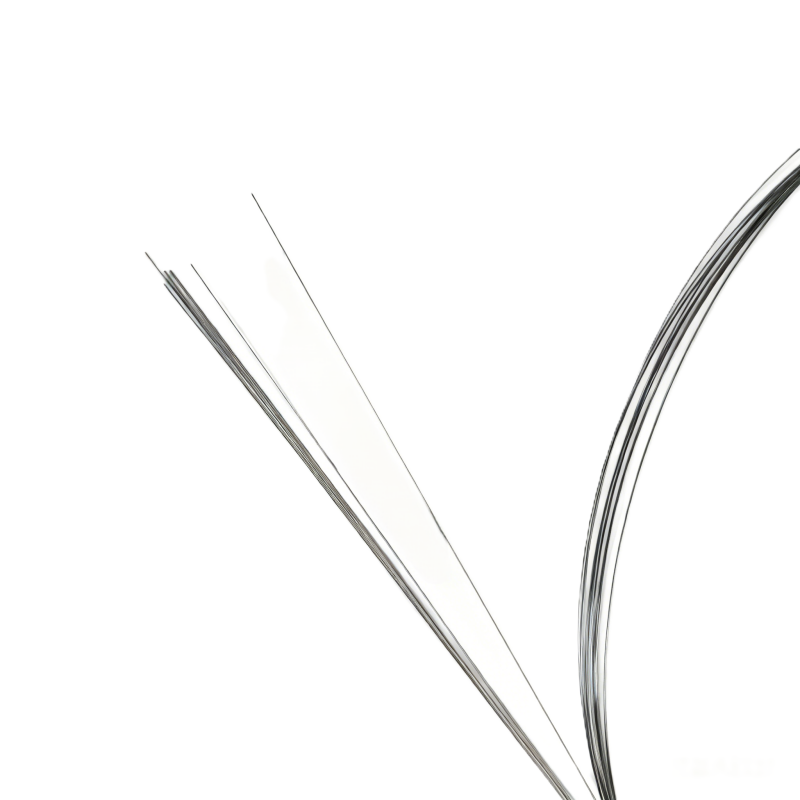
Modern wearables must bend, flex, and move with the body while keeping delicate components protected. Nickel titanium wire offers designers a useful combination of shape recovery, flexibility, and resistance to repeated deformation. These material behaviors let nickel titanium wire serve as more than a structural element: it can help solve cable tangling, create adaptable supports, and enable compact mechanisms in devices worn close to the skin.
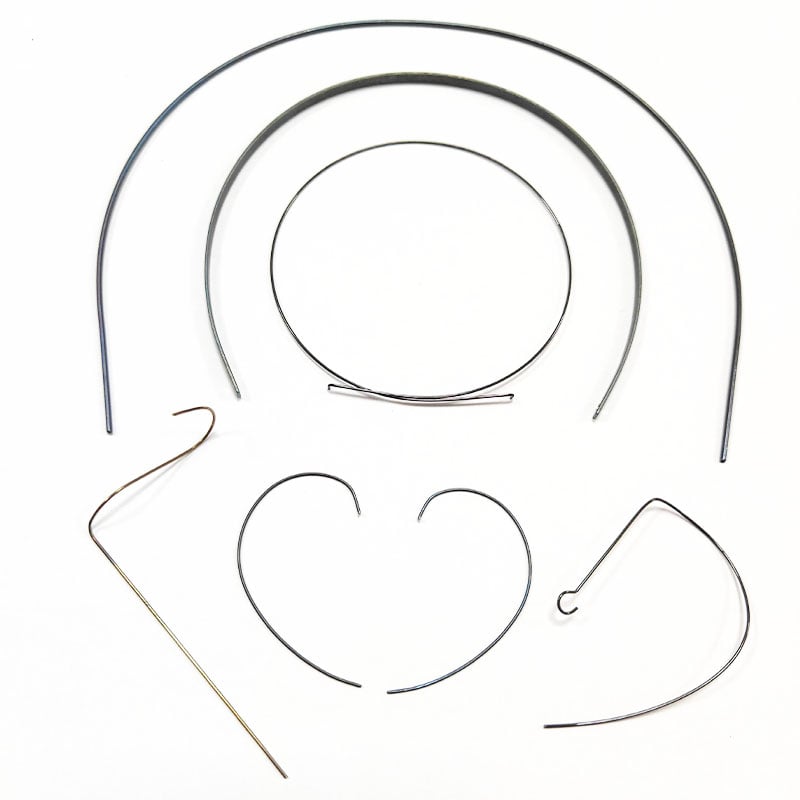
The most promising applications build on the difference between ordinary metal wire and nickel titanium wire. Depending on composition and processing, it can recover a trained shape after deformation or remain highly elastic through repeated bending. For wearable product teams, that means new options for routing, retention, and small moving parts, provided the design accounts for force, temperature, fatigue, and user comfort from the outset.
Design properties that unlock wearable applications
Shape recovery for compact forms
A wearable has limited space, so designers often need components that can be compressed for assembly and return to a useful geometry in service. Nickel titanium wire can be formed to a target shape and, in suitable grades and conditions, recover that shape after a trigger such as heating. This behavior can support deployable loops, adjustable retainers, or compact closures, while nickel titanium wire provides a discreet alternative to bulky hinges and rigid frames.
Shape recovery is not an automatic feature of every wire; alloy composition, heat treatment, transformation temperatures, and forming history all matter. A product engineer should specify the expected operating range and required movement before choosing nickel titanium wire. That makes it easier to determine whether a passive spring-like response or a temperature-dependent shape-memory action fits the device, rather than assuming every design can use the same material behavior.
Superelastic response during movement
Many wearables experience motion throughout the day, including twisting during dressing, flexing at a joint, and pressure from bags or equipment. Superelastic nickel titanium wire can accommodate substantial deformation and return toward its original form when the load is removed, within design limits. This response can make nickel titanium wire useful in flexible frames, wearable supports, and cable assemblies that need to tolerate everyday handling without relying on a rigid profile.
The practical advantage is controlled compliance, not unlimited durability. Engineers still need to evaluate bend radius, stress concentration, surface finish, and cycle requirements for the actual geometry. In a close-fitting product, nickel titanium wire must also be isolated or finished appropriately so the surrounding textile, polymer, or skin-contact layer remains comfortable. Prototypes should reproduce realistic movement because a straight coupon test may not reflect the strain pattern inside the finished wearable.
Innovative applications across wearable formats
Ear-worn devices and flexible cable routing
Earphones and other small audio wearables depend on cables that remain manageable without adding excessive bulk. Nickel titanium wire can contribute a recoverable, flexible element to cable designs, helping the lead resist permanent kinks and return toward a prepared shape after handling. Used thoughtfully, nickel titanium wire can support anti-tangle routing and improve how a cable sits around the ear or neck, while conductors and insulation continue to perform their separate electrical and protective roles.
This application requires careful integration: the alloy element must not pinch, create an uncomfortable contact point, or interfere with signal conductors and strain relief. A product team can review a nickel titanium wire cable concept as a reference for how recoverable metal behavior may be incorporated into audio connectivity. Test the full cable assembly for repeated coiling, pull loads, fit, and user handling, not just the wire alone.
Adaptive bands, frames, and textile structures
In wrist-worn sensors, headbands, and body-mounted monitors, a frame must hold position without feeling overly rigid. Nickel titanium wire can form a low-profile support that flexes as the wearer moves and helps the device return to its intended fit. In a textile laminate, nickel titanium wire may also provide a recoverable edge or guide a fabric into a repeatable shape, opening design options for adjustable bands and soft wearable enclosures.
The right construction depends on how the wearable is donned, adjusted, and cleaned. A nickel titanium wire insert may need a soft sleeve, rounded transitions, or a removable cover to distribute pressure and prevent abrasion. Designers should also consider sweat exposure, laundering requirements, skin-contact regulations, and the effects of joining methods. Those factors determine whether nickel titanium wire is best embedded in a textile, captured in a polymer channel, or kept in a replaceable subassembly.
Engineering a reliable wearable integration
Matching alloy behavior to operating conditions
Material selection begins with the intended function: spring-like flexibility, shape recovery, or a combination of both. Nickel titanium wire should be specified by relevant mechanical and thermal characteristics, not simply by alloy name. The team needs to define the expected temperature range, deformation, force, and recovery behavior, then confirm those requirements with material data and samples. A clear functional specification keeps nickel titanium wire aligned with the actual wearable use case.
Geometry and processing are equally important. Wire diameter, bend radius, surface condition, and forming history influence the force a user feels and the strain the component experiences. When nickel titanium wire is joined to other materials, the interface can become a failure point or a source of unwanted stiffness. Early prototypes should examine transitions, retention features, and assembly tolerances, then be revised before the design is locked for production.
Validating comfort, safety, and service life
Wearable validation should reproduce real use rather than rely on a single static fit check. Evaluate repeated flexing, accidental pulls, twisting, and exposure to sweat or cleaning agents as appropriate for the product. Nickel titanium wire components should be checked for permanent set, surface damage, loss of intended recovery, and changes in user-perceived comfort. Documenting these results helps product teams compare design iterations and identify where protection or geometry needs improvement.
Human factors deserve equal attention to mechanical performance. A part that technically recovers but presses against the wearer or catches hair is not a successful wearable feature. Nickel titanium wire should be positioned so its force is distributed, its ends are secured, and its movement remains predictable across a range of users. Pair bench testing with fit trials, and ensure nickel titanium wire is fully contained wherever direct exposure could create a safety or comfort concern.
FAQ
Why use nickel titanium wire instead of ordinary spring wire?
Nickel titanium wire may offer useful superelastic behavior or shape recovery that conventional spring wire does not provide in the same form. The choice depends on the desired motion, working conditions, cost, and validation needs. For a wearable, nickel titanium wire is most valuable when its specific response enables a smaller, more adaptable design rather than simply replacing a familiar material.
Can nickel titanium wire be used in skin-contact wearables?
It can be considered for such products, but the complete construction must be assessed for comfort, containment, corrosion exposure, and applicable safety requirements. Nickel titanium wire is often integrated behind a textile, polymer, or protective layer instead of left exposed. Product teams should verify the finished assembly and its contact surfaces for the intended wearing conditions.
What should engineers test before choosing nickel titanium wire?
Define the movement, force, temperature, bend geometry, and expected use cycles, then test representative parts in the assembled wearable. Include comfort, retention, joining, and environmental exposure in the evaluation. Nickel titanium wire should be selected only after prototypes show that its recovery behavior and mechanical response suit the actual device, rather than a simplified material sample.