
 EN
EN



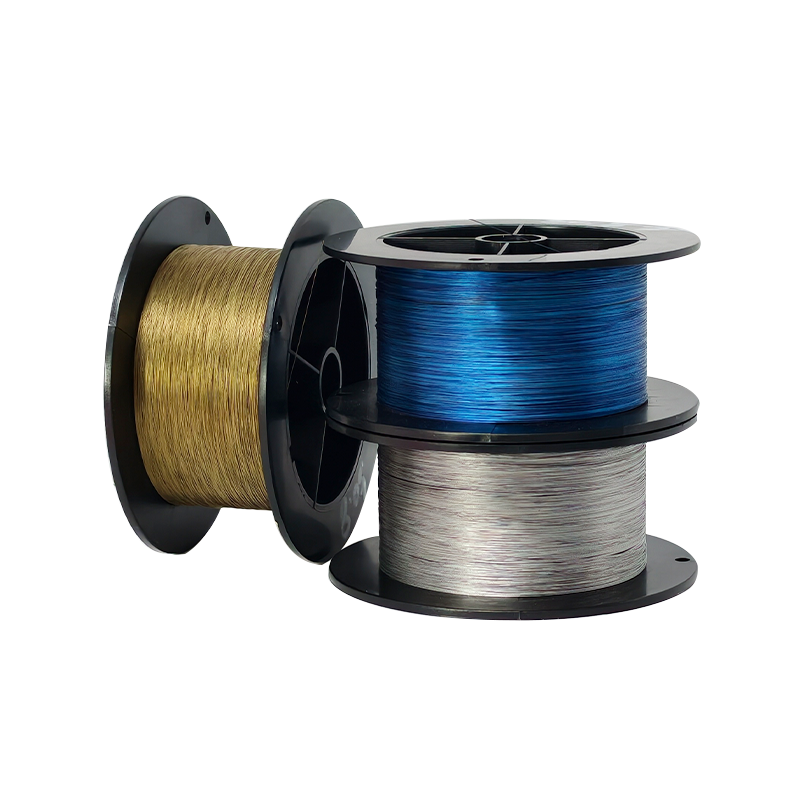
Sourcing Nitinol for industrial, medical, or specialty applications is not a decision that should be made lightly. Nitinol, the nickel-titanium shape memory alloy renowned for its superelastic behavior and thermal responsiveness, demands a level of metallurgical precision that separates reliable suppliers from unreliable ones. With over two decades of accumulated experience in the Nitinol supply chain, identifying what truly constitutes a high-quality source becomes a matter of pattern recognition, technical scrutiny, and informed judgment rather than guesswork.
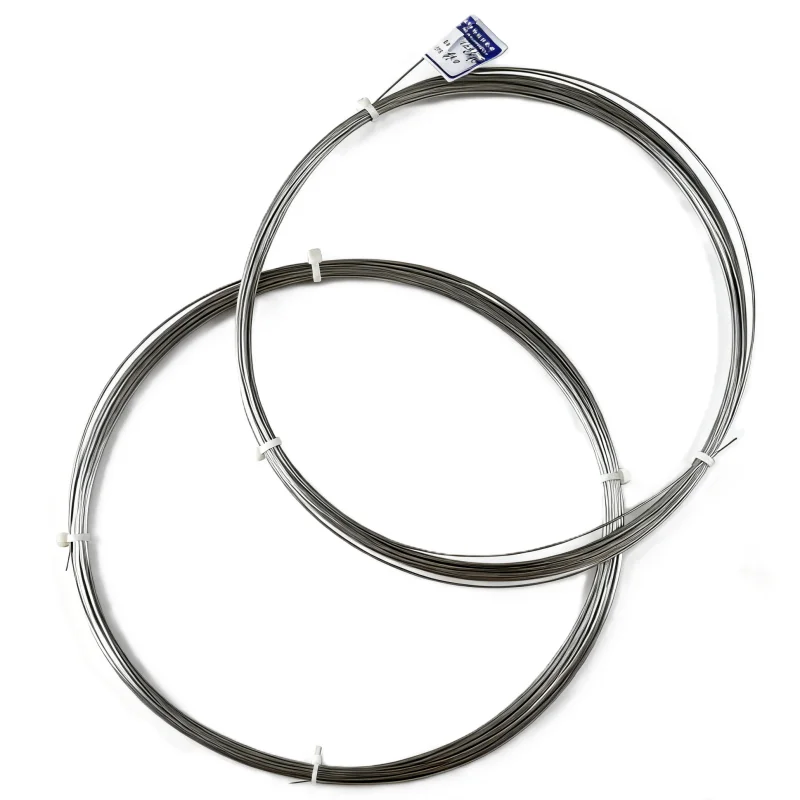
A 21-year background in Nitinol procurement and application development provides a unique vantage point. It means having witnessed how material inconsistencies translate into product failures, how supplier claims diverge from laboratory results, and how the best Nitinol sources consistently demonstrate their quality through documentation, process control, and technical transparency. This article walks through the key identification criteria that experienced buyers rely on when evaluating Nitinol sources across wire, rod, tube, and sheet formats.
Understanding What Makes Nitinol Quality Measurable
The Role of Composition Precision in Nitinol Performance
Nitinol performance is extraordinarily sensitive to its nickel-to-titanium ratio. A shift of even 0.1 atomic percent in nickel content can alter the transformation temperature by several degrees Celsius, which in turn affects whether the alloy behaves as intended in a given application. High-quality Nitinol sources maintain tight compositional tolerances and provide certified material test reports that confirm the exact alloy chemistry of each production batch.
When evaluating a Nitinol source, always request the chemical composition certificate and cross-reference it against the application's transformation temperature requirements. Reputable suppliers will not hesitate to provide this documentation. Sources that offer vague compositional ranges or refuse to share batch-specific data are a significant red flag in the Nitinol supply landscape.
Over 21 years of working with Nitinol, one of the most consistent differentiators between reliable and unreliable sources is the willingness to provide traceability. High-quality suppliers maintain heat lot records, ingot traceability, and downstream processing documentation that allows buyers to trace any performance anomaly back to its origin in the production chain.
Transformation Temperature Verification as a Quality Benchmark
Transformation temperature, often expressed as the austenite finish temperature (Af), is the single most critical functional parameter of Nitinol. It determines at what temperature the alloy transitions from its martensitic to austenitic phase, enabling the shape memory or superelastic effect. A high-quality Nitinol source will provide differential scanning calorimetry (DSC) data confirming the Af temperature for each production lot.
Buyers with deep experience in Nitinol procurement know that verbal assurances about transformation temperature are insufficient. The standard practice among quality-conscious suppliers is to include DSC curves as part of the standard material certification package. If a supplier cannot provide this data or offers only estimated ranges without test evidence, the source should be treated with caution regardless of price competitiveness.
In applications such as medical guidewires, actuator springs, or craft and jewelry components, the transformation temperature must be precisely matched to the operating environment. A Nitinol wire intended for body-temperature superelastic behavior, for example, must have an Af slightly below 37°C. Sourcing from suppliers who understand and can verify this specification is non-negotiable for quality-sensitive applications.
How Process Control Reflects Source Reliability
Melting and Drawing Consistency in Nitinol Production
Nitinol is produced through vacuum induction melting or vacuum arc remelting, both of which require precise atmospheric control to prevent oxidation and contamination. High-quality Nitinol sources invest in advanced melting infrastructure and maintain strict process parameters across production runs. The consistency of the melting process directly influences the homogeneity of the alloy, which in turn affects mechanical performance and fatigue life.
Wire drawing is another critical process stage where quality diverges sharply between suppliers. Nitinol wire must be drawn through a carefully controlled sequence of cold work and intermediate annealing steps to achieve the desired diameter, surface finish, and mechanical properties. Sources with 21 or more years of production experience have typically refined their drawing protocols to minimize surface defects, diameter variation, and residual stress inconsistencies.
When assessing a Nitinol source, ask about their drawing reduction ratios, annealing temperatures, and surface finishing methods. Suppliers who can articulate their process parameters with specificity are demonstrating the kind of process ownership that correlates with consistent product quality. Vague answers about proprietary processes without any supporting technical detail should prompt further scrutiny.
Surface Quality and Dimensional Tolerance as Indicators
The surface condition of Nitinol wire or rod is a direct indicator of production quality. High-quality Nitinol should exhibit a smooth, oxide-free surface with no visible seams, pits, or drawing marks. Surface defects act as stress concentration points that can initiate fatigue cracks under cyclic loading, which is particularly problematic in medical and actuator applications where long-term reliability is essential.
Dimensional tolerance is equally telling. A reputable Nitinol source will hold diameter tolerances to within ±0.001 inches or tighter for fine wire, and will provide measurement data confirming compliance. Buyers who have worked with Nitinol across multiple suppliers over many years quickly learn that dimensional consistency is one of the easiest quality parameters to verify upon receipt and one of the most revealing about a supplier's overall process discipline.
For applications in craft, jewelry, and hobby segments, surface finish also affects workability and aesthetic outcome. Nitinol wire used in decorative or functional jewelry must be free of surface contamination and have a consistent finish that allows for clean bending, shaping, and finishing. Suppliers offering custom cutting services alongside consistent surface quality provide significant added value for these applications.
Evaluating Supplier Credentials and Technical Depth
Certifications and Quality Management Systems
A high-quality Nitinol source will operate under a recognized quality management system, most commonly ISO 9001 or, for medical-grade material, ISO 13485. These certifications are not merely administrative achievements; they represent a structured commitment to process documentation, corrective action protocols, and continuous improvement. Buyers with long-term experience in Nitinol procurement treat certification status as a baseline screening criterion rather than a differentiating factor.
Beyond certification, the depth of a supplier's technical team is a strong quality signal. Suppliers who employ metallurgists, materials engineers, and application specialists are better positioned to support buyers through specification development, troubleshooting, and custom alloy design. A Nitinol source that can engage at a technical level rather than purely a transactional one is demonstrating the kind of expertise that only comes from sustained investment in the material.
When a supplier has been working with Nitinol for over two decades, their technical knowledge base reflects real-world application feedback, failure analysis experience, and iterative process refinement. This accumulated knowledge is not easily replicated by newer entrants to the market and represents a genuine quality advantage for buyers who need more than just raw material supply.
Custom Capability and Application-Specific Support
One of the clearest markers of a high-quality Nitinol source is the ability to offer application-specific customization. This includes custom wire diameters, specific transformation temperature targeting, tailored surface finishes, and value-added services such as precision cutting to length. Suppliers who can accommodate these requirements without compromising on material quality are demonstrating both technical capability and production flexibility.
For buyers sourcing Nitinol wire for craft, jewelry, and hobby applications, the availability of custom sizes and cutting services is particularly valuable. These segments often require small quantities in precise lengths, and a supplier who can deliver this without imposing industrial minimum order quantities is addressing a real market need with genuine service depth.
Custom capability also extends to shape setting and heat treatment services. High-quality Nitinol sources with deep application experience can advise on shape-setting temperatures, fixture design, and post-processing protocols that optimize the alloy's functional performance for specific end uses. This level of support is only possible when a supplier has invested in both equipment and expertise over an extended period.
Red Flags and Verification Strategies for Nitinol Buyers
Common Warning Signs in Nitinol Sourcing
After 21 years of evaluating Nitinol sources, certain warning signs recur consistently. Suppliers who cannot provide batch-specific material certifications, who offer unusually low prices without explanation, or who are unable to discuss their production process in technical terms should be approached with caution. Price anomalies in Nitinol sourcing almost always reflect compromises in raw material quality, process control, or both.
Another common red flag is the absence of application knowledge. A supplier who cannot distinguish between shape memory and superelastic Nitinol, or who cannot explain the significance of transformation temperature for a given use case, is unlikely to be producing material with the precision that demanding applications require. Technical literacy at the sales and support level is a proxy for the overall quality culture of the organization.
Inconsistency between samples and production lots is perhaps the most damaging quality failure in Nitinol sourcing. Some suppliers invest in producing excellent qualification samples while cutting corners on production runs. Buyers should request production lot material for qualification testing rather than accepting dedicated sample batches, and should establish incoming inspection protocols that verify key parameters on every delivery.
Practical Verification Methods for Incoming Nitinol Material
Experienced Nitinol buyers implement a layered verification approach that combines documentation review with physical testing. Upon receipt, material should be checked for dimensional compliance using calibrated micrometers, surface condition should be inspected under magnification, and a sample from each lot should be subjected to bend-and-release testing to confirm superelastic behavior at the intended operating temperature.
For critical applications, DSC testing of incoming Nitinol material provides definitive confirmation of transformation temperature and should be performed on a statistically representative sample from each production lot. While this adds cost to the incoming inspection process, it provides the assurance necessary for applications where material performance is directly linked to product safety or reliability.
Building a long-term relationship with a verified Nitinol source also reduces the burden of incoming inspection over time. Suppliers who consistently deliver material within specification earn a level of trust that allows buyers to streamline their verification protocols without sacrificing quality assurance. This kind of relationship is only possible with sources who have demonstrated sustained reliability across multiple years and production cycles.
FAQ
What is the most important quality parameter to verify when sourcing Nitinol wire?
Transformation temperature is the most critical functional parameter for Nitinol wire. It determines whether the alloy will exhibit shape memory or superelastic behavior at the intended operating temperature. Always request DSC data confirming the austenite finish temperature (Af) for each production lot, and verify that it aligns with your application requirements before committing to a source.
How does a supplier's production experience affect Nitinol quality?
Suppliers with extensive production experience, such as those with a 21-year background in Nitinol, have typically refined their melting, drawing, and heat treatment processes through iterative improvement and real-world application feedback. This accumulated process knowledge translates into tighter tolerances, more consistent transformation temperatures, and better surface quality compared to suppliers with limited production history.
Can Nitinol wire be sourced in custom sizes for small-scale applications like jewelry and crafts?
Yes, high-quality Nitinol sources with strong custom capability can supply wire in a wide range of diameters and custom cut lengths suitable for craft, jewelry, and hobby applications. The key is finding a supplier who combines material quality with flexible order quantities and precision cutting services, ensuring that small-scale buyers receive the same material integrity as industrial customers.
What documentation should a reliable Nitinol source always provide?
A reliable Nitinol source should provide batch-specific chemical composition certificates, DSC transformation temperature data, dimensional inspection reports, and evidence of quality management system certification such as ISO 9001. For medical-grade Nitinol, ISO 13485 certification and full material traceability back to the original ingot are standard expectations among experienced buyers.
Table of Contents
- Understanding What Makes Nitinol Quality Measurable
- How Process Control Reflects Source Reliability
- Evaluating Supplier Credentials and Technical Depth
- Red Flags and Verification Strategies for Nitinol Buyers
-
FAQ
- What is the most important quality parameter to verify when sourcing Nitinol wire?
- How does a supplier's production experience affect Nitinol quality?
- Can Nitinol wire be sourced in custom sizes for small-scale applications like jewelry and crafts?
- What documentation should a reliable Nitinol source always provide?