
 EN
EN



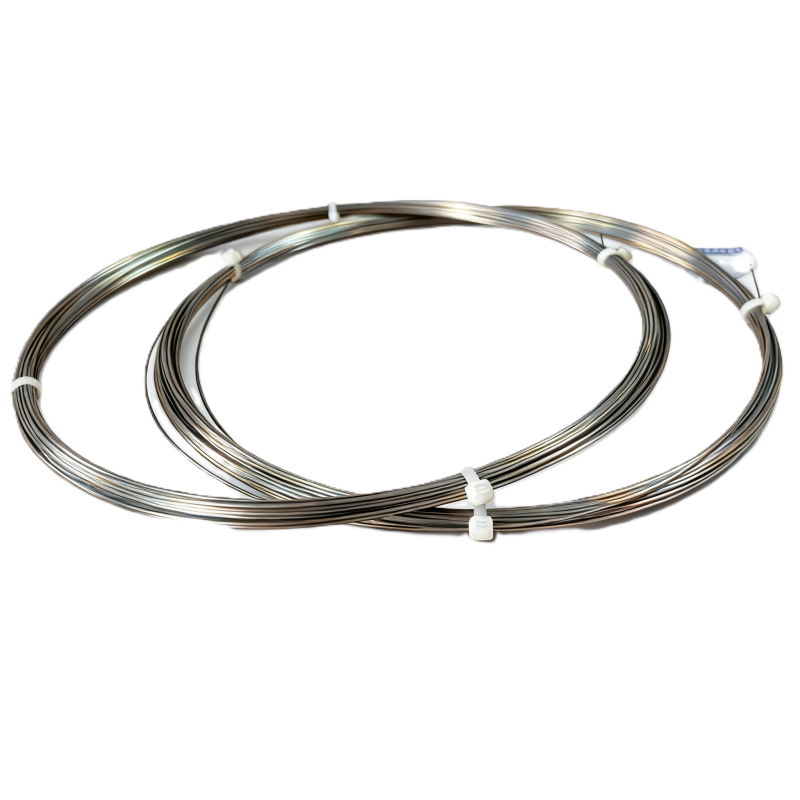
The evolution of robotics is deeply tied to the materials that power movement, flexibility, and responsiveness. Among the most promising advances in this space, Nitinol material stands out as a transformative force in the design of flexible robot joints. With its unique combination of superelasticity and shape memory behavior, this remarkable nickel-titanium alloy is enabling engineers to rethink what robotic articulation can look like — moving far beyond rigid gears and conventional actuators toward something far more fluid and biologically inspired.
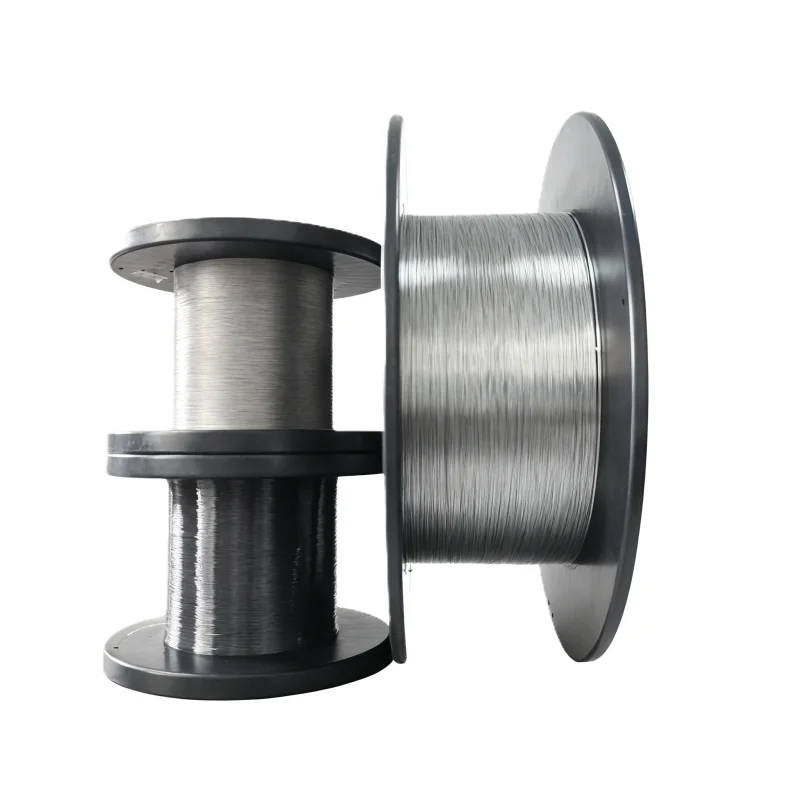
Understanding the breakthroughs that Nitinol material can deliver to flexible robot joints requires examining both the science behind the alloy and the practical engineering challenges it helps overcome. From medical robotics and soft exoskeletons to autonomous industrial arms, the implications of integrating Nitinol material into joint design are wide-reaching and increasingly concrete. This article explores the key frontiers where Nitinol is poised to redefine robotic flexibility, responsiveness, and longevity.
The Core Properties That Make Nitinol Material a Game Changer for Robotics
Superelasticity and Its Role in Joint Flexibility
One of the defining characteristics of Nitinol material is its superelastic behavior — the ability to undergo large deformations and then return to its original shape without permanent damage. This is fundamentally different from conventional metals, which either deform plastically or fracture under high strain. For flexible robot joints, this property directly translates to durability under repeated bending and twisting cycles.
In practical robotic applications, joints are subjected to thousands of motion cycles during normal operation. Conventional spring steel or aluminum components fatigue over time. Nitinol material, by contrast, can recover from strains of up to 8% elastically, making it ideal for designing joints that must flex continuously without mechanical degradation. This opens a pathway to robots with much longer service lives in demanding environments.
The superelastic response in Nitinol material is driven by a stress-induced martensitic phase transformation at the atomic level. When external stress is applied, the crystalline structure shifts from austenite to martensite, absorbing energy and enabling large elastic deformation. Upon removal of the load, the structure reverts, releasing that stored energy. This mechanism allows robot joints to absorb impact forces and vibrations, improving motion smoothness in ways that rigid materials simply cannot replicate.
Shape Memory Effect and Programmable Actuation
Beyond superelasticity, Nitinol material also exhibits the shape memory effect — the ability to recover a pre-programmed shape upon heating above a specific transition temperature. This property opens an entirely different category of breakthrough for robot joint design: thermal actuation without motors or hydraulics. By engineering the transition temperature to align with electrical resistance heating or body heat, designers can create joints that move on demand.
In flexible robot joints powered by Nitinol material wires or springs, small electrical currents can trigger precisely controlled movements. This approach eliminates the need for bulky servo motors in certain configurations, enabling robots to become significantly smaller, lighter, and quieter. The shape memory cycle in Nitinol material can be tuned during manufacturing to achieve specific stroke lengths, force outputs, and response speeds suited to joint geometry.
The programmability of Nitinol material actuation is particularly compelling for soft robotic systems that mimic biological musculature. Instead of discrete on/off motor states, Nitinol-based actuators can produce smooth, graded movements that mirror the way tendons and muscles interact in living organisms. This brings robotic joint behavior closer to the graceful articulation seen in human fingers, wrists, and spinal structures.
Breakthroughs in Soft Robotics and Bioinspired Joint Architecture
Enabling Truly Compliant Robotic Limbs
Compliance — the ability of a robotic joint to yield and adapt to external forces — is one of the most sought-after properties in next-generation robotics. Rigid joints controlled by stiff servo systems can cause damage to delicate objects and are prone to catastrophic failure under unexpected loads. Nitinol material introduces a form of intrinsic compliance that is embedded in the material itself rather than requiring complex control algorithms to simulate softness.
When used as structural elements in soft robotic fingers or grippers, Nitinol material allows the joint to naturally conform to irregular surfaces. This compliance makes such robots far better suited for handling fragile items in food processing, medical device assembly, and consumer electronics manufacturing. The joint does not need to perfectly calculate contact forces — the material itself distributes and absorbs those forces gracefully.
From a design standpoint, replacing rigid linkages with Nitinol material elements allows engineers to drastically reduce part counts. A single Nitinol spring or wire can simultaneously function as the structural element, the actuator, and the elastic return mechanism. This consolidation simplifies assembly, reduces weight, and decreases maintenance requirements — all critical considerations in commercial robotics product development.
Mimicking Biological Muscle-Tendon Structures
One of the most exciting research directions involves constructing robotic joints that architecturally mimic the human musculoskeletal system using Nitinol material as an analog for tendons. In natural physiology, tendons store and release elastic energy during movement, enhancing efficiency and reducing metabolic cost. Nitinol wires in robot joints can replicate this behavior thermomechanically, storing deformation energy and releasing it in a controlled manner.
Researchers have demonstrated prototypes of bioinspired robot hands where multiple Nitinol material wire bundles act in opposition — some contracting under heating while others return elastically — to produce complex multi-axis finger motions. These systems achieve a degree of dexterity that would require far more mechanical components using conventional approaches. The simplicity of the mechanical architecture belies the sophistication of the motion it enables.
This bioinspired architecture also benefits from the fatigue resistance of Nitinol material. Biological tendons are vulnerable to repetitive stress injuries, but properly cycled Nitinol actuators can sustain millions of strain cycles without failure when operated within their designed parameters. For robots performing repetitive assembly or rehabilitation therapy tasks, this reliability directly reduces downtime and operational costs.
Medical Robotics: Where Nitinol Material Breakthroughs Are Most Immediate
Minimally Invasive Surgical Robot Joints
Medical robotics represents arguably the most immediate and high-impact domain for Nitinol material breakthroughs in flexible joint design. Surgical robots used in minimally invasive procedures must navigate tortuous anatomical pathways, bend at extreme angles, and deliver precise forces — all within diameter constraints that conventional rigid mechanisms cannot meet. The superelastic and biocompatible properties of Nitinol material make it uniquely suited for these demands.
Flexible endoscopic tools with Nitinol joints can achieve bending radii and angular ranges impossible with stainless steel components of equivalent size. Catheters, laparoscopic instruments, and robotic needle guides increasingly incorporate Nitinol material segments to provide controlled deflection and recover their shape reliably after each procedure. This directly improves procedural accuracy and reduces tissue trauma during navigation.
Nitinol material components used in medical robotic joints must comply with standards such as ASTM F2063, which governs the wrought form of nickel-titanium alloys for medical devices. Meeting this standard ensures consistent phase transformation temperatures, mechanical properties, and biocompatibility. For manufacturers sourcing wire for robotic joint actuators in medical contexts, compliance with Nitinol material standards is non-negotiable in maintaining device safety and regulatory approval pathways.
Rehabilitation Exoskeletons and Assistive Devices
Outside the operating theater, Nitinol material is also driving breakthroughs in wearable rehabilitation robotics. Exoskeletons and orthotic devices that assist patients recovering from stroke or spinal injury require joints that are lightweight, smooth in operation, and safe when interacting with vulnerable users. The compliance and low weight of Nitinol-based actuators make them well-suited to wrist, elbow, and ankle joints in such devices.
Conventional exoskeleton joints powered by electric motors add considerable bulk and weight at the periphery of the limb, which can fatigue users and restrict natural movement. By integrating Nitinol material wire actuators alongside passive elastic elements, designers can create joints that assist movement without overpowering the user's residual muscle activity. This collaborative compliance is fundamental to effective motor rehabilitation therapy.
The warmth sensitivity of shape memory Nitinol material has also inspired research into wearable joints that respond to body temperature changes — a concept that could one day yield fully passive assistive devices that adjust to the wearer's physiological state without any electronic control system. While this remains largely in the research phase, the principle illustrates how deeply the properties of Nitinol material are aligned with the requirements of human-interactive robotics.
Manufacturing and Engineering Considerations for Nitinol Joint Integration
Custom Wire and Spring Geometries for Joint Design
Realizing the breakthroughs that Nitinol material promises in robotic joints requires precise manufacturing of the Nitinol components themselves. The transformation temperatures, force output, and fatigue life of Nitinol actuators are highly sensitive to alloy composition and thermo-mechanical processing history. Achieving consistent behavior across production batches demands stringent quality control and close collaboration between joint designers and material suppliers.
Nitinol wire used in robotic joint actuators is typically drawn to precise diameters with tight tolerances, then heat-treated and shape-set to encode the desired memory geometry. Custom cutting services allow engineers to specify exact lengths of wire or spring coil pitch, enabling efficient integration into compact joint architectures. The ability to specify and procure Nitinol material in customized geometries is a key enabler for translating laboratory prototypes into manufacturable robotic products.
Spring configurations of Nitinol material are particularly useful in joint designs that require distributed deformation along a curved path rather than concentrated strain at a single point. Helical Nitinol springs can act as torsional actuators or as elastic return elements in antagonistic joint pairs. Their ability to operate reliably across millions of cycles without the lubrication requirements of mechanical springs significantly reduces maintenance burden in deployed robotic systems.
Addressing Thermal Management and Actuation Speed Challenges
One of the engineering challenges associated with Nitinol material in thermally actuated joints is the cooling rate, which determines how quickly the joint can complete a full cycle and return to its reset state. Heating via electrical resistance is fast, but passive cooling in ambient air can be relatively slow, limiting cycle frequency. For high-speed robotic applications, this represents a practical constraint that designers must account for in their architectures.
Several strategies are being developed to address this limitation. Reducing wire cross-sectional area improves thermal exchange rate, as does incorporating forced air or fluid cooling channels adjacent to the Nitinol material elements. Some research groups are exploring antagonistic dual-wire configurations where one wire heats while the other cools, allowing for faster net cycling. These developments are steadily extending the actuation bandwidth of Nitinol joints toward ranges compatible with more dynamic robotic movements.
In superelastic applications — where Nitinol material is used purely for its elastic properties rather than thermal actuation — thermal management is less critical. Here, the material operates isothermally at room temperature, and the speed of response is essentially instantaneous with applied mechanical load. For many soft robotic joint applications, this superelastic regime is the primary operating mode, and the thermal limitations of shape memory actuation are not a design constraint.
FAQ
What makes Nitinol material different from conventional spring steel in robot joint applications?
Unlike conventional spring steel, Nitinol material exhibits both superelasticity and the shape memory effect. It can recover from elastic strains up to 8% — far exceeding what steel can manage before permanent deformation. This makes Nitinol joints far more durable under repeated flexing cycles and enables thermally actuated movement that steel cannot provide, dramatically expanding the design possibilities for flexible robotic joints.
Is Nitinol material biocompatible enough for use in medical robotic joints?
Yes. Nitinol material has a well-established history of biocompatible use in medical devices such as stents, guidewires, and orthodontic wires. When produced to the ASTM F2063 standard, nickel ion release is controlled to safe levels, and the surface chemistry can be further optimized through passivation treatments. These properties make it highly suitable for medical robotic joints that contact or operate near biological tissue.
Can Nitinol material actuators replace conventional servo motors in all robotic joint types?
Nitinol material actuators are best suited for applications requiring low-to-moderate force output, compact form factors, and smooth, biomimetic motion. They are not yet capable of matching the speed and power density of large servo motors in heavy industrial robots. However, for soft robotics, medical devices, wearable assistive systems, and miniaturized robotic mechanisms, Nitinol-based actuation offers compelling advantages that conventional motors cannot match in terms of size, weight, and noise.
What standards govern the quality of Nitinol material used in robotic and medical applications?
The primary standard is ASTM F2063, which specifies requirements for wrought nickel-titanium shape memory alloys intended for surgical implant applications. This standard governs chemical composition, phase transformation temperatures, and mechanical properties. For robotic applications, particularly in medical robotics or devices with patient contact, sourcing Nitinol material that complies with ASTM F2063 ensures consistent, predictable performance and supports regulatory compliance pathways for device certification.
Table of Contents
- The Core Properties That Make Nitinol Material a Game Changer for Robotics
- Breakthroughs in Soft Robotics and Bioinspired Joint Architecture
- Medical Robotics: Where Nitinol Material Breakthroughs Are Most Immediate
- Manufacturing and Engineering Considerations for Nitinol Joint Integration
-
FAQ
- What makes Nitinol material different from conventional spring steel in robot joint applications?
- Is Nitinol material biocompatible enough for use in medical robotic joints?
- Can Nitinol material actuators replace conventional servo motors in all robotic joint types?
- What standards govern the quality of Nitinol material used in robotic and medical applications?