
 EN
EN



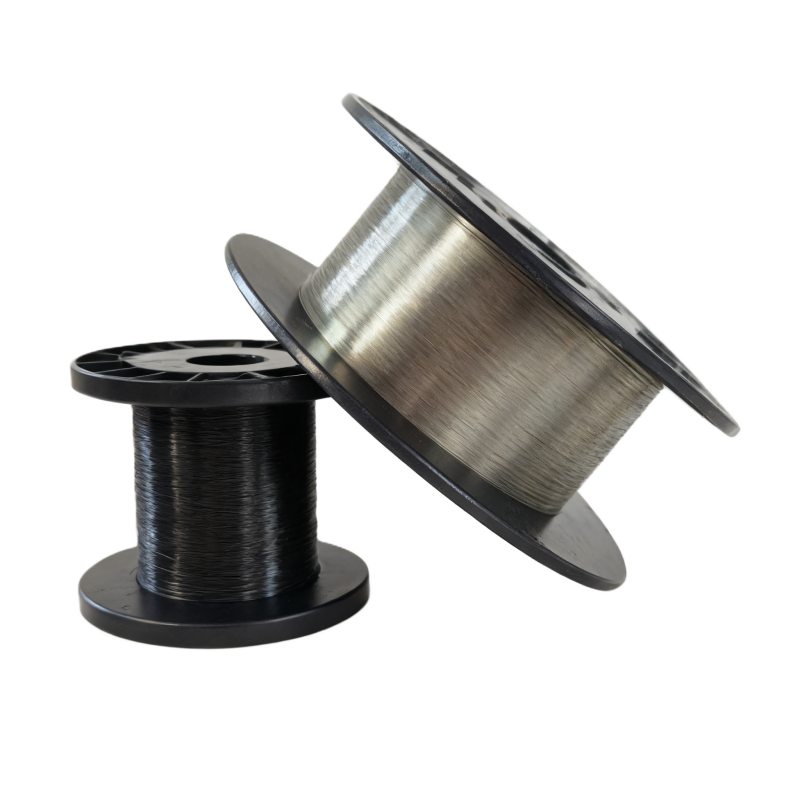
When equipment must perform reliably under mechanical stress, thermal cycling, and repeated deformation, material selection becomes a critical engineering decision. Nitinol, the nickel-titanium shape memory alloy, has earned a dominant position in demanding industrial and medical applications precisely because its physical properties align with what extreme environments require. Unlike conventional metals that degrade, fatigue, or permanently deform under harsh operating conditions, Nitinol maintains structural integrity and functional performance across a wide range of stresses and temperatures. This is not a coincidence of chemistry — it is the result of a unique crystallographic behavior that no standard engineering alloy can replicate.
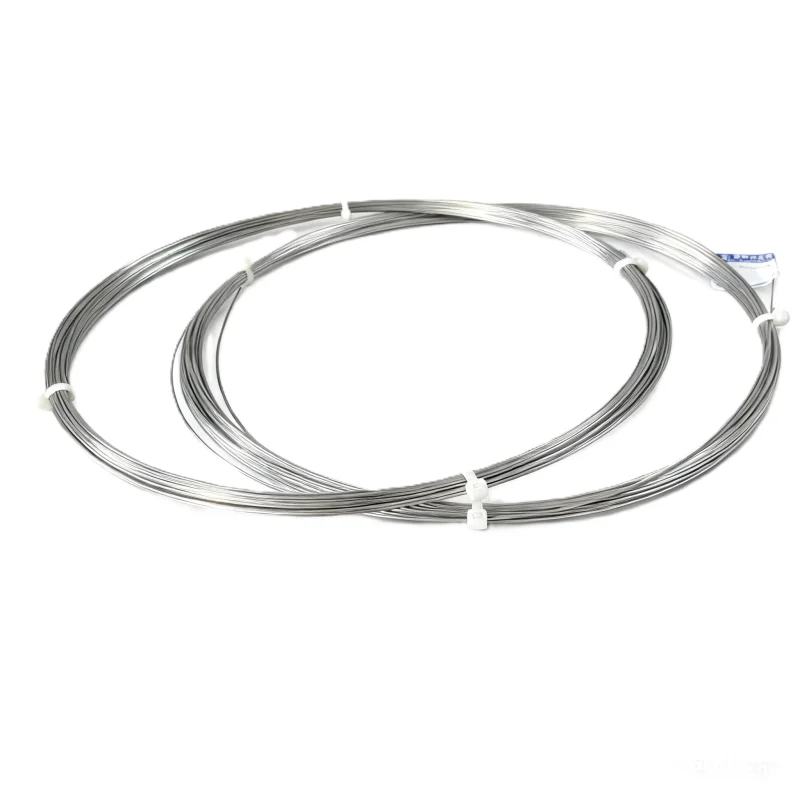
The question of why high-stability Nitinol is the first choice for equipment in extreme conditions comes down to three interconnected advantages: superelasticity that absorbs and recovers from large strains, shape memory that enables thermally driven actuation, and fatigue resistance that sustains performance over millions of cycles. Engineers working in aerospace, medical devices, oil and gas, robotics, and precision instrumentation have consistently turned to Nitinol when other materials reach their limits. Understanding the specific mechanisms behind these advantages helps clarify why Nitinol is not simply a premium alternative — it is often the only viable solution for the most demanding applications.
The Unique Material Science Behind Nitinol Stability
Phase Transformation as a Functional Mechanism
The stability of Nitinol under extreme conditions originates from its reversible solid-state phase transformation between two crystallographic structures: austenite and martensite. At higher temperatures or under low stress, Nitinol exists in the austenite phase, which is ordered and relatively rigid. When cooled or subjected to mechanical stress, it transforms into the martensite phase, which is more compliant and accommodates large deformations without dislocation-based damage. This transformation is fully reversible, meaning the alloy returns to its original shape and phase when the triggering condition is removed.
This mechanism is fundamentally different from plastic deformation in conventional metals. In steel or aluminum, deformation beyond the elastic limit causes permanent atomic displacement. In Nitinol, the same level of strain is accommodated by a coordinated lattice rearrangement that leaves no residual damage. This is why Nitinol components can endure repeated large-strain cycles in extreme environments without accumulating fatigue damage at the rate that would compromise conventional alloys.
The transformation temperatures of Nitinol can be precisely tuned during manufacturing by adjusting the nickel-to-titanium ratio and applying specific heat treatments. This tunability means engineers can design Nitinol components to operate in their optimal phase at the exact temperature range of the target application, whether that is cryogenic aerospace environments, body-temperature medical devices, or high-cycle industrial actuators.
Superelasticity and Its Role in Extreme Load Tolerance
Superelasticity is the property that allows Nitinol to recover from strains of up to 8% — roughly 20 to 30 times the recoverable strain of high-strength steel. This behavior occurs when Nitinol is deformed above its austenite finish temperature, causing stress-induced martensite to form and then revert upon unloading. The result is a material that behaves like a highly efficient mechanical spring, absorbing and releasing energy without permanent set.
In extreme conditions where equipment is subjected to impact loads, vibration, or cyclic mechanical stress, this superelastic behavior provides a built-in damage tolerance that passive materials cannot offer. Nitinol components in surgical instruments, for example, can be bent and straightened repeatedly without losing their calibrated geometry. In aerospace fasteners and connectors, the same property prevents stress concentrations from propagating into cracks under thermal and mechanical cycling.
The plateau stress behavior of Nitinol — where large strains occur at nearly constant load — also makes it predictable under dynamic loading. Engineers can design around this characteristic to create components with defined compliance windows, which is particularly valuable in precision equipment where load-displacement relationships must remain consistent across thousands of operational cycles.
Why Extreme Environments Demand What Nitinol Delivers
Thermal Extremes and Shape Memory Actuation
Many extreme operating environments involve significant temperature variation, whether from cryogenic storage, combustion proximity, geothermal exposure, or the thermal cycling inherent in aerospace re-entry and satellite operation. Conventional actuator materials — bimetals, shape memory polymers, or thermally expanding metals — either lack the force output, the cycle life, or the precision required in these contexts. Nitinol addresses all three limitations simultaneously.
The shape memory effect in Nitinol allows a deformed component to recover its programmed geometry when heated above its austenite transformation temperature. This thermally driven actuation can generate recovery stresses exceeding 500 MPa, making Nitinol one of the highest energy-density actuator materials available. In pipeline couplings used in subsea oil and gas infrastructure, Nitinol rings are cooled, expanded, and installed over pipe joints. As they warm to ambient temperature, they contract and create a leak-proof mechanical seal — a passive, maintenance-free actuation that no conventional material can replicate.
In aerospace applications, Nitinol has been used in morphing structures, deployable mechanisms, and thermal protection systems where the alloy's response to temperature change provides controlled, repeatable mechanical work. The absence of motors, hydraulics, or electronics in these Nitinol-based systems reduces weight, complexity, and failure points — all critical advantages in extreme environments where maintenance access is limited or impossible.
Corrosion Resistance in Chemically Aggressive Environments
Extreme conditions are not limited to mechanical or thermal stress. Many industrial environments expose equipment to corrosive media — saltwater, acidic fluids, oxidizing gases, or biological environments. Nitinol exhibits excellent corrosion resistance due to the stable titanium oxide layer that forms naturally on its surface. This passive oxide film is self-repairing, meaning that even if the surface is scratched or abraded, the protective layer reforms in the presence of oxygen.
This corrosion resistance makes Nitinol particularly well-suited for marine, medical, and chemical processing applications. In implantable medical devices, Nitinol's biocompatibility and resistance to body fluid corrosion are essential for long-term performance. In offshore equipment, where saltwater exposure would rapidly degrade unprotected steel components, Nitinol maintains its mechanical properties and surface integrity over extended service periods.
The combination of corrosion resistance and superelasticity in a single material is rare. Most corrosion-resistant alloys — such as certain stainless steels or titanium grades — do not offer the large recoverable strains that Nitinol provides. This dual capability is a key reason why Nitinol is specified in environments where both chemical exposure and mechanical performance are non-negotiable requirements.
Fatigue Performance Over Millions of Cycles
How Nitinol Sustains High-Cycle Durability
Fatigue failure is one of the most common causes of component failure in equipment subjected to repeated loading. Conventional metals accumulate microscopic damage at stress concentrations with each cycle, eventually leading to crack initiation and propagation. Nitinol's fatigue behavior is governed by its phase transformation mechanism rather than dislocation accumulation, which fundamentally changes how damage develops under cyclic loading.
High-quality Nitinol wire and components, manufactured to standards such as ASTM F2063, demonstrate fatigue life exceeding 10 million cycles at strain amplitudes that would cause rapid failure in stainless steel or titanium. This performance is critical in medical devices such as stents and guidewires, which must flex with every heartbeat or patient movement over years of implantation. It is equally important in industrial sensors, actuators, and connectors that operate continuously in vibrating machinery or pulsating fluid systems.
The fatigue performance of Nitinol is sensitive to surface quality, inclusion content, and microstructural consistency. This is why material certification and manufacturing precision matter significantly when specifying Nitinol for extreme-condition equipment. Components produced from high-purity, tightly controlled Nitinol stock consistently outperform those made from lower-grade material, particularly in the high-cycle regime where small differences in material quality translate into large differences in service life.
The Role of Material Specification in Reliable Performance
Not all Nitinol is equivalent in performance. The alloy's properties are highly sensitive to composition, thermomechanical processing history, and surface condition. For equipment intended for extreme conditions, specifying Nitinol to recognized standards — such as ASTM F2063 for medical-grade wire — ensures that transformation temperatures, mechanical properties, and inclusion levels meet defined thresholds. This traceability is essential for applications where component failure carries significant safety or operational consequences.
Diameter tolerance, surface finish, and straightness are also critical parameters for Nitinol wire used in precision equipment. Tight dimensional control ensures consistent behavior across a production batch, which is necessary when components are assembled into systems with defined mechanical tolerances. Engineers specifying Nitinol for extreme-condition applications should require full material certifications, transformation temperature data, and fatigue test results from their suppliers to validate that the material will perform as designed.
The availability of Nitinol in a range of diameters — from fine wire for medical applications to larger-diameter rod and tube for industrial use — means that the material can be adapted to a wide variety of component geometries and load requirements. This versatility, combined with its unique functional properties, reinforces why Nitinol remains the first-choice material when equipment must operate reliably at the boundaries of what conventional materials can withstand.
Industrial and Medical Applications Where Nitinol Proves Its Value
Medical Devices Operating Inside the Human Body
The human body represents one of the most demanding environments for implantable equipment: constant mechanical loading, corrosive biological fluids, temperature stability requirements, and the absolute necessity of biocompatibility. Nitinol has become the material of choice for cardiovascular stents, orthopedic staples, dental archwires, and minimally invasive surgical instruments precisely because it satisfies all of these requirements simultaneously.
Self-expanding Nitinol stents, for example, are compressed into a delivery catheter at room temperature and deployed at body temperature, where the shape memory effect causes them to expand and conform to the vessel wall. This thermally driven deployment eliminates the need for balloon inflation in many applications and allows the stent to adapt to vessel geometry changes over time. The superelastic properties of Nitinol also allow the stent to flex with arterial pulsation without fatigue cracking — a performance requirement that no conventional metallic stent material can meet over a multi-year implant lifetime.
In surgical instruments, Nitinol enables tools that can be introduced through small incisions in a straight configuration and then bent to access anatomical targets that would be unreachable with rigid instruments. The superelastic recovery ensures that the instrument returns to its functional geometry after each use, maintaining the precision that surgeons depend on across hundreds of procedures.
Aerospace, Oil and Gas, and Industrial Robotics
Beyond medicine, Nitinol has established a strong presence in aerospace engineering, where weight reduction, reliability, and performance under thermal and mechanical extremes are paramount. Nitinol-based actuators have been used in morphing wing structures, vibration damping systems, and deployable mechanisms in satellites and spacecraft. The alloy's ability to generate significant mechanical work from a temperature change makes it an attractive alternative to conventional electromechanical actuators in weight-critical applications.
In the oil and gas industry, Nitinol pipe couplings and sealing elements are used in subsea and downhole environments where access for maintenance is extremely limited and where thermal cycling from production fluid temperature changes is continuous. The passive, thermally driven actuation of Nitinol couplings provides a reliable sealing mechanism that does not depend on external power or mechanical adjustment, reducing the risk of seal failure in inaccessible locations.
Industrial robotics and precision automation systems benefit from Nitinol's combination of high force output, compact form factor, and silent operation. Nitinol actuators can replace conventional motors and solenoids in applications where noise, electromagnetic interference, or space constraints make traditional actuation impractical. As robotic systems are increasingly deployed in extreme environments — including nuclear facilities, deep-sea operations, and high-temperature manufacturing — the demand for Nitinol-based actuation components continues to grow.
FAQ
What makes Nitinol more stable than conventional alloys in extreme conditions?
Nitinol's stability comes from its reversible phase transformation between austenite and martensite, which allows it to absorb large mechanical strains and thermal changes without accumulating the dislocation-based damage that causes conventional metals to fatigue or permanently deform. This mechanism gives Nitinol a fundamentally different and more durable response to the stresses that define extreme operating environments.
Can Nitinol maintain its properties after millions of loading cycles?
Yes. High-quality Nitinol manufactured to standards such as ASTM F2063 demonstrates fatigue life exceeding 10 million cycles at strain levels that would cause rapid failure in stainless steel or titanium. The key factors are material purity, surface quality, and microstructural consistency, which is why sourcing Nitinol from certified suppliers with full material traceability is essential for high-cycle applications.
Is Nitinol suitable for corrosive environments such as saltwater or biological fluids?
Nitinol exhibits excellent corrosion resistance due to the self-repairing titanium oxide passive layer that forms on its surface. This makes it well-suited for marine, subsea, and medical implant applications where exposure to corrosive media is continuous. Its corrosion resistance combined with superelasticity is a rare combination that most other engineering alloys cannot provide.
How is the transformation temperature of Nitinol controlled for specific applications?
The transformation temperature of Nitinol is primarily controlled by adjusting the nickel-to-titanium atomic ratio during alloy production, with small changes in composition producing significant shifts in transformation temperature. Additional fine-tuning is achieved through thermomechanical processing and heat treatment. This tunability allows engineers to specify Nitinol that operates in its optimal phase — superelastic or shape memory — at the exact temperature range of the target application.
Table of Contents
- The Unique Material Science Behind Nitinol Stability
- Why Extreme Environments Demand What Nitinol Delivers
- Fatigue Performance Over Millions of Cycles
- Industrial and Medical Applications Where Nitinol Proves Its Value
-
FAQ
- What makes Nitinol more stable than conventional alloys in extreme conditions?
- Can Nitinol maintain its properties after millions of loading cycles?
- Is Nitinol suitable for corrosive environments such as saltwater or biological fluids?
- How is the transformation temperature of Nitinol controlled for specific applications?