
 EN
EN




In the world of precision actuators, the materials used to generate motion are not merely components — they are the foundation of reliability. nickel titanium wire has emerged as one of the most compelling active materials in modern actuator engineering, prized for its shape memory effect and superelastic behavior. Yet beyond these headline properties lies a more nuanced and operationally critical characteristic: phase transition stability. Without consistent, repeatable phase transitions between the austenitic and martensitic states, even the most precisely engineered nickel titanium wire actuator will underperform, degrade prematurely, or fail entirely under real operating conditions.
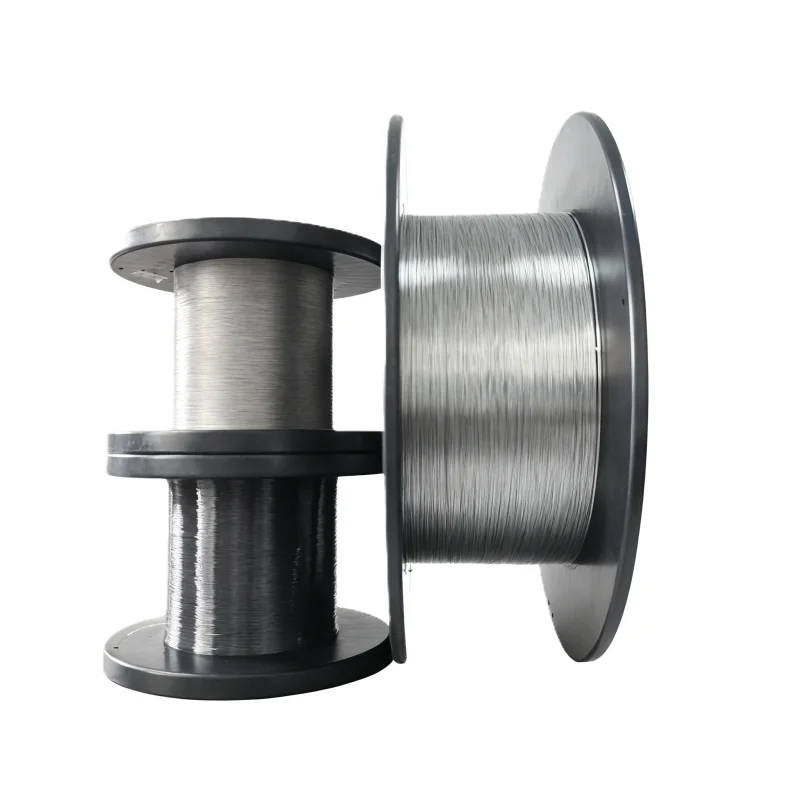
This article examines precisely why phase transition stability is the defining factor in actuator success when nickel titanium wire is involved. We will explore the mechanics of phase transformation, the consequences of instability, how material composition and processing affect transition quality, and what engineers and procurement professionals must consider when specifying nickel titanium wire for demanding actuator applications. Understanding these dynamics is essential for any team designing actuators intended for medical devices, aerospace systems, robotics, or industrial automation.
The Fundamentals of Phase Transition in Nickel Titanium Wire
How the Shape Memory Effect Drives Actuation
The actuation capability of nickel titanium wire is rooted in a reversible solid-state phase transformation. When cooled below its transformation temperature, the material shifts from a high-symmetry austenite phase to a lower-symmetry martensite phase. This shift allows the wire to be deformed and then recover its pre-programmed shape upon reheating — a behavior known as the shape memory effect. In actuator systems, this recovery generates a mechanical force that performs useful work, driving valves, closing grippers, or moving structural elements.
The transition temperatures — typically defined as martensite start (Ms), martensite finish (Mf), austenite start (As), and austenite finish (Af) — are not arbitrary values. They are engineered into the nickel titanium wire through precise control of the nickel-to-titanium ratio and thermomechanical processing. Even a fractional shift of one to two atomic percent in nickel content can shift transition temperatures by tens of degrees Celsius, fundamentally altering the actuator's operating window.
For an actuator to deliver reliable and predictable mechanical output, these transformation temperatures must remain stable across thousands of thermal cycles. If the transition onset drifts with repeated cycling, the actuator may fire at the wrong temperature, deliver inconsistent stroke, or fail to return fully to its original position. Phase transition stability, therefore, is not a secondary quality metric — it is the primary determinant of whether a nickel titanium wire actuator will meet its performance specification over its intended service life.
Austenite and Martensite: The Two Operating States
The austenitic state of nickel titanium wire is characterized by a cubic crystal structure that resists deformation and exhibits superelastic behavior at body or ambient temperatures. The martensitic state, by contrast, features a monoclinic crystal structure that is highly deformable, allowing the wire to absorb large strains without plastic damage. The ability to toggle reliably between these two states is what gives nickel titanium wire its unique actuator utility.
In practice, the transition between these states must occur sharply and repeatably. A broad or sluggish transition — where the wire contains a mixture of both phases across a wide temperature range — results in a spongy, unpredictable actuation response. Sharp transitions, achieved through proper alloy stoichiometry and controlled annealing, produce the clean, high-force, well-defined stroke that engineers depend on in precision actuator design. This is why material certification and phase characterization data are essential when sourcing nickel titanium wire for any actuator project.
The hysteresis between the heating and cooling transformation curves also matters significantly. A larger hysteresis means the wire must be heated significantly above the cooling transformation temperature to achieve full recovery, which can complicate thermal management in compact or fast-cycling actuator systems. Specifying nickel titanium wire with well-characterized hysteresis behavior allows engineers to design heating and cooling circuits that maintain phase transition stability across all operating conditions.
Why Phase Transition Instability Undermines Actuator Performance
Cyclic Degradation and Transformation Temperature Drift
One of the most well-documented failure modes in nickel titanium wire actuators is transformation temperature drift over repeated thermal cycles. When the wire is cycled repeatedly between its parent and product phases, dislocation networks accumulate in the microstructure. These dislocations act as obstacles to the coordinated lattice shear that underpins the phase transformation, causing the transformation temperatures to shift and the hysteresis to widen over time.
In a medical device actuator where a nickel titanium wire must open a stent or activate a surgical mechanism with precision, even a small upward drift in the austenite finish temperature can mean the device does not fully actuate at body temperature. In an aerospace application, where actuator response time is life-critical, transformation temperature drift can lead to delayed or incomplete actuation. These are not theoretical risks — they are documented failure modes that arise when phase transition stability is not treated as a core design and material selection criterion.
Manufacturers who subject nickel titanium wire to a training process — controlled pre-cycling under load before the component enters service — can significantly reduce subsequent drift. However, this only works effectively when the base material has good intrinsic phase transition stability. Training cannot compensate for poor alloy homogeneity or inconsistent thermomechanical processing. The foundation must be right before training can refine it.
Mechanical Fatigue Coupled with Phase Instability
Phase transition instability does not occur in isolation — it couples with mechanical fatigue in ways that accelerate overall degradation. As the transformation front moves through the nickel titanium wire cross-section during actuation, localized stress concentrations form at the interface between transforming and non-transforming regions. If the phase transformation is inconsistent across the wire diameter or along its length, these stress concentrations become more severe and more variable, dramatically increasing the probability of crack initiation.
In high-cycle actuator applications — such as robotic grippers that open and close thousands of times per day — this coupled fatigue-phase instability mechanism is the primary design concern. Engineers must specify nickel titanium wire that has been processed to ensure uniformity of transformation across the wire cross-section and along its length. Surface finish, inclusion content, and grain size all influence how uniformly the phase front propagates, making material quality documentation a non-negotiable requirement.
Standardized testing protocols, including differential scanning calorimetry (DSC) and constant-load cycling tests, provide the empirical data needed to assess phase transition stability before a nickel titanium wire is committed to an actuator design. Procurement teams should routinely request these test certificates alongside mechanical property data to ensure that the wire being sourced will maintain actuator performance throughout its intended service life.
Material and Processing Factors That Govern Phase Transition Stability
Alloy Composition and Homogeneity
The nickel-to-titanium ratio is the most sensitive compositional variable governing phase transition stability in nickel titanium wire. A nominal composition near 50.8 atomic percent nickel is typical for many actuator alloys, but the exact ratio must be tightly controlled throughout the melt and drawing process. Segregation during solidification can create compositional gradients along the wire length, producing zones with different transformation temperatures and causing the overall actuator response to smear across a broad temperature window rather than snap cleanly through a defined transition.
Ternary alloying additions — such as copper, iron, or chromium — are sometimes used to tune transformation temperatures or adjust hysteresis in nickel titanium wire. These elements must be uniformly distributed to avoid creating local phase instabilities. Copper additions, for instance, are known to narrow hysteresis and stabilize transformation behavior, but only when dissolved homogeneously in the lattice. Inhomogeneous distribution of ternary elements produces exactly the type of spatially variable transformation behavior that undermines actuator repeatability.
Suppliers who manufacture nickel titanium wire to ASTM F2063 standards provide a baseline assurance of compositional control, but procurement teams in demanding applications should go further — requesting lot-specific DSC data, transformation temperature certificates, and traceability documentation that allows performance to be correlated back to a specific production batch. This level of material documentation is standard practice in medical device and aerospace procurement and is increasingly expected in advanced robotics and industrial automation.
Thermomechanical Processing and Annealing Protocols
After alloying and initial forming, nickel titanium wire undergoes a series of cold-drawing and annealing steps that determine its final microstructure and, critically, the stability of its phase transformation behavior. Cold work introduces dislocations and internal stress that suppress transformation and increase hysteresis. Intermediate and final annealing steps relieve this stress, restore transformation sharpness, and set the microstructural state from which the wire will cycle in service.
The annealing temperature and time must be precisely controlled. Insufficient annealing leaves residual cold work that degrades phase transition stability from the outset. Excessive annealing causes grain growth that can reduce fatigue resistance and alter surface chemistry. The optimal annealing window for nickel titanium wire intended for actuator service is narrow, and achieving consistent results across production batches requires tight process control and in-process characterization.
Shape-setting — constraining the nickel titanium wire in its desired geometry during a final annealing step — also plays a role in phase transition stability. A well-executed shape-setting process establishes internal stress states that promote consistent transformation front propagation during subsequent actuation cycles. Poorly executed shape-setting, by contrast, can introduce asymmetric residual stresses that cause the transformation to initiate preferentially at certain points along the wire, creating the kind of localized phase instability that accelerates fatigue and reduces actuator lifespan.
Specifying Nickel Titanium Wire for Phase-Stable Actuator Applications
Key Parameters Engineers Must Define
When specifying nickel titanium wire for an actuator application where phase transition stability is paramount, engineers must define several interconnected parameters rather than relying on nominal material designations alone. The austenite finish temperature (Af) must be specified within a tight tolerance relative to the expected operating temperature range. If Af is too close to the maximum operating temperature, thermal variability in the application environment can push the wire into a mixed-phase state during actuation, degrading output consistency.
The actuation stroke, recovery force, and number of design cycles must all be specified together, because they collectively determine the strain and stress demands placed on the nickel titanium wire during each transition. High-strain applications accelerate transformation temperature drift, meaning that phase transition stability must be more stringently characterized for actuators with large strokes than for those with modest displacements. This interdependency between mechanical demands and phase stability must be reflected in the material specification and validated through application-specific testing.
Wire diameter is another critical specification parameter. Thinner nickel titanium wire heats and cools more rapidly, enabling faster actuation cycles, but also concentrates stress more severely during bending and coiling. The phase transition behavior of thin wire can differ from that of larger-diameter product due to surface-to-volume ratio effects on oxidation state and cooling rate during processing. Specifications should therefore include diameter-specific test data rather than assuming that behavior scales linearly from larger-diameter test material.
Validation Testing and Lifecycle Assessment
No specification document is complete without a defined validation testing protocol. For nickel titanium wire in actuator service, the minimum validation program should include DSC-based transformation temperature characterization at incoming inspection, constant-load cycling tests to a fraction of the design life with interim transformation temperature checks, and fractographic analysis of any wire specimens that reach end-of-life to identify the dominant failure mode. This information feeds directly into design refinement and supplier qualification decisions.
Accelerated lifecycle testing — cycling the nickel titanium wire at elevated temperature or higher strain amplitudes than the design condition — provides early evidence of phase transition stability or instability that would otherwise only manifest after millions of cycles in service. While accelerated testing cannot perfectly replicate service conditions, it is a practical screening tool that allows design teams to identify problematic material lots before they reach production. Teams with the most reliable actuator records routinely combine accelerated cycling data with statistical process control of transformation temperature to create a continuous feedback loop between material performance and actuator field reliability.
Engaging suppliers who specialize in nickel titanium wire for actuator-grade applications, and who can provide application-specific material support alongside standard product documentation, is one of the most effective strategies for managing phase transition stability risk across a product's full design and manufacturing lifecycle. The material is not a commodity, and treating it as one is a leading root cause of actuator underperformance in the field.
FAQ
What causes transformation temperature drift in nickel titanium wire actuators?
Transformation temperature drift in nickel titanium wire is primarily caused by dislocation accumulation in the microstructure during repeated thermal cycling. As the wire transitions between austenite and martensite phases, lattice defects accumulate that impede the coordinated crystal shear responsible for transformation. This raises the energy barrier for the phase change, shifting transformation onset temperatures and broadening the transformation range. Poor alloy homogeneity and insufficient annealing during processing accelerate this drift, while well-trained, phase-stable nickel titanium wire exhibits minimal drift over millions of cycles.
How does nickel content affect the phase transition stability of nickel titanium wire?
Nickel content is the single most sensitive compositional variable in nickel titanium wire. Even a change of 0.1 atomic percent in nickel shifts the austenite finish temperature by several degrees Celsius. Higher nickel content depresses transformation temperatures, while lower nickel content raises them. Crucially, compositional gradients along or across the wire cross-section — caused by poor melt homogeneity or inconsistent drawing — create zones with different transformation temperatures, undermining phase transition stability and producing variable actuator output. This is why tight compositional control and lot-specific DSC certification are essential for actuator-grade nickel titanium wire.
Can nickel titanium wire be retrained to restore phase transition stability after degradation?
In most actuator applications, retraining of nickel titanium wire once it is integrated into a device is not practical or advisable. The training process involves controlled cycling under load at specific temperatures, which is straightforward for raw wire but difficult to execute on an assembled component without risking damage to surrounding elements. Prevention is the correct strategy: specifying wire with inherent phase transition stability, applying appropriate pre-service training to the wire before assembly, and designing the actuator to operate within strain levels that preserve stability over the required design life.
What testing standards apply to phase transition characterization of nickel titanium wire?
ASTM F2063 is the primary standard governing the chemical composition and basic mechanical properties of nickel titanium wire for medical and related applications, but it does not fully specify phase transition stability requirements. Differential scanning calorimetry (DSC) per ASTM F2004 is the standard method for measuring transformation temperatures and hysteresis in nickel titanium wire. For actuator lifecycle assessment, engineers often supplement DSC data with constant-force or constant-strain cycling protocols developed in-house or derived from application-specific qualification standards in aerospace or medical device frameworks. Requesting supplier compliance with these test methods is a best practice for any phase-critical nickel titanium wire procurement.
Table of Contents
- The Fundamentals of Phase Transition in Nickel Titanium Wire
- Why Phase Transition Instability Undermines Actuator Performance
- Material and Processing Factors That Govern Phase Transition Stability
- Specifying Nickel Titanium Wire for Phase-Stable Actuator Applications
-
FAQ
- What causes transformation temperature drift in nickel titanium wire actuators?
- How does nickel content affect the phase transition stability of nickel titanium wire?
- Can nickel titanium wire be retrained to restore phase transition stability after degradation?
- What testing standards apply to phase transition characterization of nickel titanium wire?