
 EN
EN



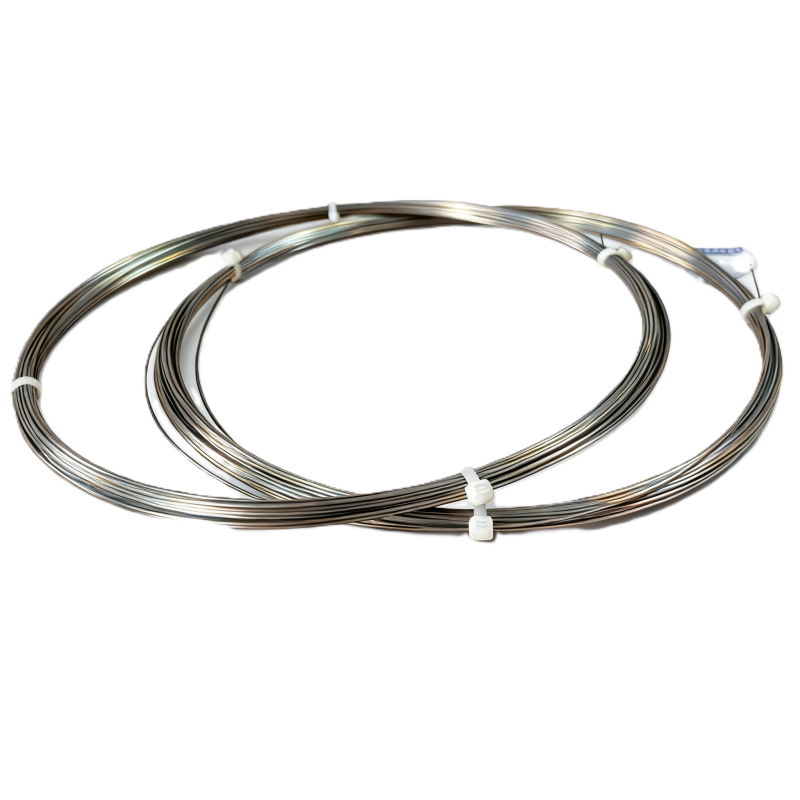
In industrial and medical procurement, supply chain reliability is not a luxury — it is a fundamental requirement. When sourcing SMA wire, the type of manufacturer you partner with has a direct and measurable impact on delivery consistency, material quality, and long-term production planning. Full-chain manufacturers — those who control every stage from raw alloy production to finished wire drawing — have emerged as the most dependable source for this specialized material.
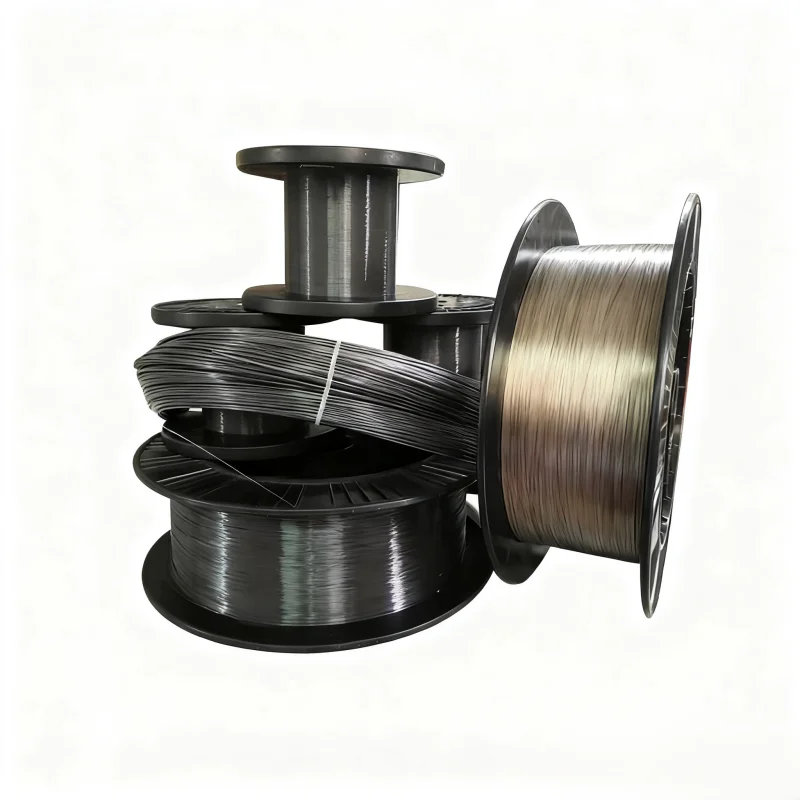
The question of why full-chain manufacturers provide a more stable supply of SMA wire is not simply about scale or capacity. It is about structural control — the ability to manage every variable that affects output, from the purity of nickel-titanium alloy inputs to the precision of final wire dimensions. Understanding this distinction helps procurement engineers, product designers, and supply chain managers make better sourcing decisions for applications where SMA wire performance cannot be compromised.
What Full-Chain Manufacturing Means for SMA Wire Production
Defining the Full-Chain Model in Specialty Alloy Manufacturing
A full-chain manufacturer of SMA wire controls the entire production sequence internally. This typically begins with alloy melting and composition control, proceeds through hot and cold working stages, and concludes with precision wire drawing, heat treatment, and surface finishing. Each of these stages directly influences the functional properties of the final SMA wire, including its transformation temperature range, superelastic behavior, and fatigue resistance.
In contrast, a trading company or partial manufacturer typically sources semi-finished material from external suppliers and performs only the final processing steps. This creates dependency on third-party schedules, quality standards, and inventory levels — all of which introduce variability into the supply chain. For SMA wire, where even minor compositional deviations can shift transformation temperatures by several degrees, this variability carries real technical risk.
Full-chain control means that when a customer specifies a particular nickel-to-titanium ratio or a specific austenite finish temperature, the manufacturer can trace and verify that specification across every production stage. This traceability is not possible when raw material is sourced externally and processed by a separate entity.
How Vertical Integration Reduces External Dependency
One of the most significant supply stability advantages of full-chain manufacturers is the elimination of external supplier dependencies. When a manufacturer produces its own nickel-titanium master alloy, it is not subject to the lead times, minimum order quantities, or quality inconsistencies of upstream raw material suppliers. This independence becomes especially valuable during periods of raw material scarcity or global logistics disruption.
For buyers of SMA wire, this translates into more predictable lead times and fewer unexpected supply interruptions. A full-chain manufacturer can adjust production scheduling internally, prioritize specific alloy batches, and respond to urgent orders without waiting for external material deliveries. This agility is structurally impossible for manufacturers who depend on outside sources for their alloy inputs.
Vertical integration also allows full-chain manufacturers to maintain larger and more strategically managed raw material inventories. Because they control the upstream process, they can plan alloy production in advance of customer demand, creating a buffer that absorbs market fluctuations without passing delays downstream to the buyer.
Quality Consistency as a Driver of Supply Stability
The Link Between Process Control and Reliable Output
Supply stability for SMA wire is not only about having material available — it is equally about having material that consistently meets specification. A shipment of SMA wire that fails incoming inspection is functionally equivalent to a delayed shipment. Full-chain manufacturers achieve higher batch-to-batch consistency because they control the variables that matter most: alloy composition, thermomechanical processing parameters, and heat treatment protocols.
When the same team manages alloy melting and wire drawing, process knowledge accumulates in a unified way. Engineers understand how upstream decisions affect downstream properties, and they can make coordinated adjustments when deviations are detected. This integrated process knowledge is one of the most underappreciated advantages of full-chain SMA wire production.
For end users in medical device manufacturing, aerospace actuation, or precision eyewear, consistent SMA wire properties are not optional. Devices are designed around specific transformation temperatures and mechanical responses. If the SMA wire supplied in month six behaves differently from the wire supplied in month one, the entire qualification process may need to be repeated — a costly and time-consuming outcome that full-chain sourcing helps prevent.
In-House Testing and Certification Capabilities
Full-chain manufacturers of SMA wire typically maintain in-house testing laboratories equipped to verify transformation temperatures using differential scanning calorimetry, measure mechanical properties under controlled conditions, and confirm dimensional tolerances with precision metrology equipment. This internal testing capability means that quality verification happens before shipment, not after arrival at the customer's facility.
When a manufacturer controls both production and testing, the feedback loop between process adjustment and quality confirmation is tight and fast. Deviations detected during in-process testing can be corrected before they propagate through an entire production run. This is a structural quality advantage that directly supports supply reliability, because fewer batches are rejected, reworked, or delayed.
Buyers who require material certifications, traceability documentation, or compliance with specific standards benefit significantly from this integrated approach. Full-chain manufacturers can provide documentation that traces the SMA wire from raw alloy composition through every processing stage, offering a level of transparency that fragmented supply chains cannot match.
Responsiveness to Custom Specifications and Volume Changes
Handling Non-Standard SMA Wire Requirements
Many industrial and medical applications require SMA wire in non-standard dimensions, specific transformation temperature windows, or with particular surface conditions. Full-chain manufacturers are structurally better positioned to fulfill these custom requirements because they can modify process parameters at any stage of production without coordinating with external suppliers.
For example, if a customer needs SMA wire with a transformation temperature shifted by a few degrees to accommodate a specific operating environment, a full-chain manufacturer can adjust the alloy composition at the melting stage and then process the material through its own wire drawing and heat treatment lines. A partial manufacturer or trading company would need to source a different alloy grade externally, adding lead time and uncertainty to the customization process.
This responsiveness to custom specifications is a form of supply stability that is often overlooked. The ability to reliably fulfill non-standard orders — and to do so repeatedly with consistent results — is as important as the ability to deliver standard catalog items on time. Full-chain control makes both possible.
Scaling Output Without Compromising Delivery Schedules
When production volumes increase — whether due to a new product launch, a seasonal demand spike, or a long-term contract ramp-up — full-chain manufacturers can scale SMA wire output by adjusting their own internal capacity. They are not constrained by the production schedules or capacity limits of external alloy suppliers.
This scalability is a critical supply stability factor for buyers who anticipate growth. Committing to a supplier who can only scale by sourcing more raw material externally introduces a bottleneck that may not be visible during initial qualification but becomes apparent when volumes increase. Full-chain manufacturers eliminate this hidden constraint.
Additionally, full-chain manufacturers can often offer more flexible minimum order quantities because they are not bound by the minimum batch sizes imposed by upstream alloy suppliers. This flexibility benefits both small-volume specialty buyers and high-volume industrial customers, making the full-chain model adaptable across a wide range of procurement scenarios.
Long-Term Partnership Value and Supply Chain Risk Reduction
Building Predictable Procurement Relationships
Supply chain stability is ultimately about predictability — the confidence that the SMA wire you need will be available, on specification, and on time, consistently over months and years. Full-chain manufacturers support this predictability by offering a single point of accountability for every aspect of the product. When an issue arises, there is no ambiguity about which party in the supply chain is responsible.
This single-source accountability simplifies supplier qualification, audit processes, and corrective action procedures. Procurement teams spend less time managing multi-party supply chains and more time focusing on product development and production optimization. For organizations operating under quality management systems such as ISO 13485 or AS9100, the auditability of a full-chain manufacturer is a significant compliance advantage.
Over time, a full-chain manufacturer also accumulates deep application knowledge about how its SMA wire performs in specific end uses. This knowledge can be shared with customers in the form of processing recommendations, design guidance, and proactive alerts about material behavior — adding value that goes beyond simple material supply.
Mitigating Geopolitical and Market Supply Risks
The global supply of nickel-titanium alloy, the base material for SMA wire, is subject to geopolitical factors, mining output variability, and commodity price fluctuations. Full-chain manufacturers who produce their own alloy are better insulated from these external pressures because they can manage their raw material inventory strategically and are not forced to purchase at spot market prices during supply crunches.
For buyers, this insulation translates into more stable pricing and more reliable availability during periods of market stress. A manufacturer who buys alloy on the open market is exposed to the same supply shocks as its customers, and may be unable to fulfill orders precisely when demand is highest. Full-chain control breaks this correlation between market disruption and supply failure.
As global supply chains continue to face pressure from logistics disruptions, trade policy changes, and raw material constraints, the structural advantages of full-chain SMA wire manufacturers become increasingly relevant. Organizations that prioritize supply chain resilience in their sourcing strategy will find that full-chain partnerships offer a measurable and durable risk reduction benefit.
FAQ
What makes SMA wire more difficult to source reliably than standard metal wire?
SMA wire is produced from a precise nickel-titanium alloy whose functional properties — including transformation temperature and superelastic behavior — are highly sensitive to compositional and processing variations. This means that supply reliability requires not just material availability but consistent quality across every batch. Standard metal wire does not carry the same sensitivity to upstream process variables, making SMA wire inherently more dependent on tightly controlled manufacturing conditions.
How does full-chain manufacturing affect the lead time for custom SMA wire orders?
Full-chain manufacturers can typically fulfill custom SMA wire orders faster than partial manufacturers because they do not need to source modified alloy grades from external suppliers. All process adjustments — including alloy composition changes, diameter modifications, and heat treatment variations — are handled internally, which compresses the development and production timeline significantly.
Is full-chain SMA wire manufacturing relevant for small-volume buyers?
Yes. Full-chain manufacturers often have more flexibility in minimum order quantities because they are not constrained by the batch size requirements of external alloy suppliers. Small-volume buyers benefit from this flexibility, and they also gain access to the same quality consistency and traceability documentation that large-volume customers receive — which is particularly important for medical device and precision instrument applications.
How can a buyer verify whether a manufacturer is truly full-chain for SMA wire production?
Buyers can verify full-chain capability by requesting a facility audit or a detailed process flow document that maps every production stage from alloy melting to finished wire. Asking for material traceability records that link the final SMA wire to specific alloy batches is another effective verification method. Manufacturers who can provide this documentation with transparency and consistency are demonstrating genuine full-chain control.
Table of Contents
- What Full-Chain Manufacturing Means for SMA Wire Production
- Quality Consistency as a Driver of Supply Stability
- Responsiveness to Custom Specifications and Volume Changes
- Long-Term Partnership Value and Supply Chain Risk Reduction
-
FAQ
- What makes SMA wire more difficult to source reliably than standard metal wire?
- How does full-chain manufacturing affect the lead time for custom SMA wire orders?
- Is full-chain SMA wire manufacturing relevant for small-volume buyers?
- How can a buyer verify whether a manufacturer is truly full-chain for SMA wire production?