
 EN
EN



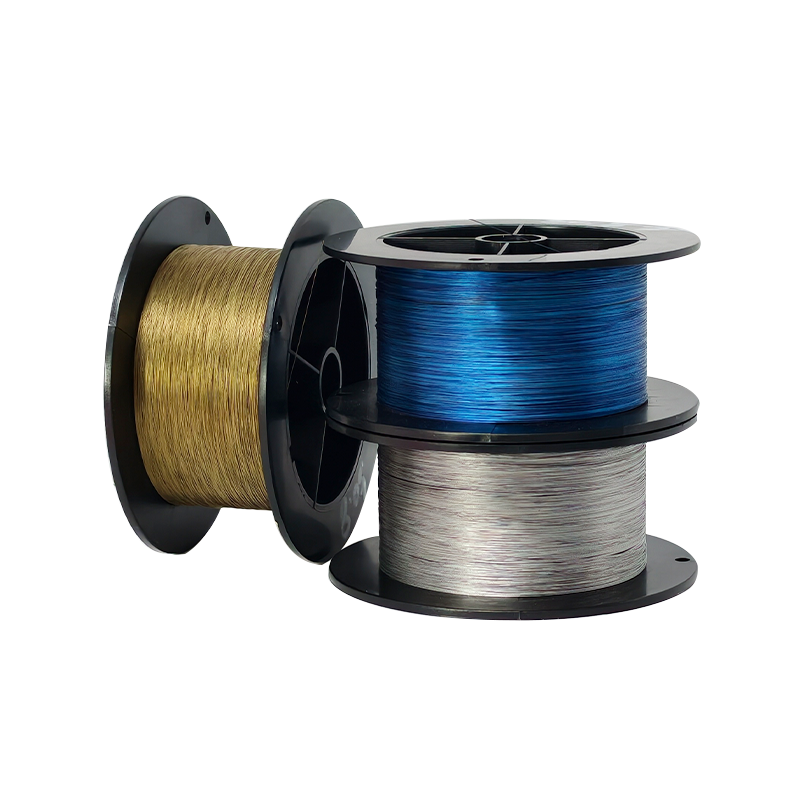
When engineers and medical device designers select materials for self-expanding stents, superelastic Nitinol consistently emerges as the dominant choice. The ability of superelastic Nitinol to undergo large elastic deformations and then recover its original shape without permanent damage makes it uniquely suited for devices that must be compressed during delivery and then expand reliably inside a vessel. No other commercially available metallic biomaterial replicates this combination of mechanical behavior, and that distinction is central to why superelastic Nitinol has become so deeply embedded in interventional cardiology and peripheral vascular therapy.
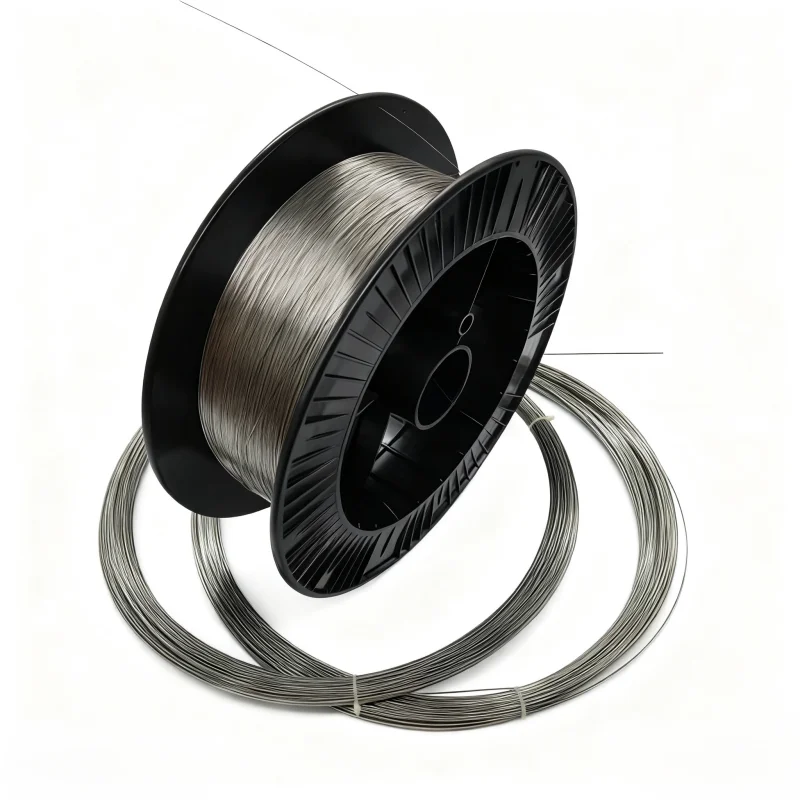
Understanding why superelastic Nitinol occupies this central role requires examining its metallurgical character, its mechanical performance under physiological conditions, and the practical engineering advantages it delivers. Superelastic Nitinol is a nickel-titanium alloy that exhibits a stress-induced martensitic transformation, allowing the material to tolerate strains that would permanently deform conventional metals. This article explores the specific reasons why superelastic Nitinol is not merely a good option but the core material architecture of modern self-expanding stent design.
The Metallurgical Foundation of Superelastic Nitinol
Stress-Induced Phase Transformation
The defining characteristic of superelastic Nitinol is its stress-induced martensitic transformation. When superelastic Nitinol is loaded mechanically at body temperature, its crystal structure shifts from the austenite phase to the martensite phase. This transformation absorbs strain energy without creating permanent dislocations in the material lattice. Once the applied stress is removed, superelastic Nitinol reverts spontaneously to its austenitic form, recovering strains of up to eight percent. Conventional stainless steel or cobalt-chromium alloys tolerate far less elastic strain before yielding permanently, which makes superelastic Nitinol the only practical metallic solution for stent geometries that must compress dramatically for catheter delivery.
Composition and Processing of Superelastic Nitinol
Superelastic Nitinol is composed of approximately equal atomic percentages of nickel and titanium, with the exact ratio carefully tuned to set the transformation temperature below body temperature. This precision ensures that superelastic Nitinol remains in its austenitic, superelastic state throughout the entire range of human physiological temperatures. Processing steps including cold drawing, shape-setting heat treatment, and surface finishing further optimize the mechanical and biocompatibility properties of superelastic Nitinol wire used in stent fabrication. Each processing decision directly influences how superelastic Nitinol will perform once deployed inside a living vessel under continuous cyclic loading from the heartbeat and respiratory movement.
Mechanical Advantages in Stent Performance
Constant Radial Force and Vessel Conformability
One of the most clinically significant properties of superelastic Nitinol is its plateau stress behavior. During deployment, superelastic Nitinol generates a relatively constant outward radial force across a wide range of diameters. This mechanical feature allows a superelastic Nitinol stent to conform to vessels of varying diameter without applying dangerously high or insufficient radial force at any point. For tortuous anatomies such as the superficial femoral artery or carotid artery, this conformability is not optional but essential. Rigid metallic stents would either fracture under bending or damage the vessel wall, whereas superelastic Nitinol accommodates anatomical curvature with controlled flexibility.
Fatigue Resistance Under Cyclic Loading
A stent implanted in the peripheral vasculature undergoes tens of millions of deformation cycles over its service life due to pulsatile blood flow and body movement. Superelastic Nitinol exhibits exceptional fatigue resistance at the small strain amplitudes typical of in-vivo loading. The reversible phase transformation mechanism that defines superelastic Nitinol means the material accommodates cyclic strain through a fundamentally different physical mechanism than conventional metals, which rely purely on elastic deformation. This structural advantage explains why superelastic Nitinol stents demonstrate significantly lower fracture rates in high-motion anatomies compared to stents made from alternative metallic alloys. For device manufacturers, superelastic Nitinol provides confidence in long-term mechanical durability that other materials simply cannot match.
Biocompatibility and Clinical Suitability
Surface Chemistry and Biological Response
Superelastic Nitinol develops a stable titanium oxide surface layer during manufacturing and finishing. This native oxide layer shields the underlying nickel content from direct biological contact, significantly reducing ion release into surrounding tissue. Regulatory and clinical data accumulated over decades of implantation experience confirm that properly processed superelastic Nitinol is well tolerated in vascular applications. The biocompatibility of superelastic Nitinol is not accidental but engineered through controlled surface treatments and quality manufacturing standards. Medical-grade superelastic Nitinol wire used in stent production must meet rigorous compositional and surface quality standards to ensure predictable in-vivo performance.
MRI Compatibility and Imaging Considerations
Superelastic Nitinol is considered MR conditional under standard clinical MRI operating parameters. Unlike ferromagnetic metals, superelastic Nitinol does not produce significant force or torque under typical MRI magnetic field strengths. This characteristic allows patients with implanted superelastic Nitinol stents to undergo MRI examinations with appropriate precautions, supporting post-procedural diagnostic imaging needs. Physicians value this aspect because follow-up imaging is essential for monitoring stent patency and vessel healing. The compatibility of superelastic Nitinol with modern imaging modalities extends its clinical utility beyond the implant procedure itself, reinforcing its position as the material of choice for long-term implantable vascular devices.
FAQ
What makes superelastic Nitinol different from shape memory Nitinol?
Superelastic Nitinol operates above its transformation temperature at body temperature, enabling stress-induced phase transformation and large elastic recovery without heating. Shape memory Nitinol requires a temperature change to trigger shape recovery. For stent applications, superelastic Nitinol is preferred because it functions purely through mechanical loading at body temperature, eliminating the need for any thermal activation during deployment.
How does superelastic Nitinol affect stent delivery through a catheter?
Superelastic Nitinol allows the stent to be compressed to a very small diameter for loading into a delivery catheter without causing permanent deformation. Once released from the catheter inside the target vessel, superelastic Nitinol drives the stent to re-expand to its programmed diameter through stress recovery. This deployment mechanism is direct, controllable, and does not require balloon inflation, which is a significant procedural advantage in tortuous or calcified vessels.
Is superelastic Nitinol used in other medical devices beyond stents?
Yes, superelastic Nitinol is widely used in guidewires, embolic protection filters, orthopedic staples, and surgical retrieval tools. The same superelastic Nitinol properties that benefit stent design, including large elastic recovery, fatigue resistance, and biocompatibility, are equally valuable across a broad range of minimally invasive and implantable medical devices. Its versatility makes superelastic Nitinol a foundational material in the medical device industry.