
 EN
EN



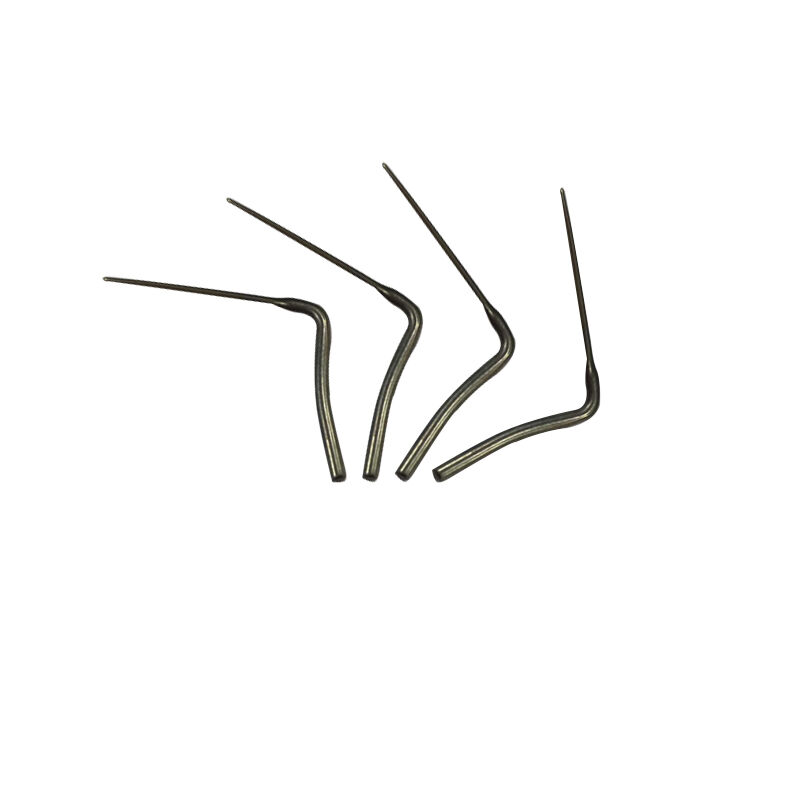
In the development of precision medical components, material intelligence is no longer a concept reserved for science fiction. nitinol wire has fundamentally changed how engineers and medical device designers approach the challenge of building components that must perform reliably inside the human body. With its unique capacity to remember and return to a predetermined shape, nitinol wire enables entirely new mechanical behaviors that passive metals simply cannot replicate. Understanding how to leverage one-way and two-way memory effects in nitinol wire is essential for anyone designing catheters, stents, guidewires, orthopedic anchors, or minimally invasive surgical tools.
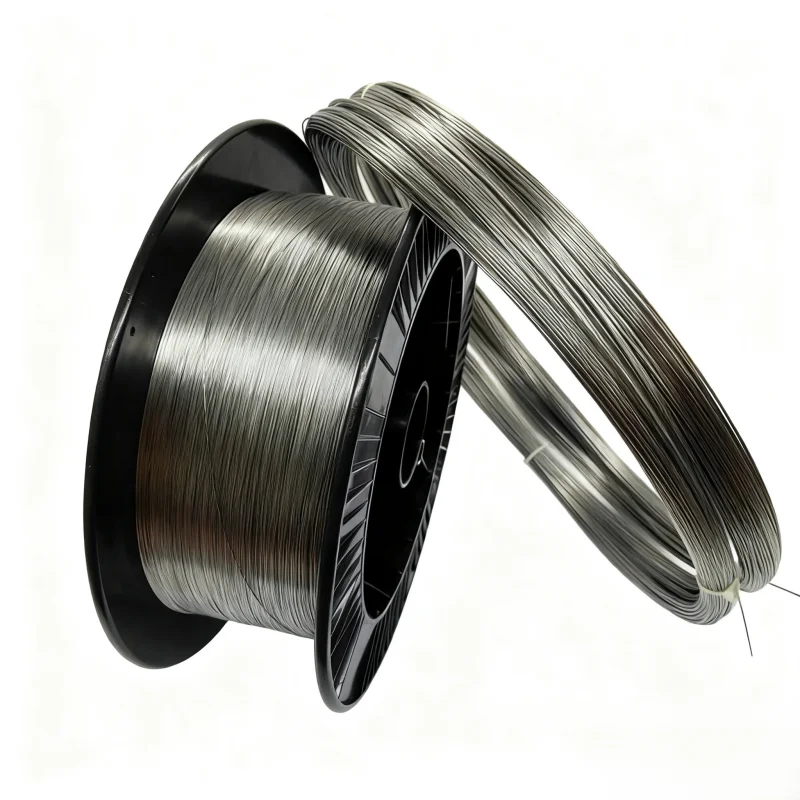
The practical application of nitinol wire in medical devices is deeply tied to which memory mode is programmed into the material and how that mode interacts with the specific deployment environment. One-way memory and two-way memory represent two fundamentally different mechanical contracts between the material and the device. Choosing the wrong mode can result in a component that fails to actuate, over-actuates at body temperature, or behaves unpredictably under cyclic loading. This article breaks down each memory mode, explains how they are trained into nitinol wire, and guides engineers through the design decisions required to use them effectively in precision medical applications.
The Metallurgical Basis of Memory in Nitinol Wire
Phase Transformation and Shape Recovery
Nitinol wire derives its memory behavior from a reversible solid-state phase transformation between two crystalline structures: the austenite phase, which is stable at higher temperatures, and the martensite phase, which is stable at lower temperatures. When nitinol wire is deformed in its martensitic state, the crystal lattice accommodates the strain through a process called twinning rather than through permanent dislocation. This is why the deformation can be fully reversed when heat is applied and the material reverts to austenite.
The transformation temperatures in nitinol wire — most critically the austenite finish temperature, or Af — determine at what point shape recovery occurs. In medical-grade nitinol wire conforming to ASTM F2063 standards, Af is typically engineered to fall just below or at body temperature, allowing the wire to deploy or actuate in response to the thermal environment inside the patient. This precise thermal tuning is what makes nitinol wire so valuable for endovascular devices and deployable structural components.
The grain structure, nickel-to-titanium ratio, and thermomechanical processing history all influence where these transformation temperatures are set. Even minor compositional shifts — sometimes less than 0.1 atomic percent — can shift the Af by several degrees Celsius. Medical device engineers working with nitinol wire must therefore source materials with tightly controlled chemistry and work closely with wire manufacturers to validate transformation temperatures before building them into final component designs.
Superelasticity as a Related but Distinct Behavior
Before exploring one-way and two-way memory in depth, it is important to distinguish shape memory from superelasticity, since both behaviors originate from the same phase transformation in nitinol wire. Superelasticity — also called pseudoelasticity — occurs when nitinol wire is used at temperatures above its Af, meaning it is in the fully austenitic state at room and body temperature. In this regime, mechanical stress alone can induce a temporary martensite phase, which reverts when the stress is removed, allowing the wire to recover strains of up to eight percent without permanent deformation.
Superelastic nitinol wire is the dominant form used in cardiovascular stents, intracranial flow diverters, and guidewires because it offers exceptional flexibility and kink resistance at body temperature without requiring any thermal trigger. Shape memory behavior, by contrast, involves a thermal trigger. Understanding this distinction is critical because selecting the wrong regime for a given component can cause it to behave in ways that are neither expected nor safe in a clinical environment.
One-Way Memory in Precision Medical Components
The Mechanism and Training of One-Way Memory
One-way memory is the classical and most widely used memory mode in nitinol wire. In this mode, the wire is trained to remember a single shape — its high-temperature austenite form. The material is constrained in the desired shape and subjected to a heat treatment process that fixes the memory. After cooling, the nitinol wire can be deformed freely in its martensitic state, but when heated above the Af temperature, it will recover only the trained shape and will not spontaneously return to the deformed state upon re-cooling.
Training nitinol wire for one-way memory involves shape-setting it at elevated temperatures, typically between 450°C and 550°C, while constrained in the target geometry. The duration of heat treatment and the exact temperature interact to determine the sharpness of the shape recovery and the stability of the memory over repeated thermal cycles. Over-annealing can widen the transformation hysteresis and reduce recovery stress, while under-annealing can leave residual stresses that compromise geometric precision. Medical component engineers must balance these parameters carefully during process validation.
The practical implication for precision medical components is that one-way nitinol wire can be packaged in a deformed, low-profile state at room temperature and then deploy autonomously when exposed to body heat. Self-expanding stents, umbrella-type occluders, and anastomosis clips are all examples where one-way nitinol wire delivers reliable, single-event shape recovery. The simplicity of this mechanism reduces design complexity and makes it well suited for components that need to deploy once and remain in the final shape indefinitely.
Design Strategies for One-Way Memory Applications
When designing precision medical components around one-way nitinol wire, the trained shape should represent the final functional geometry — the shape the component needs to maintain in the body. The deformed, low-temperature shape is essentially a temporary packaging or delivery configuration. The designer must ensure that the deformation required during packaging does not exceed the reversible strain limits of nitinol wire, which is generally considered to be around six to eight percent for well-processed medical-grade material.
Constraint geometry during delivery also needs careful thought. For catheter-delivered devices, the nitinol wire must be constrained within a sheath that can be reliably withdrawn at the deployment site. The constraint force required to hold a one-way memory component in its deformed state increases with the cross-sectional area of the nitinol wire and with the magnitude of the strain. Engineers must verify that the delivery system can maintain constraint without exceeding friction or force limits that could compromise catheter trackability.
Post-deployment, one-way nitinol wire provides excellent dimensional stability since no further thermal actuation is expected. This makes it well suited for implants that must maintain their geometry under long-term physiological loading. However, it is critical to confirm that body temperature reliably exceeds the Af of the specific nitinol wire batch being used, particularly for peripheral vascular devices that may be implanted in limbs where local tissue temperature can vary significantly from core body temperature.
Two-Way Memory in Precision Medical Components
The Mechanism and Training of Two-Way Memory
Two-way memory is a more advanced and technically demanding behavior that can be induced in nitinol wire through a conditioning process known as thermomechanical training. Unlike one-way memory, two-way memory allows the wire to remember and actively switch between two distinct shapes — one at high temperature and one at low temperature — without any external mechanical constraint. The material itself stores the information for both states through anisotropic internal stresses accumulated during the training process.
Training nitinol wire for two-way memory typically involves repeated cycling between the deformed low-temperature shape and the recovered high-temperature shape under controlled thermal conditions. Each cycle reinforces the preferential martensitic variants that correspond to the trained low-temperature geometry. A common training protocol involves constrained cooling — holding the nitinol wire in the desired martensite shape while cooling through the transformation range — repeated over many cycles until the two-way effect reaches a stable output strain.
The achievable two-way strain in medical-grade nitinol wire is typically lower than the one-way recovery strain, and the behavior tends to degrade more quickly under fatigue cycling compared to one-way memory. These limitations mean that two-way nitinol wire is best suited for applications where the cycling demands are moderate and where the ability to actuate in both directions thermally — or in response to body temperature changes — offers a functional advantage that cannot be achieved with one-way memory or superelasticity.
Medical Applications That Benefit from Two-Way Memory
The most compelling use cases for two-way nitinol wire in precision medical components are those where reversible, thermally driven actuation is mechanically useful. Temperature-activated surgical tools that must open and close in response to heating and cooling during an endoscopic procedure represent one such class. Actuating forceps, retrieval baskets, and sphincter prosthetics have all been explored using two-way nitinol wire because the material's ability to cycle autonomously between two configurations can reduce or eliminate the need for mechanical linkages or external actuators.
In orthopedic and spinal applications, two-way nitinol wire has been investigated for staples and clips that can be inserted in a relaxed state, then tighten at body temperature to compress bone fragments or tissue, and potentially loosen again if required for revision surgery under controlled cooling. This thermal reversibility is a significant clinical advantage in certain procedures where permanent fixation is not always the desired outcome. However, the long-term stability of two-way behavior under in vivo loading conditions must be rigorously validated before clinical adoption.
It is also worth noting that two-way nitinol wire requires more sophisticated quality controls and process documentation than one-way variants. The training protocol must be precisely reproducible to ensure batch-to-batch consistency, and the trained behavior must be characterized in terms of both actuation strain and actuation force across the expected temperature range. Medical device manufacturers should integrate this characterization into their incoming inspection and process validation protocols to ensure regulatory compliance.
Selecting Between One-Way and Two-Way Memory for a Given Component
Matching Memory Mode to Functional Requirements
The choice between one-way and two-way memory in nitinol wire should be driven entirely by the functional requirements of the component, not by material availability or manufacturing convenience. One-way memory is the right choice when the device is intended to perform a single, permanent deployment event — when it needs to go from a compact delivery state to a fixed functional geometry and stay there. Two-way memory is appropriate only when the component must reversibly transition between two geometries in response to thermal changes, and when the design can tolerate the lower output strain and reduced fatigue life that come with this mode.
For most commercially established precision medical devices — cardiovascular stents, vena cava filters, septal occluders, and endovascular grafts — one-way nitinol wire remains the standard because its behavior is well characterized, its manufacturing process is highly mature, and its long-term implant performance is supported by extensive clinical data. Regulatory bodies including the FDA and CE authorities are also more familiar with one-way memory applications, which can simplify the regulatory pathway for new devices using this mode.
Two-way memory applications are more likely to find acceptance in novel device categories where existing technologies are inadequate and where the thermally reversible actuation provides a genuinely differentiated clinical benefit. In these cases, the development team must invest in more extensive material characterization, training protocol validation, and fatigue testing to demonstrate biocompatibility, mechanical reliability, and repeatable performance across the intended clinical temperature range. The investment is justified when the functional need is clear and the competitive landscape favors differentiated technology.
Critical Considerations for ASTM F2063 Compliance
Both one-way and two-way memory applications in medical devices require nitinol wire that meets the compositional and microstructural requirements of ASTM F2063, the industry-standard specification for medical-grade nickel-titanium shape memory alloys. This standard sets limits on elemental impurities — particularly oxygen, carbon, and nitrogen — that can form inclusions and compromise fatigue performance. Inclusions are a primary initiation site for crack formation in nitinol wire under cyclic loading, making impurity control critical for devices that experience repeated mechanical stress in vivo.
Medical device engineers should request material certifications and traceability documentation from nitinol wire suppliers confirming compliance with ASTM F2063, along with independent test data for transformation temperatures measured by differential scanning calorimetry. When programming either memory mode into the nitinol wire, the shape-setting or training process must not introduce contamination or surface oxidation that could compromise biocompatibility or fatigue resistance. Clean room or inert atmosphere processing environments are strongly recommended for medical-grade nitinol wire heat treatment.
Process Validation and Fatigue Life Considerations
Establishing Reliable Training Protocols
For both memory modes, process validation is the bridge between material capability and device performance. When working with one-way nitinol wire, the shape-setting protocol — temperature, time, and fixturing design — must be validated to confirm that the target Af is achieved and that the recovery geometry meets dimensional tolerances. Variations in furnace temperature uniformity, wire surface condition, and fixturing material can all introduce batch-to-batch variation that compromises consistency in a regulated manufacturing environment.
For two-way nitinol wire, the training protocol must be validated to confirm that the two-way effect is stable after the specified number of training cycles, that the low-temperature and high-temperature shapes both fall within tolerance, and that the actuation force is sufficient for the intended application. Accelerated aging studies under thermal cycling can help predict long-term stability. Statistical process control methods should be applied to training data to detect drift over production runs and trigger investigation before non-conforming material reaches device assembly.
Fatigue Testing for In Vivo Cyclic Loading
Nitinol wire in precision medical components is frequently subjected to cyclic mechanical loading in vivo — from cardiac pulsatility, respiratory motion, musculoskeletal movement, or blood pressure variation. The fatigue behavior of nitinol wire is strongly influenced by the memory mode, the mean strain, the strain amplitude, and the material's inclusion content. High-cycle fatigue testing using rotary beam or displacement-controlled test rigs is the standard method for generating the strain-life (ε-N) data needed to validate design safety margins.
One-way nitinol wire components in a deployed, superelastic operating regime generally show excellent fatigue resistance, with endurance limits reported in the range of 0.5 to 1.0 percent strain amplitude for high-purity material. Two-way trained nitinol wire may show lower fatigue resistance due to the internal stresses introduced during training, making careful fatigue characterization essential before finalizing a two-way memory design for a device that will experience cyclic in vivo loading. Designers should build safety factors into the strain amplitude budget and verify performance across the full range of expected in vivo loading conditions.
FAQ
What is the difference between one-way memory and superelasticity in nitinol wire?
One-way memory in nitinol wire involves a thermally triggered shape recovery from a deformed martensite phase to a trained austenite shape when heated above the Af temperature. Superelasticity occurs when nitinol wire is already in its austenite phase at body or room temperature and recovers large strains elastically when mechanical stress is removed, without requiring any thermal trigger. Both behaviors originate from the same phase transformation, but they operate in different temperature regimes and serve different functional roles in medical device design.
How many times can two-way trained nitinol wire be cycled before it loses its memory effect?
The fatigue life of two-way trained nitinol wire depends heavily on the training protocol, the strain amplitude of the two-way effect, the material purity, and the operating conditions. In general, well-trained medical-grade nitinol wire can sustain tens of thousands of thermal actuation cycles before significant degradation of the two-way strain output occurs, but this must be verified experimentally for each specific training protocol and application. For devices intended for long-term implantation with frequent thermal cycling, extended fatigue testing is mandatory during design validation.
Can nitinol wire be re-trained if the original memory set is no longer suitable for a new device design?
In principle, nitinol wire can be re-annealed and re-trained to a new shape, but this process introduces additional thermomechanical history that may affect transformation temperatures, recovery stress, and fatigue life. For precision medical components, re-training is generally not recommended as it complicates material traceability and process validation. Medical device manufacturers are advised to source nitinol wire in a blank or annealed condition and perform the shape-setting or training process as part of a documented and validated manufacturing step to ensure consistent and reproducible results.
What surface treatments are recommended for nitinol wire used in implantable medical components?
Medical-grade nitinol wire used in implantable components typically undergoes electropolishing to remove surface oxides and create a smooth, corrosion-resistant titanium oxide passive layer. This surface treatment improves biocompatibility, reduces nickel ion release rates, and enhances fatigue resistance by removing surface defects that could initiate cracks. After any heat treatment step — including shape-setting or two-way memory training — the surface should be inspected and, if necessary, re-treated to restore the optimal passive layer before the component proceeds to final device assembly and sterilization.
Table of Contents
- The Metallurgical Basis of Memory in Nitinol Wire
- One-Way Memory in Precision Medical Components
- Two-Way Memory in Precision Medical Components
- Selecting Between One-Way and Two-Way Memory for a Given Component
- Process Validation and Fatigue Life Considerations
-
FAQ
- What is the difference between one-way memory and superelasticity in nitinol wire?
- How many times can two-way trained nitinol wire be cycled before it loses its memory effect?
- Can nitinol wire be re-trained if the original memory set is no longer suitable for a new device design?
- What surface treatments are recommended for nitinol wire used in implantable medical components?