
 EN
EN



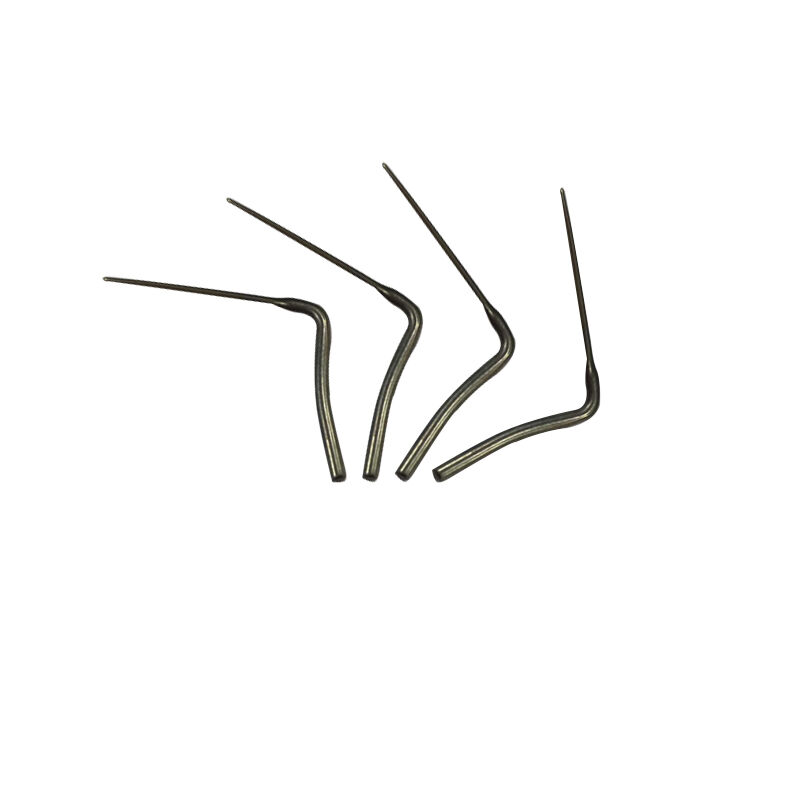
When engineers and procurement specialists evaluate materials for high-precision medical devices, aerospace components, or advanced actuator systems, the source of the material matters as much as the material itself. Nitinol SMA — the nickel-titanium shape memory alloy renowned for its superelastic behavior and thermal responsiveness — is a material where manufacturing depth directly determines functional performance. Not all suppliers offer the same level of control over the alloy's properties, and the gap between a trading intermediary and a full-process manufacturer is not merely operational. It is measurable in the final product's reliability, consistency, and application suitability.
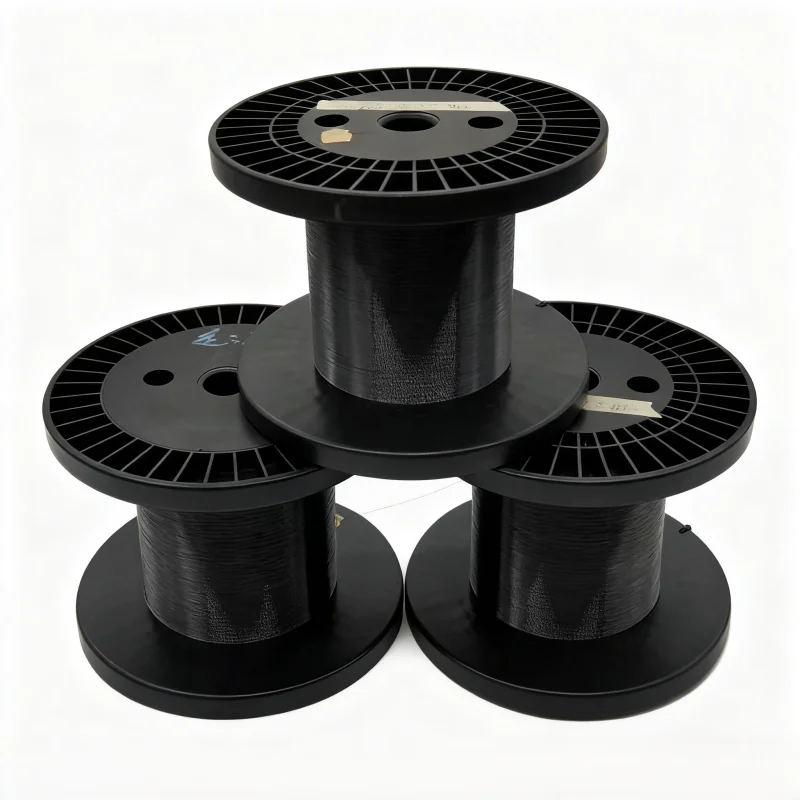
Understanding why full-process manufacturers consistently deliver higher performance Nitinol SMA requires a close look at what happens at each stage of production — from raw alloy formulation through melting, drawing, heat treatment, and final finishing. Each of these stages introduces variables that either enhance or compromise the alloy's shape memory effect, superelasticity, fatigue resistance, and biocompatibility. When a single manufacturer controls every one of these stages, the result is a level of traceability, precision, and optimization that fragmented supply chains simply cannot replicate.
What Full-Process Manufacturing Actually Means for Nitinol SMA
Vertical Integration from Alloy Composition to Finished Wire
Full-process manufacturing in the context of Nitinol SMA means that one facility or organization controls the entire production chain — starting from the precise blending of nickel and titanium raw materials, through vacuum induction melting or vacuum arc remelting, followed by hot and cold working, wire drawing, and final heat treatment. This is fundamentally different from a distributor who purchases semi-finished rod or wire from a third-party smelter and performs only downstream processing or resale.
The nickel-to-titanium ratio in Nitinol SMA is extraordinarily sensitive. A deviation of even 0.1 atomic percent in nickel content can shift the alloy's transformation temperature by several degrees Celsius. For medical guidewires, stents, or actuator springs where the transition temperature must fall within a precise physiological or mechanical range, this level of compositional control is non-negotiable. Full-process manufacturers who perform their own melting can adjust and verify this ratio at the source, rather than accepting whatever variance exists in purchased stock.
This vertical integration also means that when a customer requires a custom transformation temperature, a specific austenite finish temperature, or a tailored superelastic plateau stress, the full-process manufacturer can engineer those properties from the melt stage forward. Intermediaries working with pre-made stock have no such capability — they can only select from what is available, not design what is needed.
Process Continuity and Its Effect on Microstructural Consistency
Nitinol SMA derives its unique properties from a reversible martensitic phase transformation that is highly sensitive to microstructural uniformity. Grain size, inclusion content, oxide distribution, and residual stress all influence how reliably and repeatedly the alloy transforms between its austenite and martensite phases. When production is fragmented across multiple suppliers — one for melting, another for drawing, another for heat treatment — each handoff introduces the risk of inconsistent thermal history, surface contamination, or mechanical damage that disrupts microstructural integrity.
A full-process manufacturer maintains a continuous and documented thermal and mechanical history for every batch of Nitinol SMA it produces. The drawing schedules, intermediate annealing temperatures, and final shape-setting heat treatments are all designed as an integrated system rather than as isolated steps performed by parties with no visibility into what came before or after. This continuity is what allows the manufacturer to guarantee tight tolerances on transformation temperatures, plateau stresses, and fatigue life — properties that are the direct result of cumulative process decisions, not just final inspection.
For applications governed by standards such as ASTM F2063 — the standard specification for wrought nickel-titanium shape memory alloys for medical devices — this process continuity is not just a quality preference. It is a compliance requirement. Full-process manufacturers who operate within this standard from melt to finish are far better positioned to provide the documentation, traceability, and lot-to-lot consistency that medical device OEMs require for regulatory submissions.
How Melting and Alloy Control Drive Downstream Nitinol SMA Performance
The Critical Role of Vacuum Melting in Nitinol SMA Quality
The melting stage is where the performance potential of Nitinol SMA is either established or compromised. Nickel and titanium are both highly reactive at elevated temperatures, and titanium in particular has a strong affinity for oxygen, nitrogen, and carbon. Any contamination introduced during melting will form inclusions — typically titanium carbides or titanium oxides — that act as stress concentrators within the finished wire or tube. These inclusions are a primary cause of premature fatigue failure in cyclic applications such as cardiovascular stents or endoscopic tools.
Full-process manufacturers who perform vacuum induction melting or vacuum arc remelting under controlled atmospheric conditions can minimize inclusion content to levels that meet or exceed the requirements of ASTM F2063. They can also perform multiple remelt cycles to improve compositional homogeneity and reduce segregation — a phenomenon where nickel and titanium distribute unevenly through the ingot during solidification, creating local variations in transformation temperature that persist through all subsequent processing steps.
Suppliers who purchase pre-melted stock have no ability to influence or verify the melting conditions under which that stock was produced. They may receive material that meets a basic chemical specification on paper but contains inclusion populations or compositional gradients that will only manifest as performance failures after the material has been drawn to fine wire dimensions and subjected to cyclic loading in service.
Compositional Precision and Transformation Temperature Engineering
One of the most commercially valuable capabilities of a full-process Nitinol SMA manufacturer is the ability to engineer transformation temperatures to customer specifications. The austenite finish temperature — the temperature above which the alloy is fully superelastic — can be tuned across a wide range by adjusting the nickel content and the heat treatment parameters. For body-temperature superelastic applications, the austenite finish temperature must be reliably below 37°C. For thermal actuator applications, it may need to be set at a specific elevated temperature to trigger actuation at a defined threshold.
Achieving this level of precision requires that the manufacturer control both the alloy composition at the melt stage and the heat treatment parameters at the finishing stage. These two variables interact — a slight shift in nickel content can be partially compensated by adjusting the aging heat treatment, but only within limits, and only if the manufacturer has the process knowledge and equipment to make that adjustment deliberately. Full-process manufacturers develop this knowledge through years of integrated production experience. It is not knowledge that can be acquired by purchasing finished wire and performing secondary operations.
For B2B customers specifying Nitinol SMA for regulated applications, the ability to receive material with a certified and traceable transformation temperature — backed by differential scanning calorimetry data from the same facility that melted and drew the wire — is a significant risk reduction. It eliminates the uncertainty that arises when transformation temperature data is generated by a party who did not control the upstream process variables that determine it.
Wire Drawing, Surface Quality, and Fatigue Performance in Nitinol SMA
The Relationship Between Drawing Practice and Fatigue Life
Wire drawing is the process by which Nitinol SMA ingot or rod is progressively reduced in diameter through a series of dies, with intermediate annealing steps to restore ductility and manage work hardening. The drawing schedule — the sequence of reductions, die geometries, lubrication conditions, and annealing temperatures — has a profound effect on the final wire's surface quality, residual stress state, and fatigue resistance.
Surface defects introduced during drawing, such as seams, laps, die marks, or surface oxidation, are initiation sites for fatigue cracks. In applications where Nitinol SMA wire undergoes millions of bending cycles — as in a cardiac guidewire navigating tortuous vasculature — even minor surface imperfections can dramatically reduce fatigue life. Full-process manufacturers who draw their own wire can optimize die design, reduction ratios, and lubrication to minimize surface damage, and they can perform in-process surface inspection to catch and address defects before they propagate through subsequent drawing passes.
Manufacturers who purchase pre-drawn wire and perform only final sizing or heat treatment have no visibility into the drawing history of the material they are working with. They cannot know whether the wire was drawn with appropriate intermediate anneals, whether the dies were worn or misaligned, or whether the surface was adequately protected during storage and transit. These unknowns translate directly into uncertainty about fatigue performance — a critical property for any dynamic application of Nitinol SMA.
Heat Treatment and Shape Setting as Integrated Process Steps
The final heat treatment of Nitinol SMA wire serves two purposes: it sets the remembered shape that the alloy will return to upon heating or unloading, and it establishes the final transformation temperatures and mechanical properties of the finished product. The temperature, time, and atmosphere of this heat treatment must be precisely controlled and must be designed in conjunction with the prior cold work history of the wire — because the response of Nitinol SMA to heat treatment depends on the dislocation density and residual stress introduced during drawing.
A full-process manufacturer who has drawn the wire knows exactly how much cold work has been accumulated and can design the heat treatment accordingly. This integrated knowledge allows the manufacturer to achieve the target combination of plateau stress, recoverable strain, and transformation temperature in a single, optimized heat treatment cycle. A secondary processor working with purchased wire must either accept the manufacturer's recommended heat treatment parameters — which may not be optimized for the specific application — or conduct extensive empirical trials to find parameters that work for their particular wire lot.
For customers requiring custom shapes — such as pre-formed curves, coils, or complex three-dimensional geometries — the shape-setting capability of a full-process manufacturer is particularly valuable. Because the manufacturer controls both the wire properties and the shape-setting process, it can guarantee that the finished component will exhibit the specified shape memory behavior under the customer's defined use conditions, rather than providing a best-effort result based on incomplete process knowledge.
Traceability, Compliance, and the Business Case for Full-Process Nitinol SMA Sourcing
Regulatory Traceability Requirements in Medical Nitinol SMA Applications
Medical device manufacturers who incorporate Nitinol SMA into their products face stringent regulatory requirements for material traceability. Regulatory bodies require that manufacturers be able to trace the material in a finished device back through the entire supply chain to the raw material source, with documentation at each step confirming that the material meets the applicable specifications. For Nitinol SMA used in implantable or life-sustaining devices, this traceability must extend to the melt lot, the chemical composition certification, the mechanical property test data, and the heat treatment records.
Full-process manufacturers are uniquely positioned to provide this complete traceability package because they generated all of the relevant records themselves. They can provide a single, coherent documentation package that covers the entire production history of the material — from melt chemistry through final inspection — without relying on third-party certificates that may be incomplete, inconsistent, or difficult to verify. This simplifies the device manufacturer's supplier qualification process and reduces the risk of regulatory findings related to material traceability gaps.
For Nitinol SMA intended to meet ASTM F2063, the standard requires specific testing of chemical composition, inclusion rating, transformation temperatures, and mechanical properties. A full-process manufacturer who performs all of these tests on material produced entirely within its own facility can provide test reports with a clear and unambiguous chain of custody. This is a meaningful compliance advantage over supply chains where different tests are performed by different parties on different portions of the production lot.
Long-Term Supply Consistency and Application Development Support
Beyond regulatory compliance, the business case for sourcing Nitinol SMA from full-process manufacturers includes the practical advantages of supply consistency and technical partnership. When a device manufacturer qualifies a specific lot of Nitinol SMA for use in a regulated product, it needs assurance that future lots will exhibit the same properties. Full-process manufacturers can provide this assurance because they control all of the variables that determine lot-to-lot consistency — alloy composition, drawing schedule, heat treatment parameters, and inspection criteria.
Intermediaries who source from multiple upstream suppliers, or who switch suppliers based on price or availability, cannot provide the same level of lot-to-lot consistency. The device manufacturer may find that a new lot of Nitinol SMA from the same distributor behaves differently from the qualified lot — not because the distributor changed anything, but because the upstream supplier changed a process parameter that the distributor had no visibility into and no contractual control over.
Full-process manufacturers also offer a level of application development support that intermediaries cannot match. When a customer is developing a new device or component that requires a specific combination of Nitinol SMA properties, the full-process manufacturer can engage at the alloy design level — adjusting composition, processing, and heat treatment to achieve the target properties — rather than simply selecting from available stock. This collaborative capability accelerates development timelines and reduces the risk of late-stage material qualification failures.
FAQ
What makes full-process manufacturers different from Nitinol SMA distributors?
Full-process manufacturers control every stage of Nitinol SMA production, from alloy melting through wire drawing and heat treatment. Distributors typically purchase semi-finished or finished material from upstream producers and perform limited secondary operations or resale. This means full-process manufacturers can engineer specific transformation temperatures, guarantee microstructural consistency, and provide complete traceability documentation — capabilities that distributors cannot offer because they do not control the upstream process variables that determine these properties.
Why does the melting stage matter so much for Nitinol SMA performance?
The melting stage establishes the alloy's chemical composition and inclusion content, both of which directly determine its transformation temperatures, mechanical properties, and fatigue resistance. Vacuum melting under controlled conditions minimizes contamination from oxygen, nitrogen, and carbon, which would otherwise form inclusions that act as fatigue crack initiation sites. Manufacturers who control their own melting can adjust the nickel-to-titanium ratio with precision and perform multiple remelt cycles to achieve compositional homogeneity — advantages that are unavailable to those who purchase pre-melted stock.
How does ASTM F2063 relate to full-process Nitinol SMA manufacturing?
ASTM F2063 is the standard specification for wrought nickel-titanium shape memory alloys intended for use in medical devices. It specifies requirements for chemical composition, inclusion rating, transformation temperatures, and mechanical properties. Full-process manufacturers who produce Nitinol SMA entirely within their own facilities are best positioned to meet and document compliance with this standard, because they generated all of the required test data on material whose complete production history they control. This simplifies supplier qualification for medical device OEMs and supports regulatory submissions.
Can full-process Nitinol SMA manufacturers customize transformation temperatures for specific applications?
Yes. Full-process manufacturers can engineer transformation temperatures to customer specifications by adjusting the nickel content at the melt stage and the aging heat treatment parameters during finishing. This capability is particularly valuable for applications where the austenite finish temperature must fall within a precise range — such as body-temperature superelastic medical devices or thermally actuated industrial components. Because the manufacturer controls both the compositional and thermal variables that determine transformation temperature, it can deliver certified material with documented transformation behavior rather than providing estimates based on nominal alloy specifications.
Table of Contents
- What Full-Process Manufacturing Actually Means for Nitinol SMA
- How Melting and Alloy Control Drive Downstream Nitinol SMA Performance
- Wire Drawing, Surface Quality, and Fatigue Performance in Nitinol SMA
- Traceability, Compliance, and the Business Case for Full-Process Nitinol SMA Sourcing
-
FAQ
- What makes full-process manufacturers different from Nitinol SMA distributors?
- Why does the melting stage matter so much for Nitinol SMA performance?
- How does ASTM F2063 relate to full-process Nitinol SMA manufacturing?
- Can full-process Nitinol SMA manufacturers customize transformation temperatures for specific applications?