
 EN
EN



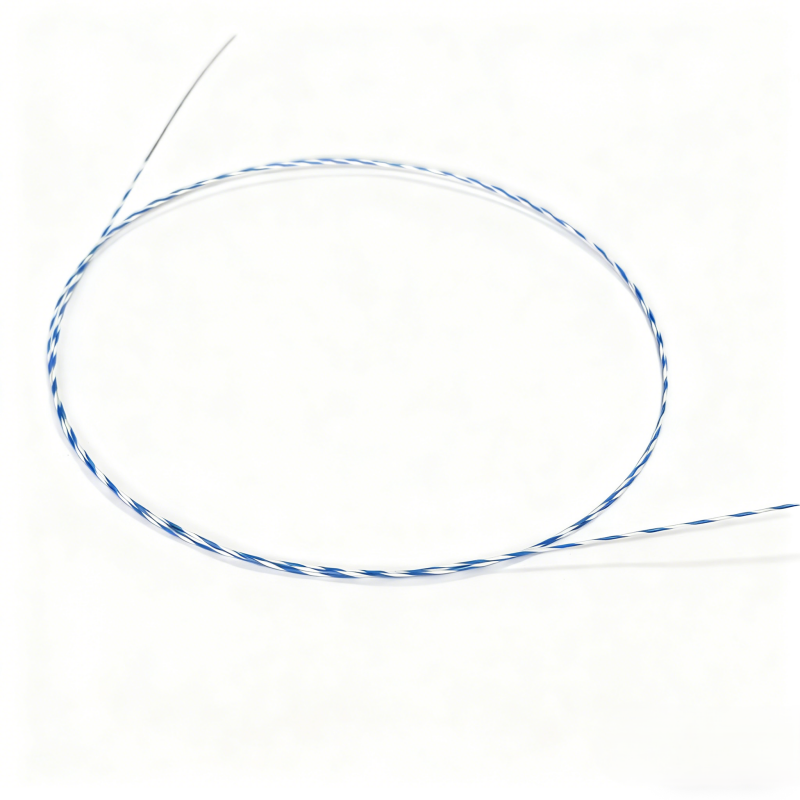
The smart drive industry is defined by its relentless demand for materials that can do more with less — components that respond intelligently to their environment, endure repeated mechanical cycles, and perform with precision in applications ranging from robotics to advanced actuators. Among all the materials competing for a central role in this evolution, Nitinol metal has emerged as a standout solution, offering a rare combination of shape memory behavior, superelasticity, and biocompatibility that no conventional alloy can match. Starspring has positioned itself at the very heart of this transformation by engineering Nitinol metal products that meet the exacting standards required by next-generation smart drive systems.
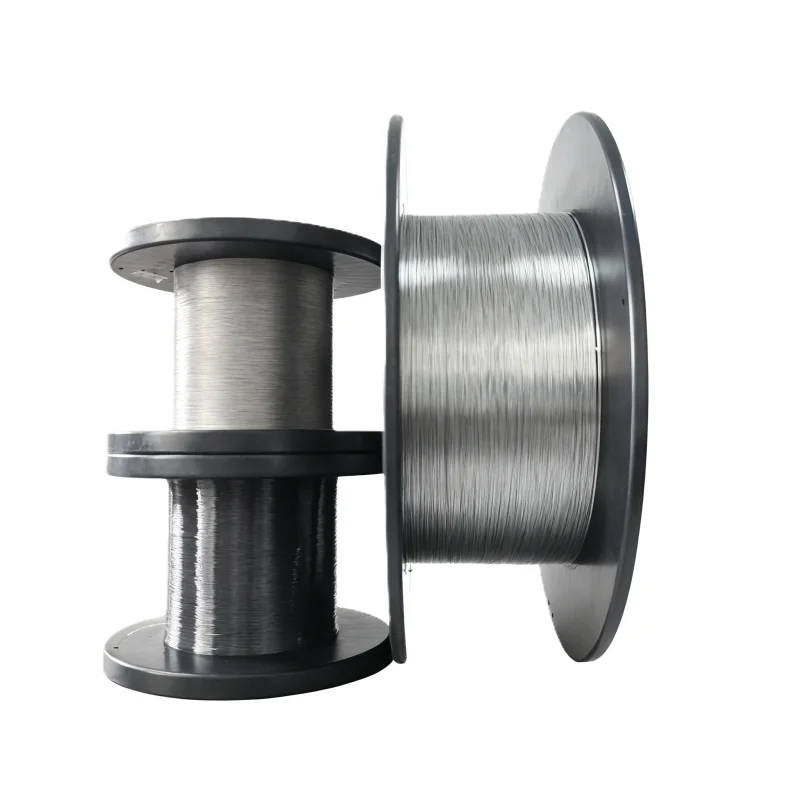
Understanding why Starspring's approach to Nitinol metal commands such attention requires looking closely at the specific demands of smart drive technology and how this remarkable alloy addresses them. From the molecular architecture that enables shape recovery to the manufacturing precision that ensures consistent actuator performance, the case for Nitinol metal in smart drive applications is both technically compelling and commercially significant. This article explores the reasons why Starspring's Nitinol metal has earned its leadership position and why the smart drive industry continues to depend on it.
The Unique Properties That Make Nitinol Metal Indispensable
Shape Memory and Superelastic Behavior
Nitinol metal is a nickel-titanium alloy that exhibits two phenomena rarely found in engineering materials: the shape memory effect and superelasticity. The shape memory effect allows the material to return to a pre-programmed shape when heated to a critical transition temperature, making it extraordinarily useful in thermally activated actuators and smart drive mechanisms. Superelasticity, on the other hand, allows Nitinol metal to undergo large elastic deformations at constant temperature and then recover completely when the load is removed — a behavior that mimics biological muscle far more closely than any steel or polymer alternative.
These two properties are not independent features; they arise from the same crystallographic transformation between the austenite and martensite phases of the alloy. By tuning the nickel-to-titanium ratio and applying precision heat treatment, Starspring engineers the transition temperature to match exact application requirements. This means that a Nitinol metal component in a smart drive system can be designed to activate at body temperature for medical robotics, at room temperature for consumer electronics, or at elevated temperatures for industrial automation — all from the same fundamental alloy with adjusted processing parameters.
For smart drive designers, this tunability is enormously valuable. Rather than redesigning a mechanism around a fixed material behavior, engineers can specify a Nitinol metal solution that is tailored to the exact thermal and mechanical window of their application. Starspring's ability to deliver this precision at production scale is a primary reason why the brand has become a preferred material partner across the smart drive sector.
Fatigue Resistance and Longevity in Cyclic Applications
Smart drive systems typically require components that can perform millions of actuation cycles without degradation. This is where many alternative smart materials fail — shape memory polymers lose their recovery force over time, piezoelectric ceramics fracture under repeated strain, and conventional spring steels plastically deform beyond their elastic limits when pushed hard. Nitinol metal, when processed correctly, demonstrates fatigue life exceeding tens of millions of cycles in carefully controlled conditions, making it one of the most durable actuator materials available.
Starspring achieves this exceptional fatigue resistance by adhering to ASTM F2063 standard in the production of Nitinol metal wire and components. This standard governs the composition, microstructure, and mechanical properties of the alloy, ensuring that each batch of material meets the purity and consistency thresholds needed for high-cycle applications. In smart drive contexts, where an actuator might complete hundreds of thousands of cycles per year, this level of material control translates directly into system reliability and reduced maintenance costs.
The relationship between processing quality and fatigue performance in Nitinol metal is direct and well-documented. Inclusions, surface defects, and compositional inconsistencies all serve as crack initiation sites that dramatically reduce cycle life. By controlling melting, drawing, and heat treatment with rigorous precision, Starspring minimizes these failure risks and delivers Nitinol metal products that perform consistently throughout their designed service life.
How Starspring's Manufacturing Capabilities Drive Smart Drive Innovation
Customized Wire and Spring Geometries for Actuator Design
One of the most significant barriers to widespread adoption of Nitinol metal in smart drive applications has historically been the difficulty of obtaining components in precise, application-specific geometries. Generic wire coils or flat strips are rarely sufficient for sophisticated actuator designs that require specific spring constants, activation forces, and dimensional tolerances. Starspring addresses this barrier directly by offering customized-size Nitinol metal wire and spring forms with cutting service, enabling engineers to specify exactly the dimensions they need without being constrained by standard catalog offerings.
This customization capability is particularly important for robotics and smart drive actuators, where the force output, stroke length, and activation temperature of a Nitinol metal element must be matched precisely to the mechanical advantage of the surrounding linkage system. A wire that is slightly too thick will require more thermal energy to activate and will exert higher forces than designed, potentially damaging sensitive components. A wire that is too thin may not generate sufficient recovery force to drive the mechanism against load. Starspring's precision manufacturing ensures that Nitinol metal components arrive ready to integrate, reducing design iteration time and accelerating product development cycles.
Beyond dimensional precision, Starspring also offers shape-setting services that pre-program complex three-dimensional geometries into Nitinol metal components. This means a spring, coil, or custom form can be delivered already trained to its target shape, requiring no additional processing by the end user. For smart drive manufacturers operating under tight production timelines, this value-added capability significantly reduces the engineering burden associated with incorporating Nitinol metal into new product designs.
Consistency Across Production Batches
Industrial-scale smart drive manufacturing cannot tolerate variability in material behavior. If one batch of Nitinol metal activates at a slightly different temperature than the last, entire production lots of actuators may fail functional testing, resulting in costly scrap and rework. Starspring's commitment to batch-to-batch consistency — enforced through strict raw material sourcing, controlled melting practices, and thorough mechanical testing — gives smart drive manufacturers the confidence to scale production without introducing performance variability at the material level.
This consistency is also critical for after-market supply and maintenance scenarios. When a Nitinol metal actuator component in a deployed smart drive system needs replacement, the replacement part must behave identically to the original. Starspring's documented production standards and traceability practices ensure that replacement components sourced years after the original order will meet the same specification, protecting the integrity of fielded systems and the reputations of the smart drive manufacturers who build them.
Applications Driving Nitinol Metal Adoption in Smart Drive Systems
Robotics and Soft Actuator Mechanisms
The robotics sector has been among the most enthusiastic adopters of Nitinol metal in smart drive applications. Traditional electric motors and hydraulic actuators introduce weight, complexity, and mechanical noise that are incompatible with the fine manipulation tasks required by surgical robots, collaborative factory arms, and biomimetic locomotion systems. Nitinol metal wires and springs, by contrast, can exert substantial forces relative to their weight, operate silently, and be integrated directly into structural elements without separate actuator housings.
Soft robotics — a rapidly growing field focused on compliant, adaptable machines — relies particularly heavily on Nitinol metal because the material's behavior closely mimics biological muscle contraction. A bundle of Nitinol metal wires heated by a small electrical current will shorten and stiffen, pulling a robotic limb or gripper closed with a force proportional to the wire cross-section and pre-strain. When the current stops and the wires cool, they relax and the limb opens. This simple actuation logic, made possible by the unique properties of Nitinol metal, enables robotic designs of remarkable compactness and functionality.
Starspring's ability to supply Nitinol metal wire in a wide range of diameters with controlled mechanical properties makes it a natural partner for robotics developers who need to fine-tune the force-displacement characteristics of their soft actuator designs. The combination of material expertise and manufacturing flexibility gives robotics teams the tools to explore the full design space that Nitinol metal enables.
Smart Drive Applications in Aerospace and Industrial Automation
Beyond robotics, Nitinol metal is finding increasing use in aerospace smart drive mechanisms, where the elimination of conventional motors and gearboxes saves critical weight and reduces failure points. Morphing wing structures, adaptive engine inlets, and deployable satellite components have all been demonstrated using Nitinol metal actuators, and several of these concepts are progressing from laboratory prototypes toward production deployment. The aerospace environment imposes extremely demanding requirements on any material, including wide temperature cycling, vibration, and vacuum compatibility — requirements that Nitinol metal meets with demonstrated reliability.
In industrial automation, Nitinol metal springs and actuators are being integrated into smart grippers, valve actuators, and precision positioning systems where the simplicity of thermally activated motion offers advantages over electromagnetic drives. A Nitinol metal actuated valve, for instance, can be designed to fail-safe open or closed depending on the direction of thermal bias, providing inherent safety functionality without additional control electronics. These system-level benefits, made accessible through the reliability and consistency of Starspring's Nitinol metal products, are accelerating industrial adoption.
Why Material Standards and Compliance Matter for Smart Drive Buyers
ASTM F2063 as a Quality Benchmark
Procurement decisions in the smart drive industry are not made on material properties alone. Buyers must also consider regulatory compliance, documentation, and the traceability of the materials they incorporate into their products. This is especially true in medical smart drive applications, where implantable or patient-adjacent devices must meet strict biocompatibility and material certification requirements. Starspring's Nitinol metal production to ASTM F2063 standard provides buyers with the documentation backbone they need to satisfy regulatory and quality management requirements.
ASTM F2063 specifies not only the chemical composition limits for Nitinol metal but also establishes testing protocols for mechanical properties, surface condition, and microstructural requirements. A supplier who meets this standard has demonstrated that their Nitinol metal is produced with the discipline and consistency needed for demanding applications. For smart drive manufacturers who must validate every component in their supply chain, this certification provides a credible starting point for material qualification activities.
Long-Term Supply Partnership Value
The smart drive industry operates on long product development cycles that require stable, reliable material supply over years or decades. Selecting a Nitinol metal supplier is therefore not just a transactional decision — it is a strategic partnership that affects product roadmaps, qualification timelines, and ultimately the competitive position of the smart drive product in the market. Starspring's focus on technical depth, customization capability, and documented quality standards makes it a partner that smart drive companies can depend on not just for a single project but across the full lifecycle of their product programs.
This long-term partnership perspective is embedded in how Starspring approaches customer engagement. Rather than simply fulfilling orders to a catalog specification, the team works with customers to understand the mechanical and thermal requirements of their specific smart drive application and recommends the Nitinol metal form, diameter, and processing condition best suited to deliver the required performance. This consultative approach accelerates the design process and reduces the risk of costly late-stage design changes caused by material mismatches.
FAQ
What makes Nitinol metal different from regular spring steel in smart drive applications?
Nitinol metal offers shape memory and superelastic behaviors that conventional spring steel cannot replicate. While steel provides elastic recovery within a limited strain range, Nitinol metal can recover from strains many times larger and can also be programmed to generate recovery force when thermally activated. These properties enable actuator designs that are far lighter, more compact, and mechanically simpler than equivalent steel-based mechanisms, which is why smart drive engineers increasingly specify Nitinol metal for precision actuation tasks.
How is the activation temperature of Nitinol metal controlled?
The transformation temperature of Nitinol metal is primarily determined by the precise ratio of nickel to titanium in the alloy and is further influenced by post-processing heat treatments. By adjusting the nickel content by fractions of a percent, manufacturers like Starspring can shift the activation temperature by tens of degrees Celsius, allowing the same fundamental alloy to be optimized for applications ranging from body-temperature medical devices to industrial systems operating at elevated temperatures. This tunability is one of the key reasons Nitinol metal is so versatile across different smart drive use cases.
Can Nitinol metal be used in high-cycle robotic actuators without fatigue failure?
Yes, when produced to appropriate quality standards and designed within the material's safe operating strain limits, Nitinol metal can achieve very high cycle life in robotic actuator applications. The key factors are maintaining strains below the fatigue threshold, ensuring a clean material microstructure free of inclusions, and controlling the surface finish to prevent crack initiation. Starspring's ASTM F2063 compliant production practices address all of these factors, making their Nitinol metal products suitable for demanding high-cycle smart drive and robotics applications.
What forms of Nitinol metal does Starspring supply for smart drive design?
Starspring supplies Nitinol metal in wire form across a range of diameters, as well as in custom spring configurations and cut-to-length pieces. All products can be provided with superelastic or shape memory characteristics depending on application requirements, and custom shape-setting is available for complex three-dimensional geometries. This range of product forms means that smart drive engineers can obtain the exact Nitinol metal component geometry they need rather than adapting their design to fit a limited catalog offering.
Table of Contents
- The Unique Properties That Make Nitinol Metal Indispensable
- How Starspring's Manufacturing Capabilities Drive Smart Drive Innovation
- Applications Driving Nitinol Metal Adoption in Smart Drive Systems
- Why Material Standards and Compliance Matter for Smart Drive Buyers
-
FAQ
- What makes Nitinol metal different from regular spring steel in smart drive applications?
- How is the activation temperature of Nitinol metal controlled?
- Can Nitinol metal be used in high-cycle robotic actuators without fatigue failure?
- What forms of Nitinol metal does Starspring supply for smart drive design?