
 EN



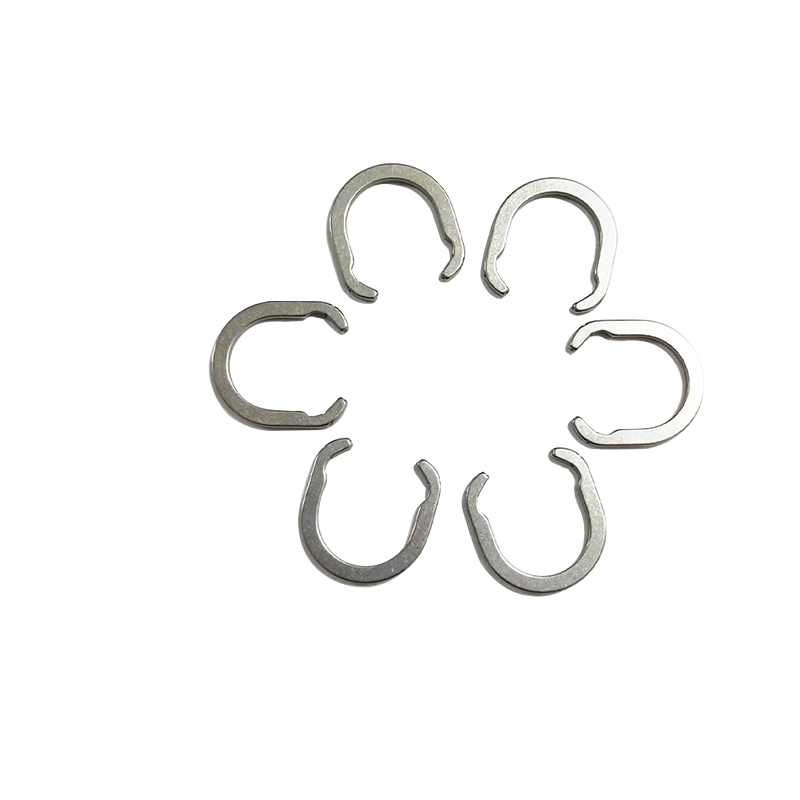
In modern dental and industrial applications, the choice between different contact ring materials significantly impacts both performance and cost-effectiveness. Matrix rings have emerged as a superior alternative to traditional steel rings, particularly when dealing with tight contacts that demand precision and reliability. The fundamental difference lies not merely in material composition but in how each type responds to pressure, maintains contact integrity, and performs over extended use cycles. Understanding these advantages requires examining the mechanical properties, practical applications, and real-world performance metrics that distinguish matrix rings from their steel counterparts.
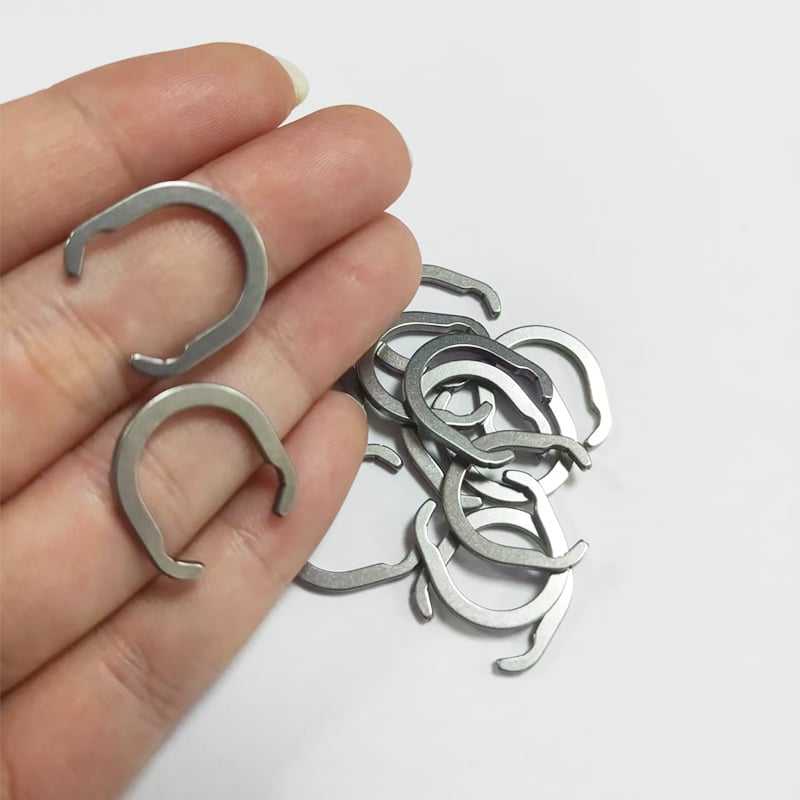
The evolution of ring technology reflects decades of research into material science and contact mechanics. Matrix rings represent a significant advancement in this field, offering characteristics that address the specific challenges posed by tight contact scenarios. When professionals evaluate whether to adopt matrix rings for their applications, they discover that the benefits extend beyond simple material substitution—they involve fundamental improvements in how tension, elasticity, and precision interact to achieve superior outcomes.
Superior Elasticity and Contact Consistency
Elastic Recovery Properties
Matrix rings demonstrate exceptional elastic recovery characteristics that steel rings cannot match. When matrix rings are compressed or stressed during application, they return to their original shape with remarkable consistency. This property proves especially valuable in tight contacts where maintaining precise pressure distribution is critical. Steel rings, by comparison, tend to experience permanent deformation after repeated use, gradually losing their ability to maintain uniform contact pressure. The elasticity of matrix rings ensures that each application delivers predictable, consistent results regardless of how many previous uses the ring has experienced.
The mechanical advantage translates directly into improved contact quality. Matrix rings distribute force more evenly across the contact area, reducing stress concentration points that can compromise performance. Steel rings, being less elastic, tend to create pressure peaks that can damage delicate components or fail to achieve adequate contact in tight spaces. This difference becomes especially pronounced in applications requiring high precision, where even minor variations in contact pressure can affect outcomes significantly.
Fatigue Resistance in Repetitive Applications
Fatigue resistance represents another critical dimension where matrix rings outperform steel rings. Steel rings gradually weaken through repeated compression and release cycles, eventually reaching a point where they no longer maintain adequate contact force. Matrix rings, conversely, exhibit superior fatigue resistance due to their material composition and structural design. This characteristic means that matrix rings maintain their performance specifications over substantially longer operational lifespans compared to steel alternatives. Industries that rely on matrix rings for mission-critical applications have documented dramatic reductions in maintenance frequency and component replacement costs.
The fatigue advantage of matrix rings becomes especially apparent in high-volume production environments. When facilities switch from steel rings to matrix rings, they typically observe reduced downtime, fewer contact failures, and more consistent output quality. The extended service life of matrix rings translates into lower total cost of ownership, even when initial purchase prices are comparable or slightly higher than steel alternatives.
Precision Performance in Tight Contact Scenarios
Controlled Pressure Distribution
Tight contacts demand precise control over how force is applied and distributed. Matrix rings excel at managing this requirement through their unique material properties and engineered design. Unlike steel rings, which apply force in relatively crude, unpredictable patterns, matrix rings create smooth, graduated pressure curves that adapt to the specific geometry of tight contact areas. This adaptation capability allows matrix rings to achieve full contact coverage even in constrained spaces where steel rings would leave gaps or create uneven pressure zones. The result is more reliable electrical connection, better mechanical coupling, and improved overall system performance.
The precision of matrix rings becomes evident when examining contact resistance measurements. Applications using steel rings in tight contacts typically show higher contact resistance and greater variability between successive measurements. Matrix rings consistently deliver lower, more stable contact resistance values, which translates into superior electrical performance and reduced heat generation. In thermal-sensitive applications, this difference can be transformative, preventing overheating and extending equipment lifespan.
Accommodating Complex Geometries
Modern applications increasingly feature complex geometries and tight tolerances that challenge conventional contact solutions. Matrix rings adapt more effectively to these demanding scenarios due to their superior compliance and controlled flexibility. Where steel rings might crack, warp, or fail to achieve adequate contact in irregularly shaped spaces, matrix rings conform to the required geometry while maintaining consistent contact pressure. This adaptability makes matrix rings particularly valuable in applications where components cannot be redesigned to accommodate simpler contact solutions.
The geometric adaptability of matrix rings enables engineers to optimize system designs without being constrained by contact ring limitations. Rather than modifying expensive components to work with inferior contact solutions, designers can specify matrix rings and proceed with proven, efficient geometries. This flexibility often results in simpler, more cost-effective overall system designs while simultaneously improving contact reliability.
Durability and Long-Term Reliability Advantages
Resistance to Environmental Stressors
Environmental conditions often compromise the performance of steel rings in ways that matrix rings resist effectively. Corrosion represents one significant concern; steel rings exposed to moisture, chemicals, or ionic environments gradually corrode, losing material and developing surface irregularities that degrade contact quality. Matrix rings demonstrate superior corrosion resistance due to their material composition, maintaining contact integrity even in challenging environmental conditions. Temperature fluctuations, which can cause differential expansion in steel rings and create contact gaps, affect matrix rings less severely. The combination of corrosion resistance and stable thermal properties extends matrix ring service life substantially beyond what steel rings can achieve in hostile environments.
The environmental resilience of matrix rings becomes particularly important in outdoor applications, marine environments, or facilities using corrosive chemicals. Organizations operating in such conditions frequently discover that switching to matrix rings reduces maintenance emergencies, improves system uptime, and eliminates unexpected failures caused by environmental degradation of contact components.
Maintaining Performance Through Extended Cycles
Longevity testing consistently demonstrates that matrix rings maintain specified performance parameters across far more operational cycles than steel rings. When subjected to thousands of compression-release cycles in controlled laboratory conditions, steel rings show measurable degradation in contact pressure and consistency by mid-life. Matrix rings maintain their baseline specifications throughout the entire tested cycle range, indicating fundamentally superior durability. This difference compounds over time; applications using matrix rings accumulate many thousands more successful cycles before replacement becomes necessary. The cumulative cost savings and reliability improvements justify the transition to matrix rings from both operational and financial perspectives.
Real-world deployment data from various industries confirms laboratory findings. Facilities tracking component lifecycles consistently report that matrix rings achieve replacement intervals two to three times longer than comparable steel rings. This extended lifespan directly reduces inventory requirements, simplifies maintenance scheduling, and improves overall system reliability. For organizations prioritizing uptime and predictability, the transition to matrix rings often represents one of the highest-return reliability investments available.
FAQ
What specific applications benefit most from matrix rings compared to steel rings?
Applications involving tight contacts in precision equipment, dental procedures, electrical connectors, and complex geometries benefit significantly from matrix rings. Any scenario requiring consistent pressure distribution, extended service life, or operation in challenging environments favors matrix rings over steel alternatives. Industries ranging from dental to electronics to industrial manufacturing have documented substantial improvements after transitioning to matrix rings.
How much longer do matrix rings typically last compared to steel rings?
Field data demonstrates that matrix rings generally achieve two to three times the service life of comparable steel rings under equivalent operating conditions. The exact improvement depends on specific application parameters, environmental conditions, and operational demands. Conservative estimates suggest matrix rings provide at least double the useful lifespan, with many high-stress applications showing even more dramatic improvements in longevity and reliability.
Are matrix rings more expensive than steel rings, and does the cost difference justify the performance benefits?
While initial purchase prices for matrix rings may be somewhat higher than steel rings, total cost of ownership strongly favors matrix rings when considering extended lifespan, reduced maintenance, improved reliability, and fewer replacement cycles. Organizations conducting lifecycle cost analysis typically find that matrix rings pay for themselves within the first year through reduced downtime and decreased component replacement frequency, making them highly cost-effective despite higher upfront costs.