
 EN
EN



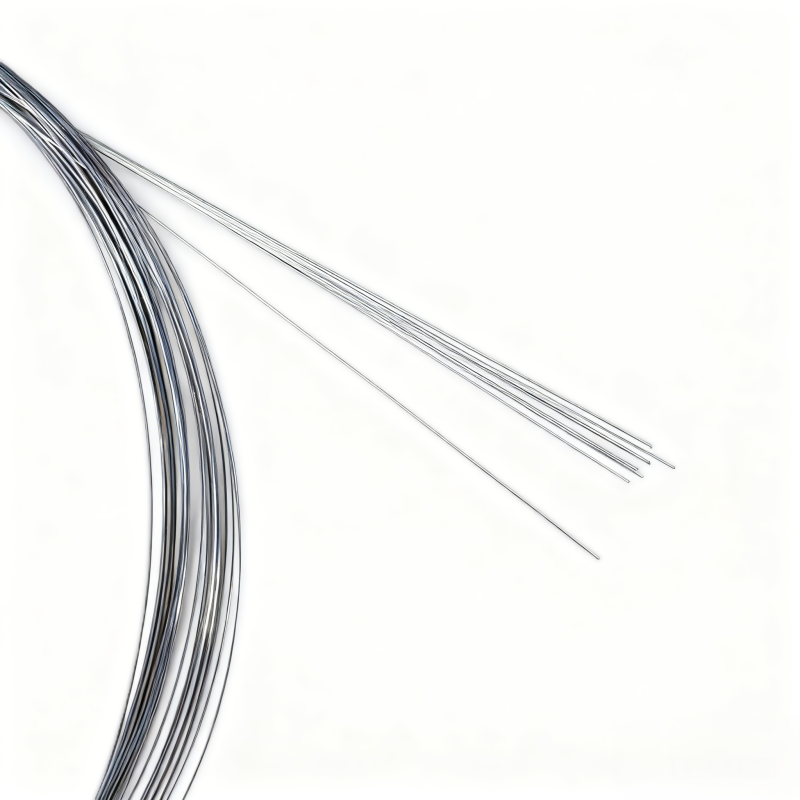
Vessel perforation is one of the most serious complications in minimally invasive vascular procedures, and the choice of guidewire plays a decisive role in whether that risk is elevated or controlled. Nitinol guide wires have become the clinical standard precisely because their material properties are uniquely suited to navigating tortuous vascular anatomy without exerting dangerous lateral forces on vessel walls. Understanding why Nitinol guide wires outperform conventional stainless steel alternatives requires examining the physics of superelasticity, the mechanics of kink resistance, and the practical behavior of these devices under real procedural conditions.
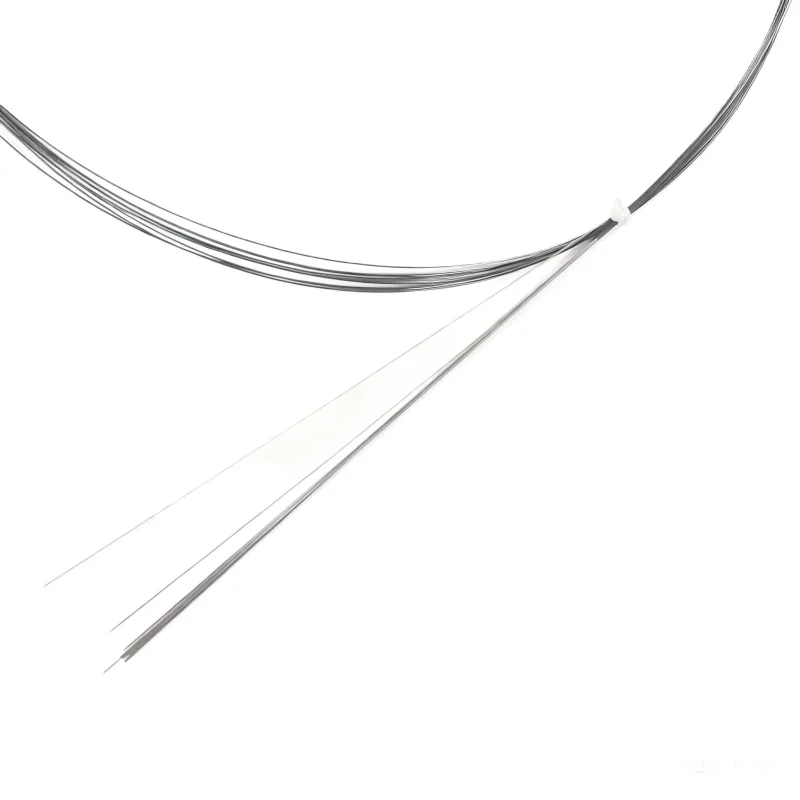
High-performance Nitinol guide wires are engineered from a nickel-titanium alloy that exhibits two extraordinary characteristics: superelasticity and shape memory. These properties are not cosmetic improvements over traditional materials — they are fundamental mechanical advantages that translate directly into safer navigation through complex vascular pathways. When clinicians choose Nitinol guide wires for peripheral, coronary, or neurovascular access, they are selecting a tool whose core behavior actively resists the deformation patterns most likely to cause vessel wall trauma. This article explains the specific mechanisms through which Nitinol guide wires reduce perforation risk and why those mechanisms matter in high-stakes procedural environments.
The Superelastic Advantage of Nitinol Guide Wires
How Superelasticity Prevents Dangerous Tip Forces
Superelasticity in Nitinol guide wires refers to the wire's ability to undergo very large elastic deformations — far beyond what stainless steel tolerates — and return to its original shape without permanent distortion. When Nitinol guide wires encounter a curve or bifurcation in the vessel, they flex and conform rather than resist the anatomy. This conformability means the force transmitted to the vessel wall remains low and distributed, rather than concentrated at a single point of contact. Concentrated point forces are the primary mechanical cause of vessel perforation, so reducing them is a direct safety benefit of using Nitinol guide wires.
Standard stainless steel guidewires have a relatively linear elastic range. Once bent beyond that range, they permanently deform and create unpredictable tip geometry. Nitinol guide wires, by contrast, maintain their designed tip shape even after repeated bending cycles. This consistency means the physician always has an accurate mental model of where the tip is and how it is oriented — a critical factor in avoiding unintended vessel wall contact. The reliable geometry of Nitinol guide wires under load is an underappreciated but essential safety feature.
Stress-Strain Behavior and Wall Trauma Reduction
The stress-strain plateau unique to Nitinol guide wires means that as the wire bends through tight angles, the load it applies increases very slowly rather than sharply. This 'force plateau' behavior buffers the vessel wall against sudden spikes in mechanical stress. In practical terms, Nitinol guide wires absorb navigational demands internally, protecting the surrounding tissue. Clinicians working in calcified or highly tortuous vessels particularly benefit from this property, as those anatomies demand repeated flexion of the wire during advancement and repositioning.
Shape Memory and Kink Resistance in Vascular Navigation
Shape Memory as a Safety Mechanism
The shape memory property of Nitinol guide wires means that pre-formed tip shapes — J-curves, angled tips, or custom configurations — are encoded at the material level, not simply bent mechanically. When Nitinol guide wires are advanced through a vessel and temporarily straightened inside a catheter, they reliably return to their intended tip geometry upon emergence. This behavior allows the physician to predict tip orientation with high confidence, reducing exploratory movements that could contact and traumatize the vessel wall. Shape memory in Nitinol guide wires is therefore a direct procedural safety advantage, not merely a handling convenience.
Custom-shaped Nitinol guide wires can be tailored to match specific anatomical requirements, such as sharply angled renal arteries or helical iliac tortuosity. When the tip geometry matches the target anatomy, the wire advances with minimal lateral deviation, keeping tip forces aligned with the vessel lumen rather than directed toward the wall. This precision is difficult to replicate with non-shape-memory materials and is one of the strongest arguments for choosing Nitinol guide wires in complex interventional cases.
Kink Resistance Across Long Working Lengths
Kinking in a guidewire creates a rigid angular deformity that amplifies perforation risk dramatically — a kinked tip can act like a needle. High-performance Nitinol guide wires are engineered to resist kinking even across long working lengths and through tight angulations. The same superelastic property that allows large reversible bending also prevents the abrupt local buckling that produces kinks. Proceduralists using Nitinol guide wires in long peripheral interventions, such as superficial femoral artery recanalization, rely on this kink resistance to maintain safe wire behavior throughout the entire working length.
Torque Transmission and Tip Control with Nitinol Guide Wires
Precise Torque for Accurate Tip Positioning
Vessel perforation often results not from advancement force alone but from poor torque response — when a physician rotates the proximal wire and the distal tip does not respond predictably. High-performance Nitinol guide wires are designed with optimized core-to-coil construction that delivers accurate one-to-one torque transmission even through tortuous segments. This means the tip moves as intended, reducing blind probing of vessel walls. When torque control is reliable, clinicians can steer Nitinol guide wires with confidence rather than applying excessive rotational force to compensate for unpredictable tip response.
The combination of torque precision and superelastic flexibility makes Nitinol guide wires particularly effective in crossing chronic total occlusions, where the temptation to apply high force is greatest and the risk of perforation is elevated. By maintaining tip control at all times, Nitinol guide wires allow the physician to feel resistance feedback accurately, stopping advancement before perforation occurs. This tactile-feedback advantage is one of the reasons interventional teams consistently prefer Nitinol guide wires over less responsive alternatives.
Compliance with ASTM F2063 and Clinical Grade Standards
High-performance Nitinol guide wires manufactured to ASTM F2063 Grade 1 standards provide a verified baseline of material consistency, fatigue resistance, and biocompatibility. Consistent material properties mean that the safety behaviors described above — superelasticity, shape memory, kink resistance, torque fidelity — are reproducible across every unit. Variability in wire performance is itself a risk factor, so Nitinol guide wires that meet certified material grades reduce procedural uncertainty alongside vessel wall risk.
FAQ
What makes Nitinol guide wires safer than stainless steel guidewires in tortuous vessels?
Nitinol guide wires offer superelastic flexibility that allows them to conform to vessel curves without exerting concentrated forces on the wall. Stainless steel guidewires deform permanently under similar loads, creating unpredictable tip geometry. The consistent tip behavior and low wall-contact forces of Nitinol guide wires directly reduce the mechanical conditions that cause perforation in tortuous anatomy.
Can Nitinol guide wires be customized for specific anatomical shapes?
Yes. The shape memory property of Nitinol guide wires allows manufacturers to encode custom tip geometries — specific angles, curves, or helical profiles — at the material level. These custom-shaped Nitinol guide wires maintain their designed geometry under procedural conditions, improving tip alignment with the target anatomy and reducing wall trauma risk.
How does ASTM F2063 compliance affect the safety performance of Nitinol guide wires?
ASTM F2063 sets strict compositional and structural standards for medical-grade Nitinol. Nitinol guide wires manufactured to this standard have verified superelastic and fatigue properties that are consistent batch to batch. This consistency ensures that the safety advantages of Nitinol guide wires — kink resistance, shape memory, controlled tip forces — are reliably present in every device used clinically.