
 EN
EN



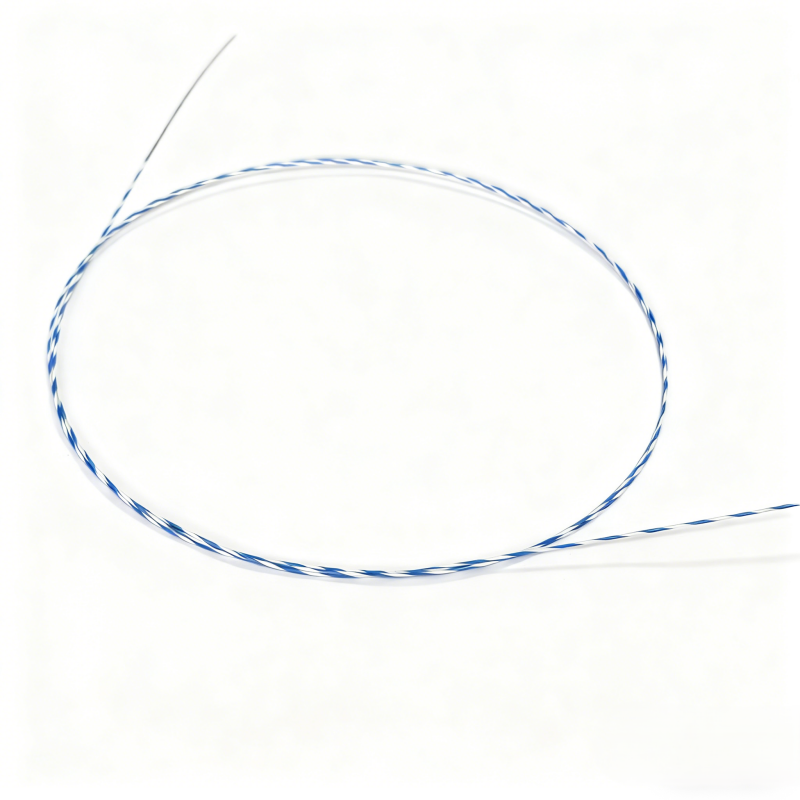
A Nitinol guide wire is one of the most critical tools in modern minimally invasive medicine. Its unique shape memory behavior allows clinicians to navigate complex vascular anatomy with a level of control and precision that conventional wire materials simply cannot match. Understanding how this memory property works in practice helps explain why the Nitinol guide wire has become the standard choice for precise vessel positioning across a broad range of interventional procedures.
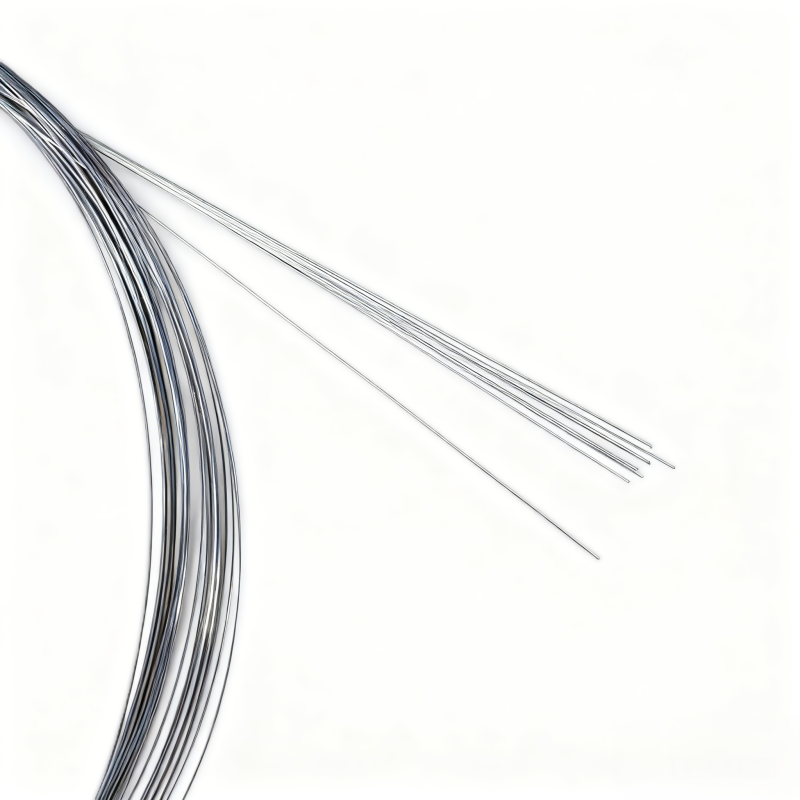
The performance of a Nitinol guide wire depends on the specific thermomechanical properties of Nitinol, a nickel-titanium alloy that exhibits both shape memory and superelasticity. These two characteristics work in concert during a procedure. The Nitinol guide wire can be deformed, inserted through narrow or curved pathways, and then reliably return to its pre-set shape once it reaches the target site. This behavior is not incidental — it is the fundamental mechanism that makes a Nitinol guide wire so valuable for vessel positioning.
The Shape Memory Mechanism in a Nitinol Guide Wire
How Shape Memory Works at a Material Level
The shape memory effect in a Nitinol guide wire originates from a reversible phase transformation between two crystalline states: austenite and martensite. At body temperature, the Nitinol guide wire exists predominantly in the austenite phase, which is the high-strength, elastically stiff configuration. When the Nitinol guide wire is cooled or mechanically stressed during loading for insertion, it transitions into the more pliable martensite phase. Upon release of that stress — which occurs naturally as the Nitinol guide wire advances through the vasculature — the alloy reverts to austenite and recovers its programmed shape.
This phase transition is what gives the Nitinol guide wire its ability to 'remember.' Unlike stainless steel wires that plastically deform under bending, the Nitinol guide wire springs back reliably. The tip geometry pre-set during manufacturing is restored at the target location, allowing the Nitinol guide wire to engage the vessel wall or bifurcation point with consistent angular orientation. This predictability is essential for precise vessel positioning.
Superelasticity as a Complement to Shape Memory
Superelasticity enhances the Nitinol guide wire beyond what shape memory alone provides. A superelastic Nitinol guide wire can undergo strains of up to 8% and fully recover without permanent deformation. During navigation through tortuous vessels, the Nitinol guide wire bends and flexes in response to anatomical curves yet continuously generates a restoring force. This means the Nitinol guide wire does not kink, buckle, or lose its tip orientation even in highly angulated anatomy. The result is sustained positional accuracy throughout the entire advancement process.
How Nitinol Guide Wire Memory Enables Vessel Positioning
Tip Shape Pre-Setting and Its Clinical Role
Manufacturers pre-set the distal tip of each Nitinol guide wire into a specific geometry — straight, angled, or J-shaped — depending on the intended application. During packaging and insertion into a delivery sheath, the Nitinol guide wire is straightened. Once advanced past the sheath tip inside the patient, the Nitinol guide wire autonomously recovers that pre-set tip shape. This recovery positions the distal end of the Nitinol guide wire precisely against the intended vessel wall segment or toward a target branch vessel, reducing the need for manual manipulation.
For interventionalists, this means a Nitinol guide wire requires fewer corrective steering adjustments compared to a conventional wire. The Nitinol guide wire essentially 'seeks' its intended vessel geometry based on its programmed shape. In bifurcated vessels or vessels with tight curves, the Nitinol guide wire tip conforms and orients naturally, improving first-pass placement success and reducing procedural time. Consistent tip recovery from the Nitinol guide wire directly translates into reproducible vessel engagement across patient anatomies.
Force Transmission and Pushability Through Complex Anatomy
Precise vessel positioning is not only about tip shape — it also depends on how reliably force is transmitted along the Nitinol guide wire from the operator's hand to the tip. The Nitinol guide wire achieves excellent pushability because its elastic modulus, while lower than stainless steel, remains sufficient to translate axial force without significant energy loss. The Nitinol guide wire body resists kinking along its length, so the push-to-tip response remains predictable. This characteristic of the Nitinol guide wire is particularly important in peripheral and neurovascular procedures where vessel tortuosity is high and precise tip placement is clinically critical.
Design Considerations for a High-Performance Nitinol Guide Wire
Alloy Composition and ASTM F2063 Standards
Not all Nitinol guide wire products deliver the same level of shape memory performance. The composition of the Nitinol alloy — particularly the nickel-to-titanium ratio — determines the transformation temperature and the magnitude of the shape recovery. A Nitinol guide wire manufactured to ASTM F2063 standards ensures that the alloy composition falls within tightly controlled limits, guaranteeing consistent austenite finish temperature and reliable memory behavior at body temperature. Selecting a Nitinol guide wire built to this standard removes uncertainty from the shape recovery process.
Surface Finish and Bending Strength
The surface quality of a Nitinol guide wire directly affects its fatigue resistance and long-term shape memory reliability. A Nitinol guide wire with a smooth, well-finished surface tolerates repeated bending cycles without microcrack initiation. High bending strength — often exceeding 1300 MPa in well-manufactured Nitinol guide wire products — means the Nitinol guide wire maintains its structural integrity under the repeated flexion cycles encountered during navigation. This durability ensures that the Nitinol guide wire delivers consistent vessel positioning performance even during extended or complex procedures.
FAQ
Why does a Nitinol guide wire return to its original shape inside the body?
A Nitinol guide wire returns to its original shape because of a thermally driven phase transformation. At body temperature, the Nitinol guide wire reverts to its austenite crystalline phase, which corresponds to the pre-set shape programmed during manufacturing. This phase recovery is repeatable and reliable, making the Nitinol guide wire ideal for consistent vessel positioning.
How does superelasticity in a Nitinol guide wire differ from shape memory?
Shape memory in a Nitinol guide wire refers to recovery driven by a temperature change, while superelasticity refers to recovery driven by the release of mechanical stress. During a procedure, the Nitinol guide wire primarily uses superelasticity to navigate tortuous vessels and recover from bending without permanent deformation, while the pre-set tip shape is recovered through the shape memory effect upon exiting the delivery sheath.
What standards should a Nitinol guide wire meet for medical use?
A Nitinol guide wire intended for medical use should conform to ASTM F2063, which governs the chemical composition of wrought nickel-titanium shape memory alloys. This standard ensures the Nitinol guide wire has consistent transformation temperatures, adequate corrosion resistance, and reliable mechanical properties. Compliance with ASTM F2063 is a baseline quality indicator when evaluating any Nitinol guide wire for interventional applications.