
 EN



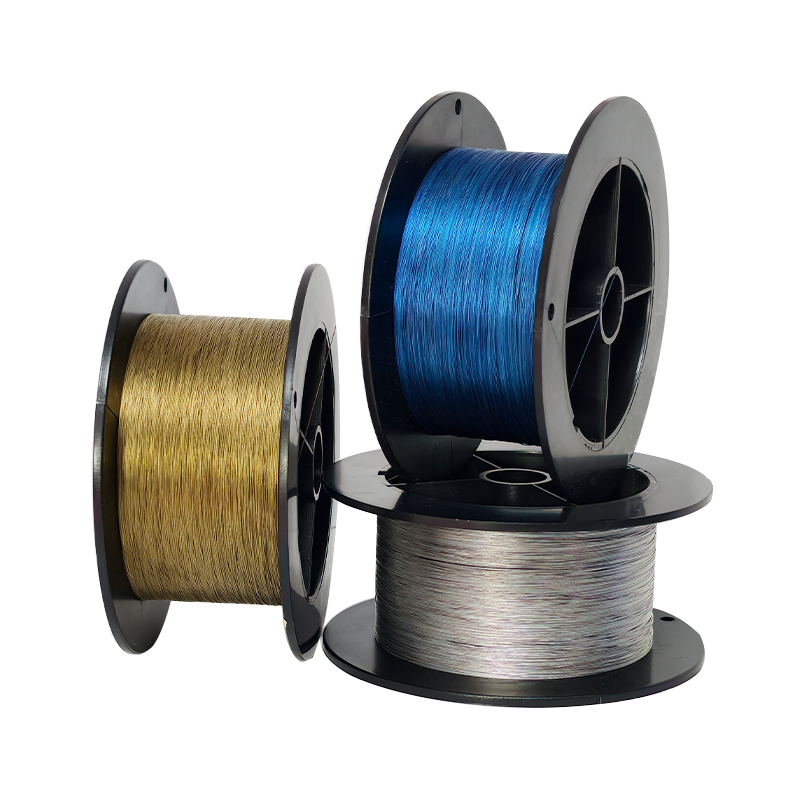
Modern manufacturing demands precision, reliability, and innovation at every level. For manufacturers with decades of experience, selecting the right material for critical applications like actuators can define success or failure in competitive markets. Nitinol, a nickel-titanium shape memory alloy, has emerged as a transformative solution that addresses fundamental challenges in actuator design and performance. This advanced material enables manufacturers to create actuators that deliver superior force, silent operation, and extended service life, fundamentally changing how industrial systems function. Understanding how nitinol enhances actuators reveals why experienced manufacturers increasingly adopt this technology across diverse sectors.
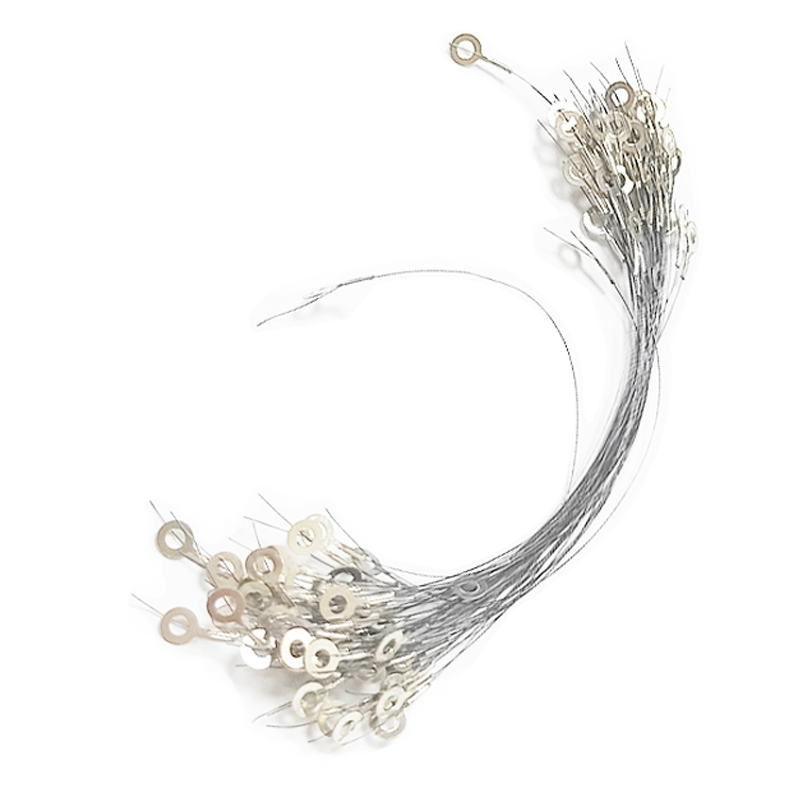
After 21 years in manufacturing, leading producers recognize that material science directly impacts product quality and cost efficiency. Nitinol actuators represent a breakthrough because they combine mechanical resilience with intelligent material behavior, responding to temperature changes and mechanical stress in ways conventional metals cannot. The adoption of nitinol demonstrates how manufacturers evolve their engineering practices to meet increasingly demanding specifications in medical devices, aerospace systems, industrial automation, and precision instrumentation.
Understanding Nitinol Material Properties and Actuator Performance
The Science Behind Nitinol's Unique Characteristics
Nitinol possesses two defining properties that make it ideal for actuator applications: the shape memory effect and superelasticity. The shape memory effect allows nitinol to return to a predetermined shape when heated, enabling controlled motion without traditional mechanical linkages. This characteristic becomes transformative in actuator design because it eliminates complex mechanical assemblies, reducing component count and failure points. Manufacturers who implement nitinol actuators benefit from simplified designs that deliver consistent, repeatable motion across millions of cycles, a capability that competing materials struggle to match consistently.
Superelasticity in nitinol means the material can withstand significant deformation and return to its original shape without permanent damage, even at room temperature. This property enables nitinol actuators to absorb shock loads, tolerate misalignment, and maintain precision under variable operating conditions. When manufacturers integrate nitinol into actuator systems, they gain an inherent safety margin that protects against unexpected stresses and extends component lifespan dramatically compared to conventional steel or aluminum alternatives.
How Nitinol Responds to Temperature and Mechanical Stimuli
Nitinol's response to temperature changes makes it exceptionally valuable for actuator applications requiring precise, repeatable motion control. As temperature increases above the transformation temperature, nitinol transitions from austenite to martensite phase, triggering the shape memory effect and generating controlled motion. Manufacturers calibrate this transition temperature during material processing, allowing nitinol actuators to activate at specific temperature thresholds relevant to their application environment. This inherent responsiveness means nitinol actuators require minimal control complexity, reducing power consumption and electronic overhead compared to traditional electromagnetic or pneumatic actuators.
The mechanical stimulation response of nitinol adds another dimension to its utility. When stress is applied, nitinol undergoes reversible martensitic transformation, creating pseudo-elastic behavior that absorbs energy and restores shape without plastic deformation. Manufacturers leverage this property in applications where actuators must accommodate tolerance stack-ups, thermal expansion mismatches, or operational loads that would permanently damage conventional materials, ensuring long-term reliability in harsh industrial environments where nitinol excels.
Manufacturing Applications and Real-World Performance Benefits
Precision Motion Control in Medical and Aerospace Sectors
Medical device manufacturers recognize nitinol as essential for developing minimally invasive instruments and implantable systems requiring absolute reliability. Nitinol actuators enable catheters, stents, and surgical instruments to perform complex motions within confined anatomical spaces while maintaining biocompatibility and sterilizability. The material's fatigue resistance ensures these critical devices function flawlessly through millions of activation cycles, meeting stringent regulatory requirements and patient safety standards that medical applications demand. In aerospace, nitinol actuators control flight surface movements, engine components, and landing gear systems where weight reduction and elimination of hydraulic complexity provide significant operational advantages over traditional actuation methods.
The silent operation characteristic of nitinol actuators delivers particular value in these sectors. Unlike electromagnetic solenoids or pneumatic cylinders that generate noise and vibration, nitinol actuators function with minimal sound and mechanical disruption, enabling their integration into noise-sensitive medical environments and maintaining structural integrity in precision aerospace applications. Manufacturers who specify nitinol actuators gain a competitive advantage through improved device performance, reduced system complexity, and enhanced reliability in applications where failure is not an acceptable option.
Industrial Automation and Thermal Management Applications
Industrial automation systems benefit dramatically from nitinol actuators' ability to provide high-force motion without external power sources. Smart damping systems, vibration isolation mechanisms, and adaptive component positioning all leverage nitinol's inherent response to temperature and mechanical stress. Manufacturers integrate nitinol into conveyor systems, material handling equipment, and production line components where reliable, maintenance-free operation directly impacts throughput and profitability. The extended service life of nitinol actuators reduces downtime and replacement costs, creating substantial economic value over equipment lifetime compared to conventional actuation technologies.
Thermal management applications showcase another critical advantage of nitinol-based solutions. HVAC systems, thermal expansion joints, and temperature-responsive dampers employ nitinol actuators to automatically adjust system response based on environmental conditions without requiring external control systems. Manufacturers designing products for variable climate zones or industrial environments with temperature fluctuations benefit significantly from the autonomous responsiveness that only nitinol can provide, simplifying control architecture while improving overall system efficiency and reducing operational energy consumption substantially.
Engineering Advantages and Implementation Considerations for Manufacturers
Design Flexibility and System Simplification with Nitinol
Experienced manufacturers appreciate how nitinol actuators enable significant design simplification across multiple system dimensions. Traditional actuator systems require control electronics, power distribution, mechanical linkages, and feedback sensors to achieve equivalent performance to what nitinol delivers inherently. By replacing these complex subsystems with nitinol actuators, manufacturers reduce bill of materials costs, assembly complexity, and potential failure points throughout the product. This simplification extends development timelines positively, allowing faster market entry and reduced engineering resource requirements compared to conventional actuation approaches requiring extensive validation and tuning.
The compact form factor of nitinol actuators enables integration into space-constrained applications where traditional actuators simply cannot fit within dimensional requirements. Manufacturers designing portable medical devices, miniaturized automation equipment, or aerospace components benefit from nitinol's ability to deliver high force in minimal volume. This compactness, combined with the material's inherent reliability, allows product architects to pursue innovative designs that competing technologies cannot support, creating differentiated solutions that command premium positioning in competitive markets where advanced performance justifies higher material costs.
Performance Validation and Lifecycle Optimization
Manufacturers with 21 years of experience understand that material selection directly impacts product warranty obligations and field reliability metrics. Nitinol actuators demonstrate exceptional performance in fatigue testing, environmental cycling, and long-term reliability assessments that manufacturing teams conduct before design release. The predictable behavior of nitinol under repeated stress and temperature cycling reduces warranty costs and field failure rates substantially compared to conventional materials, directly improving profitability on every unit manufactured. Comprehensive lifecycle data from established industrial applications provides confidence that nitinol investments will deliver measurable returns through improved quality metrics and reduced service logistics.
Implementation of nitinol requires specialized material knowledge and supplier relationships with proven expertise in shape memory alloy processing and customization. Manufacturers benefit from partnering with experienced nitinol suppliers who understand application-specific requirements and can deliver material precisely calibrated for target operating conditions. This collaborative approach ensures successful nitinol integration, optimizes actuator performance for specific missions, and accelerates the transition from conventional technologies to advanced shape memory alloy solutions that redefine what's possible in actuator design and industrial system performance overall.
FAQ
What advantages does nitinol provide compared to traditional actuator materials?
Nitinol delivers superior fatigue resistance, silent operation, compact form factor, and inherent responsiveness to temperature and mechanical stress compared to conventional steel, aluminum, or electromagnetic actuators. The material eliminates complex control systems and mechanical linkages, reducing design complexity while improving reliability and extending service life dramatically across medical, aerospace, and industrial applications where advanced performance justifies material investment.
How do manufacturers calibrate nitinol actuators for specific temperature responses?
Nitinol's transformation temperature can be precisely adjusted during material processing through controlled thermal and mechanical treatments that modify the phase transition characteristics. Manufacturers work with experienced material suppliers to specify transformation temperature windows matching their application requirements, ensuring nitinol actuators activate at optimal conditions within the target operating environment. This customization capability enables precise motion control without external sensors or complex feedback systems that traditional actuators require.
Are nitinol actuators suitable for high-volume manufacturing applications?
Yes, nitinol actuators are increasingly deployed in high-volume manufacturing environments including medical devices, automotive systems, and industrial automation equipment. While nitinol materials command premium pricing compared to conventional metals, the reduced system complexity, extended lifespan, and elimination of maintenance significantly lower total cost of ownership over product lifetime. Manufacturers pursuing high-volume production benefit from simplified supply chains, reduced assembly complexity, and improved quality metrics that offset material cost premiums through operational efficiency gains and reduced warranty obligations.