SMA Connector Wire: High-Frequency RF Cable Assemblies for Reliable Signal Transmission

Get a Free Quote

Our representative will contact you soon.
Email
Name
Company Name
Message
0/1000

sma connector wire

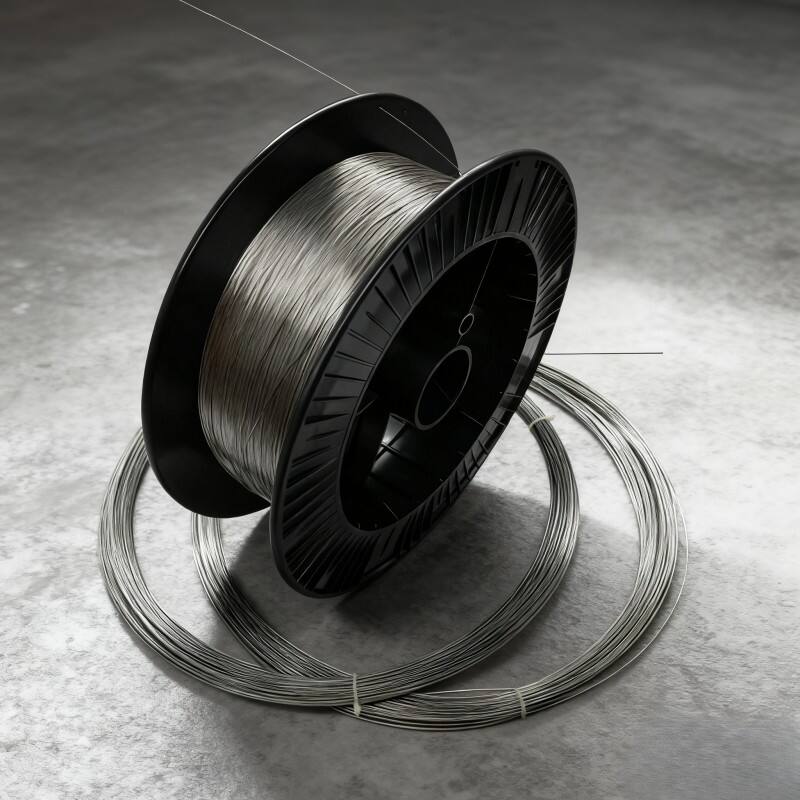
The SMA connector wire is a precision-engineered coaxial cable assembly designed to deliver reliable, high-frequency signal transmission across a wide range of demanding environments. Standing for SubMiniature version A, the SMA connector wire combines a threaded coupling mechanism with a 50-ohm impedance design, making it one of the most trusted interconnect solutions in the RF and microwave industry. Whether you are building a wireless communication system, testing electronic equipment, or deploying a defense-grade radar array, the SMA connector wire serves as the critical link that keeps signals clean, stable, and interference-free. At its core, the SMA connector wire functions as a conduit for high-frequency electrical signals, typically supporting frequencies from DC up to 18 GHz, with premium versions reaching 26.5 GHz. This broad frequency range makes the SMA connector wire suitable for an exceptionally diverse set of applications. The threaded interface provides a secure, vibration-resistant connection that passive push-on connectors simply cannot match, ensuring signal integrity even in mechanically challenging conditions. Technologically, the SMA connector wire features a precision-machined center conductor, a PTFE or air-spaced dielectric, and a gold-plated or stainless-steel outer body, all of which contribute to low insertion loss, high return loss, and excellent repeatability over thousands of mating cycles. The cable attached to the SMA connector wire can vary from flexible coaxial types to semi-rigid constructions, depending on the routing requirements of the application. In terms of applications, the SMA connector wire is widely used in telecommunications infrastructure, satellite communication systems, military and aerospace electronics, medical imaging equipment, test and measurement instruments, and consumer wireless devices such as routers and antennas. Its compact form factor, combined with robust electrical performance, makes the SMA connector wire an indispensable component wherever space is limited but signal quality cannot be compromised. Engineers and procurement specialists consistently choose the SMA connector wire because it balances performance, durability, and cost-effectiveness in a single, standardized package.


New Product Recommendations

When you are choosing a cable assembly for your next project, the SMA connector wire stands out for reasons that go far beyond technical specifications on a datasheet. Let us walk through the practical benefits that make this component a go-to choice for engineers, system integrators, and procurement teams around the world. First, the SMA connector wire gives you a rock-solid connection every single time. The threaded coupling mechanism means you physically lock the connector in place, so vibration, accidental tugs, or thermal expansion will not cause your connection to loosen or drop signal. If you have ever dealt with a push-on connector that worked its way free during a field deployment, you already know how valuable this feature is. The SMA connector wire eliminates that problem entirely, saving you troubleshooting time and preventing costly system downtime. Second, the SMA connector wire handles a remarkably wide frequency range without breaking a sweat. From DC all the way up to 18 GHz in standard configurations, this connector keeps your signal clean and your insertion loss low. That means less power wasted, stronger signal at the receiving end, and a system that simply performs better. Whether you are running a 2.4 GHz Wi-Fi antenna, a 5G test bench, or a microwave backhaul link, the SMA connector wire covers your needs without requiring you to switch to a different connector family. Third, the SMA connector wire is built to last. The gold-plated contacts resist corrosion, the stainless-steel or brass body handles mechanical stress, and the PTFE dielectric stays stable across a wide temperature range. You can mate and unmate an SMA connector wire hundreds or even thousands of times and still get consistent electrical performance. This durability translates directly into lower replacement costs and fewer maintenance cycles over the lifetime of your equipment. Fourth, the SMA connector wire is a globally standardized component. That means you can source it from multiple suppliers, find compatible adapters and test equipment everywhere, and integrate it into systems designed by teams on the other side of the world without compatibility headaches. Standardization also means your technicians already know how to work with it, reducing training time and installation errors. Fifth, the compact size of the SMA connector wire makes it ideal for space-constrained designs. Modern electronics are getting smaller, and the SMA connector wire fits right into that trend without sacrificing the electrical performance you need. You get a high-performance RF connection in a package small enough to fit on a densely populated PCB or inside a compact enclosure. Sixth, the SMA connector wire is cost-effective relative to the performance it delivers. Compared to higher-tier connector families like 2.92 mm or 1.85 mm, the SMA connector wire gives you excellent performance at a fraction of the price for applications that do not require frequencies above 18 GHz. That is a smart trade-off that keeps your bill of materials lean without cutting corners on quality. All of these advantages add up to a single conclusion: the SMA connector wire is a practical, reliable, and economical choice that delivers real value from the moment you install it.

Practical Tips

Why do orthodontists prefer using orthodontic wire with shape memory?

15

May

Why do orthodontists prefer using orthodontic wire with shape memory?

In modern orthodontic practice, the materials used to move teeth are just as important as the clinical techniques applied. Among the many innovations that have transformed the field, orthodontic wire with shape memory stands out as one of the most cl...
View More
How to ensure dimensional tolerances for precision Nitinol metal parts?

18

May

How to ensure dimensional tolerances for precision Nitinol metal parts?

Achieving tight dimensional tolerances in Nitinol metal components is one of the most demanding challenges in precision manufacturing. Unlike conventional metals, Nitinol — a nickel-titanium shape memory alloy — exhibits superelastic recovery and pha...
View More
Why do full-process manufacturers provide higher performance Nitinol SMA?

20

May

Why do full-process manufacturers provide higher performance Nitinol SMA?

When engineers and procurement specialists evaluate materials for high-precision medical devices, aerospace components, or advanced actuator systems, the source of the material matters as much as the material itself. Nitinol SMA — the nickel-titanium...
View More
Why should you prioritize the manufacturer's R&D center when choosing partners?

02

Jun

Why should you prioritize the manufacturer's R&D center when choosing partners?

When evaluating potential manufacturing partners, most procurement teams focus on price, lead time, and production capacity. These are legitimate criteria, but they often overlook one of the most telling indicators of long-term value: the strength an...
View More

Get a Free Quote

Our representative will contact you soon.
Email
Name
Company Name
Message
0/1000

sma connector wire

Unmatched Signal Integrity Across High-Frequency Applications

Unmatched Signal Integrity Across High-Frequency Applications

One of the most compelling reasons engineers specify the SMA connector wire in their designs is its ability to maintain exceptional signal integrity across a broad frequency spectrum. Signal integrity is not just a technical metric; it is the difference between a system that works reliably in the field and one that generates mysterious errors, dropped connections, and frustrated end users. The SMA connector wire addresses this challenge through a combination of precision mechanical design and carefully selected materials that work together to minimize every source of signal degradation. The 50-ohm impedance of the SMA connector wire is tightly controlled throughout the entire assembly, from the connector body through the dielectric and down the length of the attached cable. This impedance consistency prevents reflections, which are one of the primary causes of signal loss and data errors in high-frequency systems. When impedance changes abruptly at any point in a transmission line, a portion of the signal bounces back toward the source instead of reaching the destination. The SMA connector wire is engineered to keep those reflections to an absolute minimum, which is why it achieves high return loss values that satisfy even the most demanding RF system requirements. Low insertion loss is another hallmark of the SMA connector wire. The gold-plated center contact and the precision-machined outer conductor create a low-resistance, low-inductance signal path that lets your signal pass through with minimal attenuation. In practical terms, this means your amplifiers do not have to work as hard, your noise figure stays low, and your overall link budget improves. For applications like satellite ground stations, wireless base stations, and precision test equipment, these gains translate directly into better system performance and wider operating margins. The SMA connector wire also delivers excellent phase stability, which matters enormously in applications like phased array antennas, radar systems, and vector network analyzer setups where the timing relationship between signals is critical. Phase-matched SMA connector wire assemblies allow engineers to build systems where multiple signal paths arrive at their destinations with predictable, repeatable phase relationships, enabling accurate beam steering, precise measurements, and reliable data. Beyond the electrical characteristics, the mechanical precision of the SMA connector wire contributes to signal integrity in ways that are easy to overlook. The threaded coupling ensures that the center pin engages fully and consistently with the mating connector, eliminating the micro-movements that can cause intermittent contact and signal noise. Every time you connect an SMA connector wire, you get the same reliable electrical interface, which is essential for systems that need to be connected and disconnected repeatedly during testing, maintenance, or reconfiguration.
Rugged Durability That Performs in the Toughest Conditions

Rugged Durability That Performs in the Toughest Conditions

The SMA connector wire is not just designed for the controlled environment of a laboratory bench. It is built to perform reliably in the kinds of harsh, unpredictable conditions that real-world deployments throw at electronic systems every day. From the scorching heat of a desert communications outpost to the damp, salt-laden air of a maritime installation, the SMA connector wire holds up where lesser connectors fail, protecting your investment and keeping your systems online. The materials used in the SMA connector wire are chosen specifically for their ability to withstand environmental stress. The outer body is typically manufactured from stainless steel or passivated brass, both of which offer strong resistance to corrosion, mechanical impact, and the dimensional changes caused by thermal cycling. When temperatures swing from minus 65 degrees Celsius to plus 165 degrees Celsius, as they do in many aerospace and military applications, the SMA connector wire maintains its structural integrity and its electrical performance without warping, cracking, or losing its grip. The gold plating on the center contact of the SMA connector wire serves a dual purpose. It provides a highly conductive surface that minimizes contact resistance and insertion loss, and it acts as a barrier against oxidation that would otherwise degrade the contact over time. In humid or chemically aggressive environments, this gold plating is the reason the SMA connector wire continues to deliver consistent performance long after unprotected contacts would have corroded and failed. The PTFE dielectric used inside the SMA connector wire is another key contributor to its durability. PTFE is chemically inert, meaning it does not react with moisture, solvents, or most industrial chemicals. It also has a very low coefficient of thermal expansion, which helps maintain the precise geometry of the connector across a wide temperature range. This dimensional stability is what keeps the impedance of the SMA connector wire consistent even as the surrounding environment changes dramatically. Mechanical durability is equally impressive. The SMA connector wire is rated for hundreds to thousands of mating cycles depending on the specific construction, and it maintains its electrical specifications throughout that entire service life. The threaded coupling distributes mechanical stress evenly around the connector body rather than concentrating it at a single point, which is why the SMA connector wire survives the repeated connect-disconnect cycles of test environments and field maintenance routines without developing the wear and looseness that plague other connector types. For system designers who need a connector that will not become the weak link in a mission-critical assembly, the SMA connector wire delivers the kind of long-term reliability that justifies its specification in everything from military avionics to industrial wireless gateways.
Versatile Compatibility That Simplifies System Integration

Versatile Compatibility That Simplifies System Integration

One of the most underappreciated advantages of the SMA connector wire is how effortlessly it integrates into virtually any RF system architecture. In a world where engineers are constantly juggling components from different manufacturers, dealing with legacy equipment, and trying to future-proof their designs, the universal compatibility of the SMA connector wire is a genuine competitive advantage that saves time, reduces costs, and eliminates integration headaches. The SMA connector wire conforms to a globally recognized standard that has been in use for decades. This means that an SMA connector wire from one manufacturer will mate correctly and reliably with SMA connectors from any other manufacturer that follows the same standard. You are not locked into a single supplier, you are not dependent on proprietary tooling, and you do not have to worry about whether the connector on your new module will work with the cable assembly you already have in stock. This interoperability is something that engineers who have dealt with proprietary connector systems genuinely appreciate, because it gives them the freedom to source components based on quality and price rather than compatibility constraints. The SMA connector wire is also compatible with an enormous ecosystem of adapters, attenuators, terminations, and test accessories. Need to connect an SMA connector wire to a device with an N-type port? There is a standard adapter for that. Need to terminate an unused SMA connector wire port to prevent reflections? Standard 50-ohm terminations are available from dozens of suppliers at commodity prices. This rich accessory ecosystem means you can build, test, and reconfigure RF systems quickly without waiting for custom parts or paying premium prices for specialized hardware. The SMA connector wire is available in a wide variety of cable types and lengths, giving system designers the flexibility to route signals through tight spaces, across long distances, or through flexible joints without compromising performance. Semi-rigid SMA connector wire assemblies offer the lowest loss and best shielding for fixed routing applications, while flexible versions accommodate moving parts, hinged panels, and field-replaceable assemblies. This range of physical configurations means the SMA connector wire can be adapted to almost any mechanical layout without requiring a change in connector type. For teams working on modular systems that need to be reconfigured, upgraded, or repaired in the field, the SMA connector wire is an ideal choice because any trained technician can work with it using standard tools. There is no specialized crimping equipment, no proprietary insertion tools, and no manufacturer-specific training required. The SMA connector wire keeps your supply chain simple, your maintenance procedures straightforward, and your total cost of ownership low across the entire lifecycle of your system.
SMA Connector Wire: High-Frequency RF Cable Assemblies for Reliable Signal Transmission

Get a Free Quote

Our representative will contact you soon.
Email
Name
Company Name
Message
0/1000
Newsletter
Please Leave A Message With Us