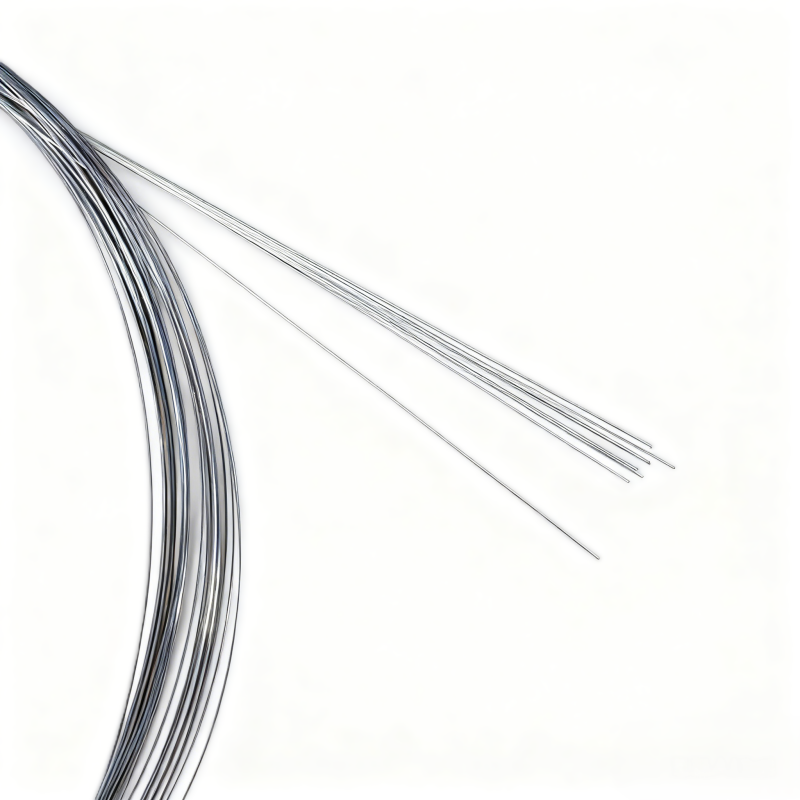
Nitinol Sheet Price Guide: Properties, Applications, and Value Explained

Get a Free Quote

Our representative will contact you soon.
Email
Name
Company Name
Message
0/1000

nitinol sheet price

Nitinol sheet price is a topic that draws significant attention from engineers, procurement specialists, and manufacturers across multiple industries. Nitinol, an alloy composed of nearly equal parts nickel and titanium, is one of the most remarkable smart materials available today. Its two defining characteristics, shape memory effect and superelasticity, set it apart from conventional metals and drive the demand that ultimately shapes nitinol sheet price in global markets. Understanding what you are paying for begins with understanding what this material can do. A nitinol sheet can return to a pre-programmed shape after being deformed, simply by applying heat. This shape memory effect is not a surface-level property but a fundamental behavior rooted in a reversible phase transformation between two crystalline structures, austenite and martensite. Superelasticity, the other key feature, allows the sheet to undergo large elastic deformations at constant temperature and spring back without permanent damage. These properties make nitinol sheet an irreplaceable component in applications where ordinary metals would fail. From a technological standpoint, nitinol sheets are produced through carefully controlled melting, hot rolling, cold rolling, and heat treatment processes. Each step influences the transformation temperature, surface finish, and mechanical performance of the final product. Manufacturers can tune the alloy composition and processing parameters to deliver sheets with specific transition temperatures, making the material adaptable to a wide range of operating environments. Nitinol sheet price reflects this complexity. The cost of raw nickel and titanium, the precision required during processing, and the quality control measures needed to meet medical, aerospace, or industrial standards all contribute to the final price point. Typical applications include medical devices such as stents and orthopedic implants, aerospace actuators, robotics, consumer electronics, and architectural elements. As demand grows across these sectors, understanding nitinol sheet price becomes essential for budgeting, sourcing, and competitive product development. Buyers who understand the factors behind nitinol sheet price are better positioned to negotiate effectively and select the right grade for their specific needs.

Popular Products

When you look at nitinol sheet price alongside the performance it delivers, the value becomes clear very quickly. Many buyers initially focus on the upfront cost, but the practical benefits of nitinol sheet make it a smart long-term investment across a wide range of applications. Here is a straightforward look at why nitinol sheet is worth every dollar you spend on it. First, nitinol sheet lasts. Unlike standard stainless steel or aluminum sheets that fatigue and crack under repeated stress, nitinol can cycle through millions of deformation and recovery events without losing its mechanical integrity. This durability means you replace parts less often, which reduces maintenance costs and production downtime over the life of your product. When you factor in these savings, nitinol sheet price looks far more competitive than a simple line-item comparison would suggest. Second, nitinol sheet gives you design freedom that no other metal can match. Because it can be programmed to return to a specific shape at a target temperature, you can build actuators, clamps, connectors, and structural components that respond automatically to environmental changes. You eliminate motors, solenoids, and complex control systems. Fewer moving parts mean lower assembly costs and higher reliability. For product designers and engineers, this translates directly into faster development cycles and leaner bills of materials. Third, nitinol sheet performs consistently in harsh environments. It resists corrosion in saline, acidic, and humid conditions, making it suitable for medical implants, marine equipment, and outdoor industrial systems. You do not need to apply protective coatings or schedule frequent inspections. The material handles the environment on its own, which saves both time and money in maintenance-heavy industries. Fourth, nitinol sheet price is becoming more accessible as production technology improves. Advances in vacuum arc remelting, precision rolling, and automated quality inspection have increased output and reduced waste, pushing costs down over time. Buyers who establish long-term supplier relationships and purchase in volume can negotiate favorable nitinol sheet price terms that make the material viable even for mid-scale production runs. Fifth, the biocompatibility of nitinol sheet opens doors in the medical device market that are closed to most other metals. Regulatory approval pathways for nitinol-based implants and instruments are well established, which reduces time to market for medical manufacturers. When you consider the revenue potential of a cleared medical device, the nitinol sheet price paid during development is a minor fraction of the overall investment. Sixth, nitinol sheet supports sustainability goals. Its long service life reduces material consumption and waste generation. Products built with nitinol sheet stay in service longer, which lowers the environmental footprint of manufacturing and disposal cycles. For companies working toward green certifications or ESG targets, this is a tangible and measurable benefit. In summary, nitinol sheet price is not just a procurement figure. It is a gateway to superior product performance, reduced lifecycle costs, expanded design possibilities, and access to high-value markets. Buyers who evaluate nitinol sheet price in the context of total value rather than unit cost consistently find that it delivers returns that justify the investment many times over.

Tips And Tricks

Why is phase transition stability of nickel titanium wire key to actuator success?

13

May

Why is phase transition stability of nickel titanium wire key to actuator success?

In the world of precision actuators, the materials used to generate motion are not merely components — they are the foundation of reliability. nickel titanium wire has emerged as one of the most compelling active materials in modern actuator engineer...
View More
Why do full-chain manufacturers provide a more stable supply of SMA wire?

14

May

Why do full-chain manufacturers provide a more stable supply of SMA wire?

In industrial and medical procurement, supply chain reliability is not a luxury — it is a fundamental requirement. When sourcing SMA wire, the type of manufacturer you partner with has a direct and measurable impact on delivery consistency, material ...
View More
How to ensure dimensional tolerances for precision Nitinol metal parts?

18

May

How to ensure dimensional tolerances for precision Nitinol metal parts?

Achieving tight dimensional tolerances in Nitinol metal components is one of the most demanding challenges in precision manufacturing. Unlike conventional metals, Nitinol — a nickel-titanium shape memory alloy — exhibits superelastic recovery and pha...
View More
Why should you prioritize the manufacturer's R&D center when choosing partners?

02

Jun

Why should you prioritize the manufacturer's R&D center when choosing partners?

When evaluating potential manufacturing partners, most procurement teams focus on price, lead time, and production capacity. These are legitimate criteria, but they often overlook one of the most telling indicators of long-term value: the strength an...
View More

Get a Free Quote

Our representative will contact you soon.
Email
Name
Company Name
Message
0/1000

nitinol sheet price

Shape Memory Effect Drives Unmatched Functional Value in Nitinol Sheet Price

Shape Memory Effect Drives Unmatched Functional Value in Nitinol Sheet Price

One of the most compelling reasons to invest in nitinol sheet, regardless of nitinol sheet price, is the shape memory effect. This property allows a nitinol sheet to be deformed at a low temperature and then recover its original, pre-programmed shape when heated above its transformation temperature. No other commercially available sheet metal offers this capability, and it fundamentally changes what engineers can build. The shape memory effect works because nitinol undergoes a reversible solid-state phase transformation. At lower temperatures, the alloy exists in a martensite phase, which is relatively soft and easily deformed. When heated, it transforms into the austenite phase, which is harder and returns to the memorized geometry. This transformation is repeatable, predictable, and tunable. By adjusting the nickel-to-titanium ratio and the heat treatment parameters during manufacturing, producers can set the transformation temperature anywhere from well below zero to above one hundred degrees Celsius. This tunability is a major part of what drives nitinol sheet price, and it is also what makes the material so versatile. In practical terms, the shape memory effect enables self-actuating components. A nitinol sheet can be formed into a spring, a clamp, a valve seat, or a structural bracket that automatically changes configuration in response to temperature. In medical devices, this means stents that expand to their working diameter when warmed by body heat. In aerospace, it means actuators that deploy without motors or hydraulics. In consumer products, it means thermally responsive mechanisms that add intelligence to otherwise passive assemblies. Each of these applications benefits from the elimination of external power sources and mechanical complexity. The reliability gains are substantial. A shape memory component made from nitinol sheet has no gears, no wires, and no electronics to fail. It responds directly to its environment, which makes it inherently robust. For buyers evaluating nitinol sheet price, this reliability translates into lower warranty costs, fewer field failures, and stronger customer satisfaction. The shape memory effect also supports miniaturization. Because the actuation force comes from the material itself rather than an attached mechanism, designers can create very small, lightweight components that perform work previously requiring much larger assemblies. This is particularly valuable in minimally invasive medical devices and compact aerospace systems where space and weight are tightly constrained. Understanding the shape memory effect is essential to understanding why nitinol sheet price is structured the way it is. The processing precision required to deliver consistent transformation temperatures, repeatable recovery strains, and reliable fatigue life is significant. Buyers who appreciate this complexity recognize that nitinol sheet price reflects genuine engineering value, not commodity metal pricing.
Superelasticity Makes Nitinol Sheet Price a Strategic Investment for High-Cycle Applications

Superelasticity Makes Nitinol Sheet Price a Strategic Investment for High-Cycle Applications

Superelasticity is the second defining property of nitinol sheet, and it is the reason why nitinol sheet price commands a premium in markets that demand extreme mechanical performance. Superelastic nitinol sheet can be stretched or bent to strains of six to eight percent and return completely to its original shape when the load is removed, all at room temperature and without any heating required. This behavior far exceeds the elastic limits of steel, titanium alloys, and most engineering metals, which typically recover only a fraction of a percent before yielding permanently. The mechanism behind superelasticity is the same phase transformation that drives the shape memory effect, but in this case it is triggered by stress rather than temperature. When a load is applied to a superelastic nitinol sheet, the austenite phase transforms to martensite under stress, accommodating the large deformation. When the load is removed, the martensite reverts to austenite and the sheet springs back. This stress-induced transformation is fully reversible and can be repeated millions of times without fatigue failure under properly designed conditions. For buyers assessing nitinol sheet price, this fatigue resistance is a critical economic factor. In high-cycle applications such as medical guidewires, flexible electronics, vibration dampers, and dynamic structural components, the ability to survive millions of load cycles without cracking or permanent deformation directly determines product lifespan. A component made from conventional spring steel might last tens of thousands of cycles before requiring replacement. A superelastic nitinol sheet component can outlast it by orders of magnitude, dramatically reducing replacement frequency and total cost of ownership. Superelasticity also enables designs that absorb and dissipate energy efficiently. The stress-strain curve of superelastic nitinol sheet exhibits a hysteresis loop, meaning the material absorbs energy during loading and releases it during unloading. This makes nitinol sheet an excellent material for impact protection, seismic damping, and vibration isolation systems. Buildings, bridges, and industrial machinery can benefit from nitinol sheet-based dampers that protect structures during earthquakes or mechanical shocks. The nitinol sheet price paid for these components is easily justified by the structural protection they provide. In the medical field, superelastic nitinol sheet is the material of choice for devices that must navigate tortuous anatomical pathways without kinking or breaking. Catheters, guidewires, and retrieval baskets made from superelastic nitinol sheet conform to body geometry under insertion forces and recover their shape once deployed. Patient safety and procedural success rates improve significantly compared to devices made from conventional metals. Regulatory bodies recognize this performance advantage, and the established safety profile of nitinol in medical applications reduces approval risk for new devices. When evaluating nitinol sheet price for superelastic applications, buyers should consider not just the material cost but the engineering value embedded in every sheet. The controlled composition, precise rolling tolerances, and validated fatigue performance that define a high-quality superelastic nitinol sheet represent years of materials science development. That knowledge and process control are what you are purchasing when you pay the nitinol sheet price, and the return on that investment is measured in product reliability, market access, and competitive differentiation.
Nitinol Sheet Price Reflects Advanced Processing and Quality Standards That Protect Your Investment

Nitinol Sheet Price Reflects Advanced Processing and Quality Standards That Protect Your Investment

A thorough understanding of nitinol sheet price requires looking closely at the manufacturing process that produces it. Nitinol is not a material that can be made with standard metallurgical equipment or conventional quality control practices. Every step of its production demands specialized technology, rigorous process control, and extensive testing, all of which are embedded in the nitinol sheet price that buyers encounter in the market. The production of nitinol sheet begins with melting. Because nickel and titanium are both highly reactive at elevated temperatures, nitinol must be melted in vacuum or inert atmosphere furnaces to prevent contamination. Vacuum arc remelting and vacuum induction melting are the two primary methods used by leading producers. The composition must be controlled to within fractions of a percent because even small deviations in the nickel-to-titanium ratio shift the transformation temperature significantly. A batch that is slightly off-composition may not meet the customer's specified performance requirements, making it unusable and costly to scrap. This compositional sensitivity is a primary driver of nitinol sheet price. After melting, the ingot is hot worked to break down the cast structure and improve homogeneity. Hot rolling and forging at carefully controlled temperatures refine the grain structure and prepare the material for subsequent cold working. Cold rolling to final thickness requires multiple passes with intermediate annealing steps to restore ductility and prevent cracking. Each annealing cycle must be performed at precise temperatures and durations to achieve the desired microstructure and transformation behavior. The surface finish of the final nitinol sheet is also carefully controlled. Depending on the application, sheets may be supplied with a pickled surface, a mechanically polished surface, or an electropolished surface. Medical-grade nitinol sheet requires electropolishing to remove surface defects and achieve the biocompatibility standards required by regulatory agencies. This additional processing step adds cost but is non-negotiable for medical applications, and it is reflected in the nitinol sheet price for medical-grade material. Quality control is another significant component of nitinol sheet price. Reputable producers perform differential scanning calorimetry to verify transformation temperatures, tensile testing to confirm mechanical properties, and fatigue testing to validate cycle life. Traceability documentation, material certifications, and compliance with standards such as ASTM F2063 for medical-grade nitinol are provided with each shipment. For buyers in regulated industries, this documentation is not optional. It is a requirement for product approval and liability management. Buyers who choose lower-cost nitinol sheet from suppliers who cannot provide full traceability and certified test data are taking on significant risk. A single batch of out-of-specification material can result in product recalls, regulatory action, and reputational damage that far exceeds any savings achieved on nitinol sheet price. The true cost of cheap nitinol sheet is measured not in dollars per kilogram but in the potential consequences of failure. Investing in properly certified, fully traceable nitinol sheet from a qualified supplier is the only approach that protects both your product and your business. When you evaluate nitinol sheet price from this perspective, the premium charged by reputable producers is not a cost burden. It is a quality assurance fee that safeguards your entire downstream investment.
Nitinol Sheet Price Guide: Properties, Applications, and Value Explained

Get a Free Quote

Our representative will contact you soon.
Email
Name
Company Name
Message
0/1000
Newsletter
Please Leave A Message With Us