Nitinol Muscle Wire: Silent, Lightweight Shape Memory Actuator for Precision Applications

Get a Free Quote

Our representative will contact you soon.
Email
Name
Company Name
Message
0/1000

nitinol muscle wire

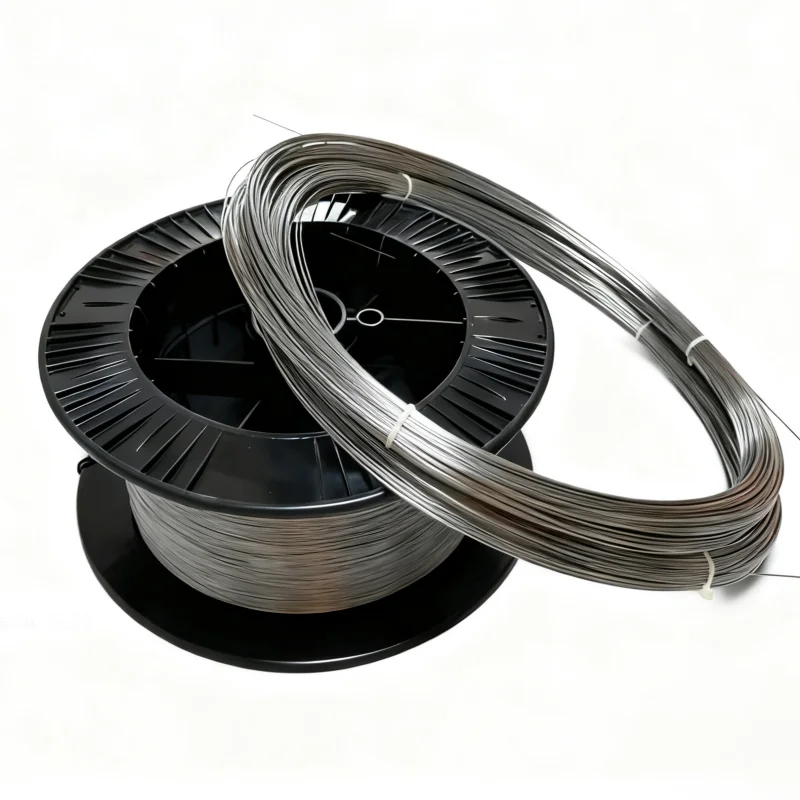
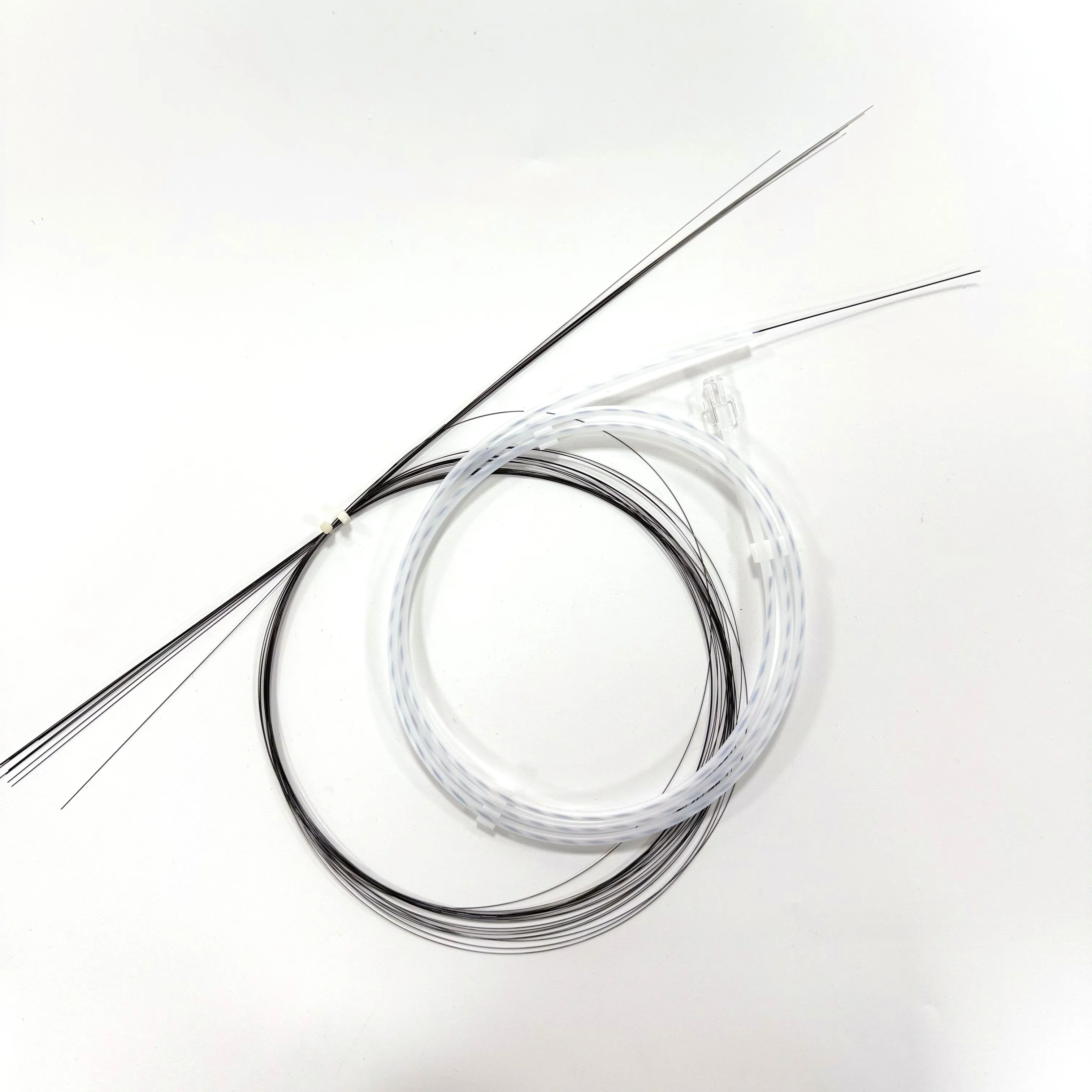
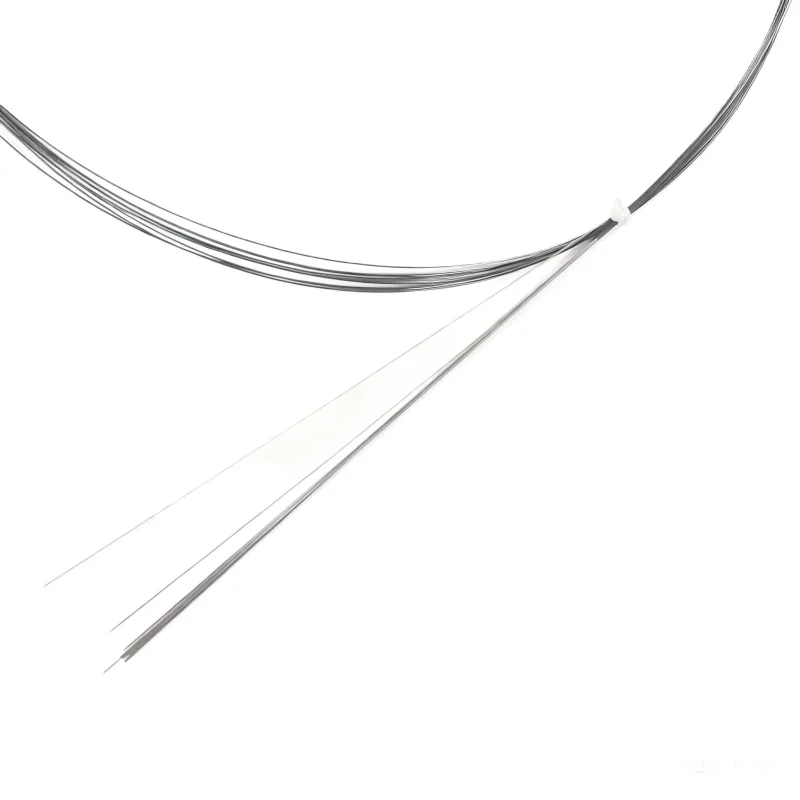
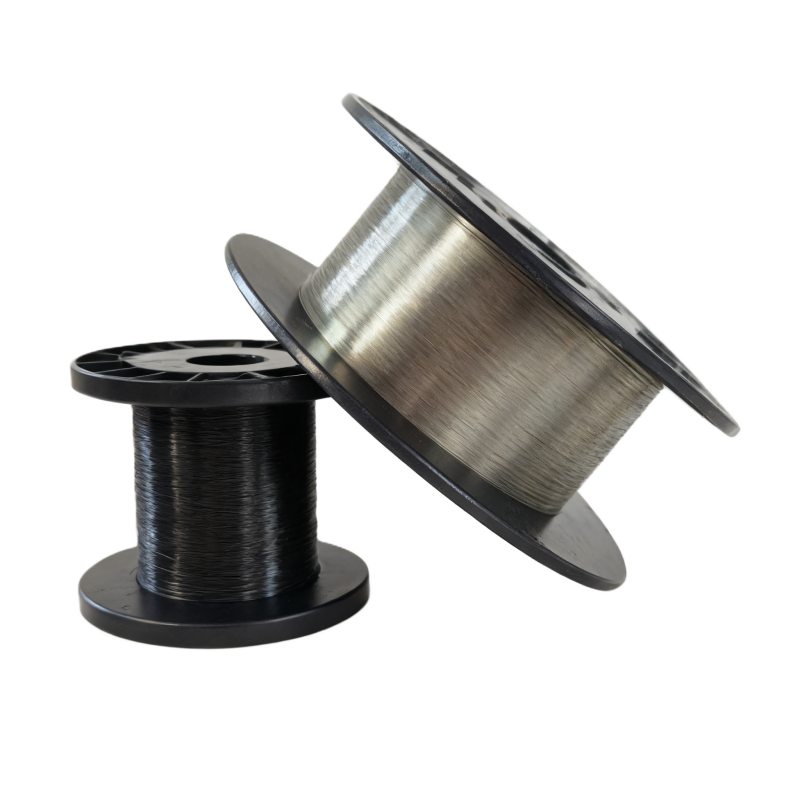
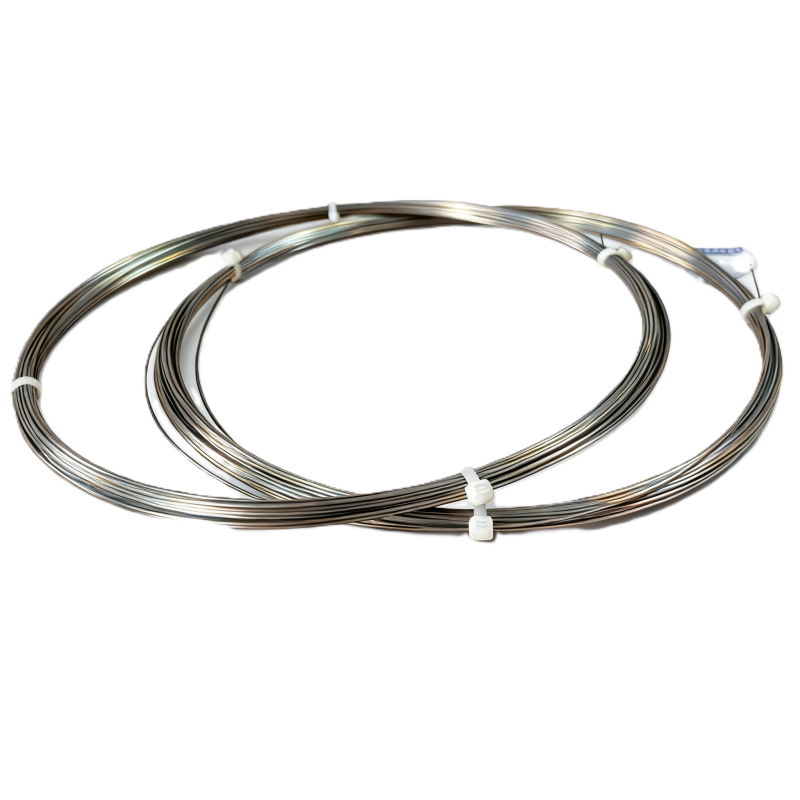
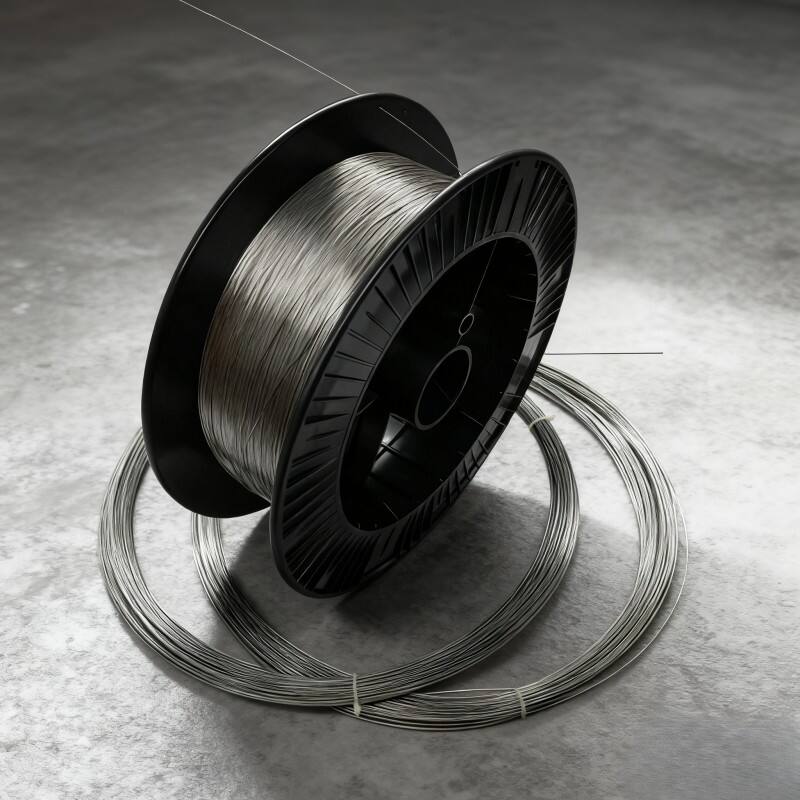
Nitinol muscle wire is a remarkable shape memory alloy material that has transformed the way engineers and designers approach motion, actuation, and mechanical design. Composed of nearly equal parts nickel and titanium, nitinol muscle wire derives its name from its ability to mimic the contracting behavior of biological muscle tissue. When an electrical current passes through the wire, it heats up and contracts, pulling loads or triggering mechanical movement with impressive precision and reliability. This behavior is rooted in a solid-state phase transformation between two crystal structures, martensite and austenite, which allows the wire to return to a pre-programmed shape upon heating and revert when cooled. The result is a clean, silent, and highly repeatable actuation mechanism that requires no motors, gears, or pneumatic systems. Nitinol muscle wire is available in a wide range of diameters, each calibrated to deliver specific contraction forces and response speeds, making it adaptable to an enormous variety of engineering challenges. Its biocompatibility makes it a preferred choice in medical device development, where it is used in minimally invasive surgical tools, catheter steering mechanisms, and implantable actuators. Beyond medicine, nitinol muscle wire finds application in robotics, aerospace, consumer electronics, automotive systems, and wearable technology. Engineers value it for its high power-to-weight ratio, which allows compact designs to generate meaningful mechanical force without adding bulk. The wire also exhibits superelastic properties under certain conditions, enabling it to absorb and recover from significant deformation without permanent damage. As manufacturing techniques have advanced, the consistency and performance of nitinol muscle wire have improved substantially, making it more accessible to product developers across industries. Whether used in a precision medical instrument or an experimental soft robot, nitinol muscle wire continues to push the boundaries of what lightweight, intelligent materials can achieve in modern engineering.


New Product Recommendations

Nitinol muscle wire gives you a smarter way to create movement in your products. Instead of relying on bulky motors, complex gear trains, or noisy pneumatic systems, you get a wire that simply contracts when heated and relaxes when cooled. That straightforward behavior opens up a world of practical benefits that matter to real product developers and engineers working on real problems. First, nitinol muscle wire is incredibly lightweight. Because the wire itself is the actuator, you eliminate the weight of motors, brackets, and transmission components. This makes a significant difference in applications like wearable devices, drones, and portable medical tools, where every gram counts. You can build a system that moves and responds without adding the kind of bulk that traditional actuators demand. Second, the wire operates silently. There are no spinning parts, no clicking gears, and no hissing air lines. This silence is a genuine advantage in medical environments, consumer products, and any setting where noise would be disruptive or unacceptable. Patients using medical devices powered by nitinol muscle wire experience a quieter, less intimidating interaction. Consumers using smart home products or wearables appreciate the clean, unobtrusive operation. Third, nitinol muscle wire delivers repeatable, precise movement. The contraction ratio is consistent across thousands of cycles when the wire is used within its rated parameters. This predictability makes it easier to design reliable products without building in excessive mechanical tolerances or complex feedback systems. You know what the wire will do, and it does it the same way every time. Fourth, the wire is biocompatible. Nitinol has a long track record of safe use inside the human body, which is why it appears in stents, guidewires, and surgical instruments. If you are developing a medical device or a product that contacts skin, nitinol muscle wire gives you a material you can trust to meet regulatory and safety expectations. Fifth, nitinol muscle wire scales well. Whether you need a tiny actuator for a micro-robotic finger or a stronger pull for an industrial mechanism, you can select a wire diameter that matches your force and stroke requirements. The range of available diameters means you are not locked into a one-size-fits-all solution. You choose the wire that fits your design, not the other way around. Sixth, the wire simplifies your system architecture. Fewer moving parts mean fewer failure points. A simpler mechanical design is easier to manufacture, easier to assemble, and easier to maintain. For startups and established manufacturers alike, that simplicity translates directly into lower production costs and faster time to market. Nitinol muscle wire is not just a clever material. It is a practical tool that helps you build better products with less complexity, less weight, and more reliability than conventional actuation methods can offer.

Latest News

Why is high-stability Nitinol the first choice for equipment in extreme conditions?

12

May

Why is high-stability Nitinol the first choice for equipment in extreme conditions?

When equipment must perform reliably under mechanical stress, thermal cycling, and repeated deformation, material selection becomes a critical engineering decision. Nitinol, the nickel-titanium shape memory alloy, has earned a dominant position in de...
View More
Why do full-chain manufacturers provide a more stable supply of SMA wire?

14

May

Why do full-chain manufacturers provide a more stable supply of SMA wire?

In industrial and medical procurement, supply chain reliability is not a luxury — it is a fundamental requirement. When sourcing SMA wire, the type of manufacturer you partner with has a direct and measurable impact on delivery consistency, material ...
View More
Why is a brand with a 5,000m² factory more professional in Nitinol customization?

22

May

Why is a brand with a 5,000m² factory more professional in Nitinol customization?

When sourcing advanced shape memory alloys for medical devices, aerospace components, or industrial actuators, the manufacturing environment behind a supplier tells you far more than a product catalog ever could. Nitinol customization is a precision-...
View More
Why should you prioritize the manufacturer's R&D center when choosing partners?

02

Jun

Why should you prioritize the manufacturer's R&D center when choosing partners?

When evaluating potential manufacturing partners, most procurement teams focus on price, lead time, and production capacity. These are legitimate criteria, but they often overlook one of the most telling indicators of long-term value: the strength an...
View More

Get a Free Quote

Our representative will contact you soon.
Email
Name
Company Name
Message
0/1000

nitinol muscle wire

Silent and Smooth Actuation Without Mechanical Complexity

Silent and Smooth Actuation Without Mechanical Complexity

One of the most compelling reasons engineers and product designers choose nitinol muscle wire is the complete absence of mechanical noise and vibration during operation. Traditional actuators, whether electric motors, solenoids, or pneumatic cylinders, all introduce some level of audible or tactile disturbance into a system. Motors hum and whir. Solenoids click and clunk. Pneumatic systems hiss and thump. Each of these characteristics can be a serious liability depending on the application. Nitinol muscle wire eliminates all of that. The actuation mechanism is entirely solid-state. When current flows through the wire, a crystallographic phase change occurs within the material itself, causing it to shorten along its length. There are no rotating components, no sliding surfaces, and no fluid dynamics involved. The result is motion that is genuinely silent and vibration-free. This characteristic has profound implications across multiple industries. In medical devices, silence reduces patient anxiety and allows clinicians to work in quiet, focused environments. A surgical tool or catheter actuated by nitinol muscle wire does not announce itself with mechanical noise, which is especially important in delicate procedures where concentration is critical. In consumer electronics and smart home products, silent operation contributes to a premium user experience. Customers associate quiet mechanisms with quality and sophistication, and nitinol muscle wire delivers that impression naturally. In robotics, particularly in social or collaborative robots designed to work alongside humans, silent movement makes the machine feel less threatening and more approachable. The absence of vibration also matters from an engineering standpoint. Vibration causes fatigue in structural components, loosens fasteners over time, and can interfere with sensitive sensors or optical systems. By choosing nitinol muscle wire as your actuation method, you remove a significant source of mechanical stress from your design. The wire contracts and extends smoothly, transmitting force without the impulse loads that characterize many conventional actuators. This gentler force profile extends the service life of connected components and reduces the need for vibration isolation hardware, which in turn saves weight, space, and cost. The simplicity of a nitinol muscle wire system also means there is less to go wrong. Fewer parts, fewer joints, and fewer interfaces all contribute to a more robust and maintainable product. For any application where quiet, smooth, and reliable motion is a priority, nitinol muscle wire stands out as the clear and practical choice.
Exceptional Power-to-Weight Ratio for Compact and Portable Designs

Exceptional Power-to-Weight Ratio for Compact and Portable Designs

When you are designing a product where size and weight are constrained, the power-to-weight ratio of your actuation system becomes one of the most critical engineering parameters you will face. Nitinol muscle wire excels in this area in a way that few other actuation technologies can match. A single strand of nitinol muscle wire can exert a pulling force many times greater than its own weight, making it one of the most force-dense actuators available to product developers today. To put this in perspective, consider what a conventional motor-driven actuator requires. You need the motor itself, a gearbox to convert speed into torque, a mounting structure to hold everything in place, wiring to deliver power, and often a position sensor to provide feedback. Each of these components adds weight, volume, and complexity. In a wearable device, a handheld medical instrument, or a miniature robot, that accumulation of components quickly becomes a design constraint that limits what you can achieve. Nitinol muscle wire collapses all of that into a single element. The wire is the actuator. It generates force, it moves, and it returns, all without any supporting mechanical infrastructure beyond the electrical connections needed to deliver current. This radical simplification allows designers to create products that are dramatically lighter and more compact than anything achievable with conventional actuation. In wearable exoskeletons and assistive devices, this matters enormously. A device that helps a person move their hand or arm must be light enough to wear comfortably for extended periods. Adding even a few hundred grams of actuator hardware can make the difference between a product that people actually use and one that sits on a shelf. Nitinol muscle wire enables actuator systems that weigh a fraction of their motor-driven equivalents while still delivering meaningful force output. In aerospace and defense applications, weight savings translate directly into performance gains and cost reductions. Every gram removed from an aircraft or unmanned vehicle improves range, payload capacity, and fuel efficiency. Nitinol muscle wire allows engineers to build control surfaces, latching mechanisms, and deployment systems that perform reliably while contributing minimal mass to the overall vehicle. The high power-to-weight ratio of nitinol muscle wire is not just a technical specification. It is a practical enabler that expands the design space available to engineers and allows products to reach performance and usability targets that would otherwise be out of reach.
Biocompatibility and Safety for Medical and Skin-Contact Applications

Biocompatibility and Safety for Medical and Skin-Contact Applications

The biocompatibility of nitinol muscle wire is one of its most strategically important properties, and it is a characteristic that sets this material apart from the vast majority of engineering alloys used in actuation systems. Nitinol, the nickel-titanium alloy from which nitinol muscle wire is made, has been studied extensively for its interaction with biological tissues and fluids. Decades of clinical use in cardiovascular stents, orthopedic staples, and endoscopic tools have established a strong safety record that regulatory agencies around the world recognize and accept. This history of safe use is invaluable for medical device developers. When you choose nitinol muscle wire as the actuation element in a medical product, you are building on a foundation of established biocompatibility data. This can significantly streamline the regulatory approval process, because you are not introducing an unknown material into a biological environment. You are using a material with a well-documented safety profile, which reduces the burden of biocompatibility testing and gives regulatory reviewers a familiar reference point. For implantable devices, this is particularly significant. The human body is an extraordinarily demanding environment for any material. Fluids are corrosive, temperatures fluctuate, and mechanical stresses are continuous. Nitinol muscle wire resists corrosion effectively in physiological conditions, maintains its mechanical properties over long periods of implantation, and does not provoke the kind of inflammatory response that many other metals trigger. These characteristics make it a trusted choice for applications ranging from active implants to minimally invasive surgical tools that must navigate delicate anatomical structures without causing tissue damage. Beyond fully implanted devices, nitinol muscle wire is also appropriate for products that contact skin over extended periods, such as wearable health monitors, rehabilitation devices, and smart garments. Skin contact applications have their own set of material requirements, including resistance to sweat, flexibility to accommodate body movement, and freedom from sensitizing agents. Nitinol muscle wire meets these requirements reliably, allowing designers to create comfortable, safe wearable products without compromising on actuation performance. The combination of biocompatibility, corrosion resistance, and mechanical reliability makes nitinol muscle wire the material of choice for any application where human safety is a non-negotiable design requirement.
Nitinol Muscle Wire: Silent, Lightweight Shape Memory Actuator for Precision Applications

Get a Free Quote

Our representative will contact you soon.
Email
Name
Company Name
Message
0/1000
Newsletter
Please Leave A Message With Us