Matrix Rings: Precision-Engineered Components for Superior Performance and Reliability

Get a Free Quote

Our representative will contact you soon.
Email
Name
Company Name
Message
0/1000

matrix rings

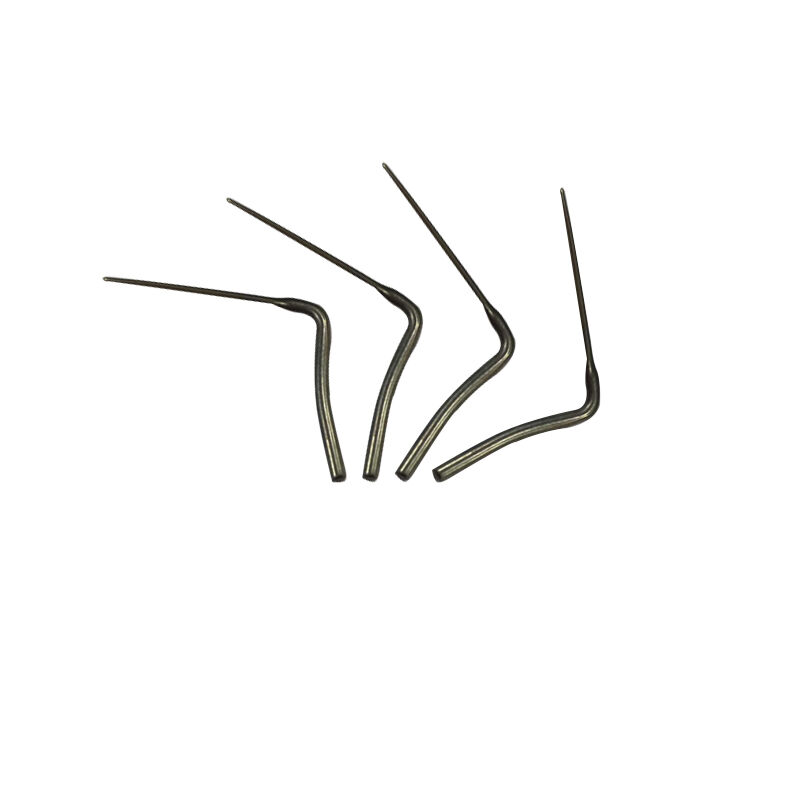
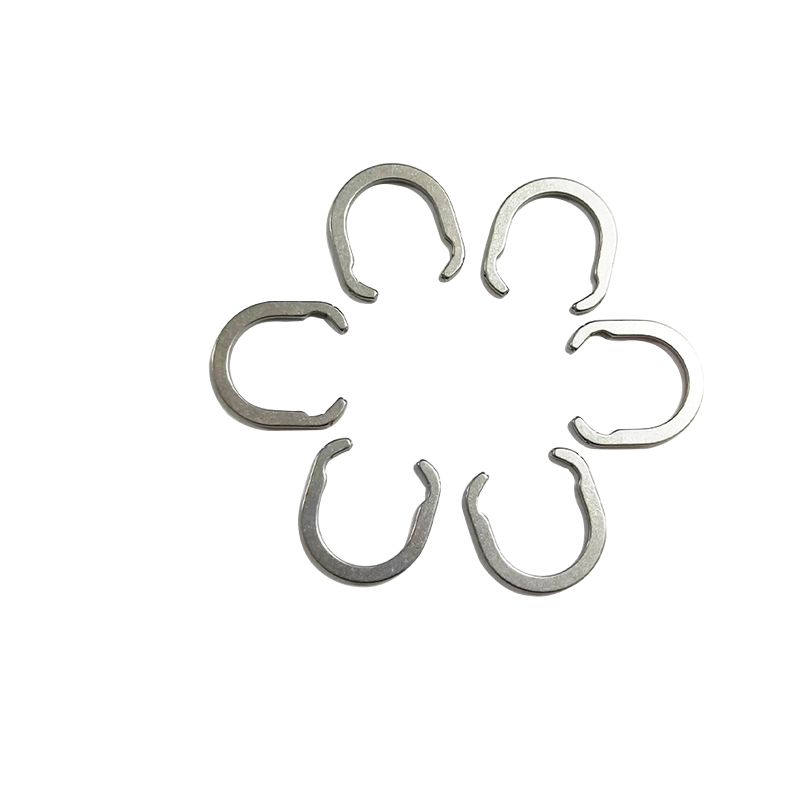
Matrix rings represent a sophisticated category of precision-engineered components that play a critical role across a wide range of industrial, mechanical, and technological applications. Designed to deliver consistent performance under demanding conditions, matrix rings combine advanced material science with precision manufacturing to produce components that meet the highest standards of reliability and durability. At their core, matrix rings function as structural and functional connectors, providing sealing, load distribution, alignment, and rotational support within complex assemblies. Their design allows them to accommodate both radial and axial forces, making them indispensable in systems where multi-directional stress management is essential. From heavy-duty industrial machinery to precision optical instruments, matrix rings serve as the backbone of countless mechanical systems. Technologically, matrix rings are engineered using high-performance materials such as hardened steel alloys, advanced polymers, ceramic composites, and specialized coatings that enhance resistance to corrosion, heat, and mechanical wear. The manufacturing process typically involves computer-aided design and CNC machining, ensuring dimensional accuracy down to micrometer tolerances. Surface treatments such as nitriding, anodizing, and PTFE coating are commonly applied to extend service life and reduce friction. Many modern matrix rings also incorporate smart material properties, allowing them to respond dynamically to changes in temperature, pressure, or load. In terms of applications, matrix rings are widely used in aerospace engineering, automotive drivetrains, hydraulic and pneumatic systems, robotics, medical devices, and semiconductor manufacturing equipment. Their versatility makes them suitable for both high-speed rotating assemblies and static load-bearing configurations. In the energy sector, matrix rings are found in wind turbines, oil and gas drilling equipment, and power generation systems where reliability under extreme conditions is non-negotiable. The growing demand for miniaturization in electronics and medical technology has also driven innovation in micro-scale matrix rings, which deliver the same performance characteristics in significantly reduced form factors. As industries continue to push the boundaries of performance and efficiency, matrix rings remain at the forefront of enabling technologies, offering engineers and designers the precision, strength, and adaptability needed to build the next generation of high-performance systems.


New Product Recommendations

Matrix rings offer a compelling set of practical benefits that make them a smart choice for engineers, procurement specialists, and product designers who need reliable, long-lasting components without unnecessary complexity. Here is a clear look at what matrix rings bring to the table and why they matter for your operations. First, matrix rings dramatically extend the service life of the assemblies they are part of. Because they are built from high-grade materials and manufactured to tight tolerances, they resist wear far better than standard alternatives. This means fewer replacements, less downtime, and lower maintenance costs over the lifetime of your equipment. For any operation where unplanned stoppages translate directly into lost revenue, this durability is a major financial advantage. Second, matrix rings handle stress from multiple directions at once. Unlike simpler components that only manage force along a single axis, matrix rings distribute both radial and axial loads efficiently. This multi-directional capability reduces the strain on surrounding components, which in turn lowers the risk of cascading failures within a system. Your entire assembly benefits from the presence of a well-designed matrix ring at its core. Third, matrix rings are highly adaptable. They are available in a wide range of sizes, materials, and surface finishes, which means you can find or specify a matrix ring that fits your exact application without compromise. Whether you are working with extreme temperatures, corrosive environments, high-speed rotation, or heavy static loads, there is a matrix ring configuration engineered to perform reliably in those conditions. This adaptability reduces the need for custom workarounds and simplifies your supply chain. Fourth, matrix rings contribute directly to energy efficiency. By minimizing friction and optimizing load transfer, they reduce the energy losses that occur at connection and bearing points throughout a mechanical system. Over time, this translates into measurable reductions in power consumption, which benefits both your operating budget and your sustainability goals. Fifth, matrix rings support precision and consistency in high-accuracy applications. In industries like semiconductor manufacturing, medical device production, and aerospace assembly, dimensional stability and repeatable performance are non-negotiable. Matrix rings deliver the tight tolerances and predictable behavior that these demanding environments require, helping you maintain quality standards and pass regulatory inspections with confidence. Sixth, installation and integration of matrix rings is straightforward. Their standardized geometries and compatibility with common assembly methods mean that your technicians can install them quickly and correctly without specialized training. This reduces labor costs and minimizes the risk of installation errors that could compromise system performance. Seventh, matrix rings provide excellent value for money. While they may carry a higher upfront cost compared to lower-grade alternatives, the total cost of ownership is significantly lower when you factor in reduced maintenance, longer service intervals, and the avoided costs of system failures. Investing in quality matrix rings is a decision that pays dividends throughout the operational life of your equipment. In summary, matrix rings give you durability, versatility, efficiency, precision, and ease of use in a single well-engineered component. They are a practical upgrade that delivers real, measurable improvements to the performance and economics of your systems.

Tips And Tricks

Why is phase transition stability of nickel titanium wire key to actuator success?

13

May

Why is phase transition stability of nickel titanium wire key to actuator success?

In the world of precision actuators, the materials used to generate motion are not merely components — they are the foundation of reliability. nickel titanium wire has emerged as one of the most compelling active materials in modern actuator engineer...
View More
Why do full-chain manufacturers provide a more stable supply of SMA wire?

14

May

Why do full-chain manufacturers provide a more stable supply of SMA wire?

In industrial and medical procurement, supply chain reliability is not a luxury — it is a fundamental requirement. When sourcing SMA wire, the type of manufacturer you partner with has a direct and measurable impact on delivery consistency, material ...
View More
Why do full-process manufacturers provide higher performance Nitinol SMA?

20

May

Why do full-process manufacturers provide higher performance Nitinol SMA?

When engineers and procurement specialists evaluate materials for high-precision medical devices, aerospace components, or advanced actuator systems, the source of the material matters as much as the material itself. Nitinol SMA — the nickel-titanium...
View More
What breakthroughs can Nitinol material bring to future flexible robot joints?

25

May

What breakthroughs can Nitinol material bring to future flexible robot joints?

The evolution of robotics is deeply tied to the materials that power movement, flexibility, and responsiveness. Among the most promising advances in this space, Nitinol material stands out as a transformative force in the design of flexible robot joi...
View More

Get a Free Quote

Our representative will contact you soon.
Email
Name
Company Name
Message
0/1000

matrix rings

Unmatched Durability Built for the Most Demanding Environments

Unmatched Durability Built for the Most Demanding Environments

One of the most significant advantages that matrix rings bring to any application is their exceptional durability, which is not simply a product of using premium raw materials but rather the result of a holistic engineering approach that considers every factor contributing to component longevity. Matrix rings are designed from the ground up to withstand the harshest operating conditions that modern industrial and technological systems can produce. The materials selected for matrix rings include hardened steel alloys with precisely controlled carbon content, high-performance engineering polymers such as PEEK and PTFE composites, and advanced ceramic materials that offer outstanding hardness and thermal stability. Each material choice is matched to the specific demands of the intended application, ensuring that the matrix ring performs optimally rather than merely adequately. Beyond material selection, the surface engineering applied to matrix rings plays a crucial role in their durability. Processes such as case hardening, nitriding, hard chrome plating, and diamond-like carbon coating create surface layers that are dramatically harder and more wear-resistant than the base material alone. These treatments also provide protection against corrosion, chemical attack, and oxidation, which are common causes of premature component failure in real-world operating environments. The manufacturing precision of matrix rings further contributes to their long service life. When a component is machined to micrometer-level tolerances, it fits correctly within its assembly from day one. Proper fit eliminates the micro-movements and edge loading that cause accelerated wear in poorly manufactured alternatives. Matrix rings that fit precisely distribute stress evenly across their contact surfaces, which is the single most effective way to maximize fatigue life and prevent the initiation of surface cracks. For customers, this durability translates into concrete operational benefits. Maintenance intervals can be extended significantly, reducing the frequency and cost of scheduled service. The risk of unexpected failures drops sharply, protecting both equipment and personnel. Over the full lifecycle of a machine or system, the use of high-quality matrix rings consistently delivers a lower total cost of ownership compared to cheaper alternatives that require more frequent replacement. In environments where access for maintenance is difficult or costly, such as offshore platforms, aerospace systems, or deep-bore drilling equipment, the extended service life of matrix rings is not just a convenience but a critical operational requirement. Choosing matrix rings means choosing components that will continue to perform reliably long after lesser alternatives have failed.
Precision Engineering That Supports the Highest Accuracy Standards

Precision Engineering That Supports the Highest Accuracy Standards

In industries where the margin for error is measured in micrometers and the consequences of dimensional drift can be catastrophic, the precision engineering behind matrix rings becomes one of their most valuable attributes. Matrix rings are not simply manufactured to be round and smooth. They are produced through multi-stage machining and finishing processes that achieve geometric accuracy and surface quality at a level that directly enables the high-performance systems they support. The production of precision matrix rings begins with computer-aided design models that define every dimension, tolerance, and surface characteristic with exacting specificity. These digital models drive CNC grinding and turning operations that remove material with sub-micron precision, producing ring geometries that conform to their specifications within tolerances that are often tighter than a single human hair. After machining, matrix rings undergo rigorous inspection using coordinate measuring machines, optical profilometers, and roundness testing equipment to verify that every dimension falls within the specified tolerance band. This commitment to dimensional accuracy has profound practical implications for the systems that incorporate matrix rings. When a ring is perfectly round and dimensionally correct, it creates uniform contact with mating surfaces. Uniform contact means uniform load distribution, which eliminates stress concentrations that would otherwise initiate fatigue cracks and lead to premature failure. It also means that sealing surfaces close completely and consistently, preventing leakage in hydraulic and pneumatic systems. In rotating assemblies, dimensional precision in matrix rings directly affects vibration levels, noise output, and rotational accuracy. A precisely manufactured matrix ring supports smooth, stable rotation that is essential in applications ranging from high-speed spindles in machine tools to gyroscopic instruments in navigation systems. For customers in the semiconductor, medical device, and aerospace sectors, the precision of matrix rings is a direct enabler of product quality and regulatory compliance. These industries operate under strict standards that require documented evidence of component accuracy, and matrix rings that are manufactured and inspected to certified tolerances provide the traceability and confidence that quality management systems demand. Investing in precision matrix rings is therefore not an optional upgrade but a fundamental requirement for anyone building systems where accuracy, reliability, and compliance are non-negotiable priorities.
Versatile Design That Adapts Across Industries and Applications

Versatile Design That Adapts Across Industries and Applications

The true measure of a component's engineering excellence is not just how well it performs in a single application but how effectively it can be adapted to serve diverse needs across a broad spectrum of industries and operating conditions. Matrix rings excel on this dimension, offering a degree of design versatility that makes them one of the most widely applicable precision components available to engineers and product designers today. The versatility of matrix rings begins with the breadth of materials from which they can be produced. Depending on the application requirements, matrix rings can be manufactured from stainless steel grades optimized for corrosion resistance, tool steel grades engineered for maximum hardness, titanium alloys that combine strength with low weight, engineering plastics that offer chemical resistance and electrical insulation, and composite materials that deliver tailored combinations of properties unavailable in any single homogeneous material. This material flexibility means that a matrix ring can be specified for a cryogenic aerospace application one day and a high-temperature industrial furnace application the next, with each version optimized for its specific environment. Geometric versatility is equally important. Matrix rings are available in configurations ranging from simple flat rings and stepped rings to complex cross-sectional profiles that incorporate sealing lips, load shoulders, and precision bore features in a single integrated component. This ability to consolidate multiple functional elements into one matrix ring reduces part count, simplifies assembly, and improves system reliability by eliminating the interfaces between separate components that would otherwise be potential failure points. The surface finish options available for matrix rings further extend their applicability. Smooth mirror finishes support sealing and low-friction sliding applications, while textured or coated surfaces can be specified to promote adhesion, retain lubricants, or provide electrical conductivity or insulation as required. For customers, this versatility delivers significant practical value. It means that matrix rings can be sourced from a single trusted supplier across multiple product lines and applications, simplifying vendor management and enabling volume pricing advantages. It also means that when a new application arises, the engineering team can draw on proven matrix ring technology rather than developing an entirely new component from scratch, accelerating development timelines and reducing technical risk. Matrix rings are, in the most practical sense, a universal solution that grows with your engineering ambitions.
Matrix Rings: Precision-Engineered Components for Superior Performance and Reliability

Get a Free Quote

Our representative will contact you soon.
Email
Name
Company Name
Message
0/1000
Newsletter
Please Leave A Message With Us