Exceptional Shape Memory Effect Transforms Design Possibilities
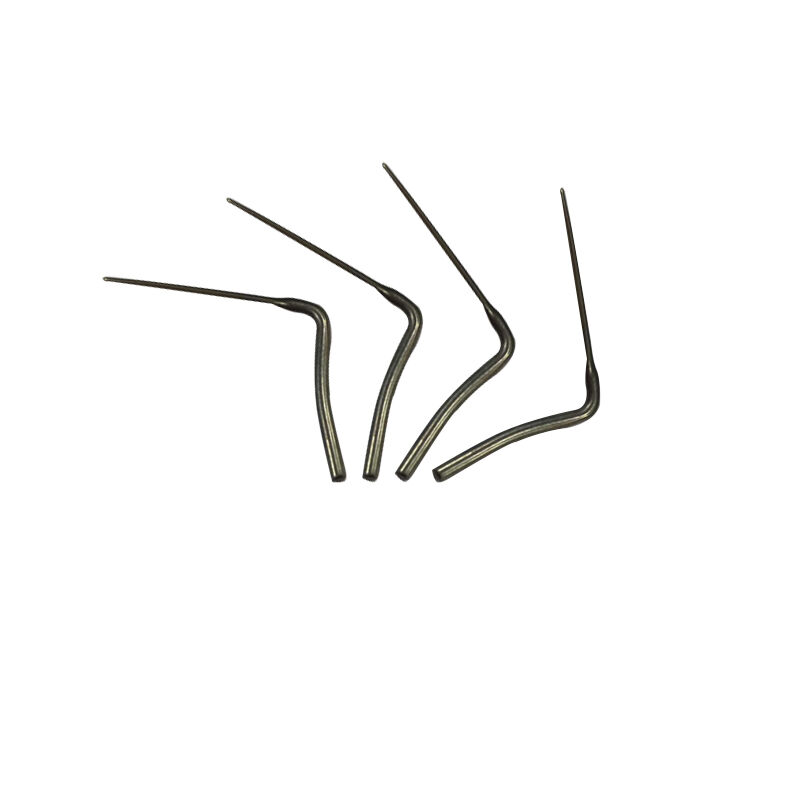
The shape memory effect exhibited by memory metal nitinol fundamentally changes how engineers approach design challenges, offering capabilities impossible with conventional materials. This remarkable property allows memory metal nitinol components to be deformed at lower temperatures into a temporary shape, then recover their original predetermined geometry when heated above the transformation temperature. The transformation occurs through a crystallographic phase change from martensite to austenite, happening rapidly and generating substantial recovery forces exceeding 60,000 psi in some configurations. Designers can program memory metal nitinol into complex three-dimensional shapes during manufacturing through a training process involving constraint, heat treatment, and controlled cooling, essentially encoding geometric information into the material's crystal structure. This programmability enables the creation of self-deploying structures, adaptive components, and automatic mechanisms that respond to environmental temperature changes without external control systems. In practical applications, memory metal nitinol actuators provide linear motion, rotary motion, or complex spatial movements through intelligent design of the trained shape, replacing bulky motors, solenoids, and pneumatic cylinders with elegant solutions weighing a fraction of traditional actuators. The recovery process is highly repeatable, with properly designed memory metal nitinol components performing millions of actuation cycles while maintaining consistent stroke length and force output, ensuring reliable long-term operation. Engineers exploit this repeatability in critical applications where failure is unacceptable, confident that memory metal nitinol will respond predictably throughout its service life. The amount of shape change achievable reaches up to eight percent strain recovery, allowing designers to create substantial motion from compact components, particularly valuable in space-constrained applications like minimally invasive surgical tools or miniature robotic systems. Temperature control determines when and how quickly memory metal nitinol responds, with transformation ranges adjustable during manufacturing from cryogenic temperatures to several hundred degrees Celsius, matching the material's behavior to specific application requirements. This tunability means memory metal nitinol can activate from body heat in medical implants, engine heat in automotive applications, or electrical heating elements in precision instruments, providing flexibility across industries and use cases.

 EN
EN