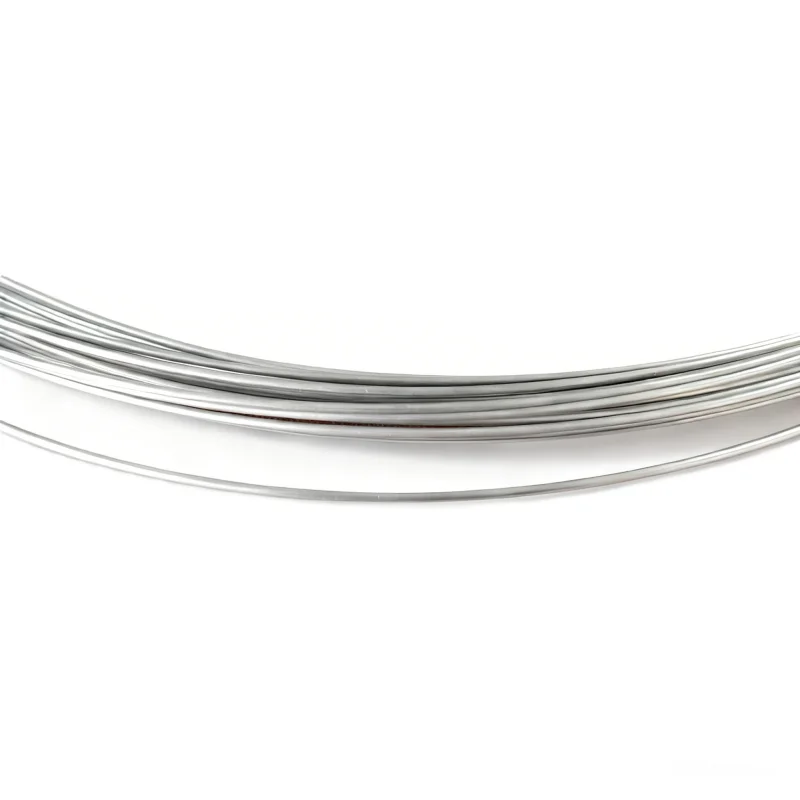
Shape Memory Alloy in Civil Engineering: Revolutionary Smart Materials for Resilient Infrastructure

Get a Free Quote

Our representative will contact you soon.
Email
Name
Company Name
Message
0/1000

shape memory alloy in civil engineering

Shape memory alloy in civil engineering represents a revolutionary advancement in construction materials that combines exceptional mechanical properties with intelligent responsive behavior. These remarkable metallic materials possess the unique ability to return to their original shape after deformation when exposed to specific temperature changes or stress removal. In civil engineering applications, shape memory alloys have emerged as transformative solutions for structural control, seismic retrofitting, and adaptive building systems. The primary function of shape memory alloy in civil engineering involves providing self-centering capabilities, energy dissipation, and autonomous structural correction without external power sources. The technological features of these alloys include superelasticity, which allows materials to undergo significant strain and recover completely, and the shape memory effect, where the material remembers its original configuration and returns to it upon thermal activation. Nickel-titanium alloys are the most commonly utilized shape memory alloy in civil engineering projects due to their superior performance characteristics and reliability. These materials demonstrate exceptional fatigue resistance, corrosion resistance, and biocompatibility, making them ideal for long-term structural applications. The applications of shape memory alloy in civil engineering span across bridge construction, where they serve as seismic dampers and expansion joint systems, building structures requiring adaptive stiffness control, pipeline coupling systems that create leak-proof connections, and concrete reinforcement that provides active crack closure. Engineers integrate shape memory alloy in civil engineering projects to enhance structural resilience against earthquakes, wind loads, and temperature fluctuations. The material's ability to dissipate energy during seismic events while maintaining structural integrity has positioned it as a preferred choice for earthquake-prone regions. Furthermore, shape memory alloy in civil engineering enables the development of smart structures that respond autonomously to environmental changes, reducing maintenance requirements and extending service life. The growing adoption of these materials reflects the industry's commitment to creating safer, more durable, and intelligent infrastructure systems.


New Products

The advantages of shape memory alloy in civil engineering deliver substantial practical benefits that directly impact project performance, safety, and cost-effectiveness. First and foremost, these materials provide exceptional durability that outlasts conventional construction materials by decades. Buildings and bridges incorporating shape memory alloy in civil engineering require significantly less maintenance over their operational lifetime because the material resists corrosion, fatigue, and environmental degradation. This translates to reduced maintenance costs and fewer service interruptions for facility owners and operators. The self-healing properties of shape memory alloy in civil engineering create structures that automatically correct minor deformations and damage without human intervention. When micro-cracks form in structural elements, the shape memory effect activates and closes these cracks, preventing moisture ingress and further deterioration. This autonomous repair capability means property owners avoid expensive manual inspections and repairs that traditional materials demand. Energy dissipation capabilities represent another compelling advantage of shape memory alloy in civil engineering projects. During earthquakes or high wind events, these materials absorb and dissipate destructive forces, protecting the primary structural elements from damage. This protective function keeps buildings operational after natural disasters, eliminating costly downtime and reconstruction expenses. The installation process for shape memory alloy in civil engineering systems proves remarkably straightforward compared to complex mechanical damping systems. Contractors appreciate the simplified construction procedures that reduce labor hours and accelerate project timelines. Temperature-activated connectors and fasteners made from shape memory alloy eliminate the need for welding or special joining techniques, cutting installation time substantially. Property values increase when shape memory alloy in civil engineering forms part of the structural system because buyers recognize the enhanced safety features and reduced long-term operating costs. Insurance companies often provide premium discounts for buildings incorporating advanced seismic protection systems utilizing these intelligent materials. The lightweight nature of shape memory alloy in civil engineering applications reduces the overall structural load, allowing architects to design more ambitious structures with larger open spaces and fewer support columns. This design flexibility creates more attractive and functional buildings that command higher rental rates and sale prices. Environmental sustainability represents an increasingly important advantage as shape memory alloy in civil engineering reduces material waste through extended service life and eliminates the need for replacement components. The recyclability of these metallic alloys supports circular economy principles and helps construction projects achieve green building certifications. Owners benefit from enhanced reputation and potential tax incentives associated with sustainable construction practices.

Practical Tips

Why is high-stability Nitinol the first choice for equipment in extreme conditions?

12

May

Why is high-stability Nitinol the first choice for equipment in extreme conditions?

When equipment must perform reliably under mechanical stress, thermal cycling, and repeated deformation, material selection becomes a critical engineering decision. Nitinol, the nickel-titanium shape memory alloy, has earned a dominant position in de...
View More
How to ensure dimensional tolerances for precision Nitinol metal parts?

18

May

How to ensure dimensional tolerances for precision Nitinol metal parts?

Achieving tight dimensional tolerances in Nitinol metal components is one of the most demanding challenges in precision manufacturing. Unlike conventional metals, Nitinol — a nickel-titanium shape memory alloy — exhibits superelastic recovery and pha...
View More
Why is Starspring's Nitinol metal at the forefront of the smart drive industry?

19

May

Why is Starspring's Nitinol metal at the forefront of the smart drive industry?

The smart drive industry is defined by its relentless demand for materials that can do more with less — components that respond intelligently to their environment, endure repeated mechanical cycles, and perform with precision in applications ranging ...
View More
How to identify high-quality Nitinol sources with a 21-year background?

01

Jun

How to identify high-quality Nitinol sources with a 21-year background?

Sourcing Nitinol for industrial, medical, or specialty applications is not a decision that should be made lightly. Nitinol, the nickel-titanium shape memory alloy renowned for its superelastic behavior and thermal responsiveness, demands a level of m...
View More

Get a Free Quote

Our representative will contact you soon.
Email
Name
Company Name
Message
0/1000

shape memory alloy in civil engineering

Superior Seismic Protection Through Intelligent Energy Dissipation

Superior Seismic Protection Through Intelligent Energy Dissipation

The application of shape memory alloy in civil engineering for seismic protection delivers unprecedented safety advantages that conventional structural systems cannot match. When earthquakes strike, buildings equipped with shape memory alloy dampers and bracing systems automatically absorb and dissipate seismic energy, preventing catastrophic structural failure and protecting occupants. The superelastic properties of shape memory alloy in civil engineering enable these materials to undergo extreme deformation during ground shaking while returning completely to their original shape once the seismic event concludes. This self-centering behavior eliminates permanent structural drift that plagues conventional buildings after earthquakes, meaning facilities remain fully operational without requiring extensive repairs. Building owners in earthquake-prone regions gain tremendous value from shape memory alloy in civil engineering because their properties maintain functionality and value even after major seismic events. Traditional steel reinforcement and concrete structures often suffer irreversible damage during earthquakes, necessitating expensive strengthening work or complete reconstruction. In contrast, structures incorporating shape memory alloy in civil engineering bounce back automatically, dramatically reducing recovery costs and business interruption losses. The material's exceptional fatigue resistance ensures reliable performance through multiple seismic cycles over the building's lifetime, providing consistent protection year after year. Engineers designing with shape memory alloy in civil engineering can reduce the overall quantity of structural materials required because these intelligent alloys provide superior performance per unit weight compared to conventional options. This material efficiency translates to lower construction costs and faster project delivery while enhancing safety margins. The technology behind shape memory alloy in civil engineering for seismic applications has been validated through extensive laboratory testing and real-world implementations in countries including Japan, New Zealand, and the United States. Monitored buildings demonstrate that shape memory alloy components perform exactly as predicted during actual earthquakes, giving property owners confidence in their investment. Insurance actuaries increasingly recognize the risk reduction benefits of shape memory alloy in civil engineering, leading to measurable premium reductions for properly engineered installations.
Autonomous Structural Repair and Maintenance Reduction

Autonomous Structural Repair and Maintenance Reduction

Shape memory alloy in civil engineering revolutionizes building maintenance through autonomous repair capabilities that dramatically reduce lifecycle costs and extend structural service life. The shape memory effect enables structural components to detect and respond to damage automatically without sensors, controllers, or external power supplies. When temperature fluctuations or stress changes occur, shape memory alloy in civil engineering activates and physically closes cracks, tightens connections, and restores structural integrity without human intervention. This self-healing functionality represents a paradigm shift from reactive maintenance to proactive autonomous repair. Facility managers benefit enormously from shape memory alloy in civil engineering because routine inspection requirements decrease substantially when structures can repair themselves. Traditional reinforced concrete structures require regular inspections to identify cracks, spalling, and reinforcement corrosion, with each inspection representing significant expense and operational disruption. Buildings incorporating shape memory alloy in civil engineering reduce inspection frequencies because the material actively prevents minor damage from progressing into major structural problems. The financial impact becomes particularly significant for infrastructure like bridges and tunnels where inspection costs escalate due to traffic control requirements and specialized access equipment. Property owners installing shape memory alloy in civil engineering realize return on investment through avoided maintenance expenses that accumulate over decades of operation. The initial premium for shape memory alloy materials typically represents less than five percent of total construction costs while delivering maintenance savings exceeding thirty percent over the structure's lifetime. These economic benefits make shape memory alloy in civil engineering increasingly attractive for both new construction and retrofit applications. The longevity advantage of shape memory alloy in civil engineering stems from the material's inherent corrosion resistance, which eliminates the deterioration that plagues conventional steel reinforcement. Chloride-induced corrosion causes billions in annual infrastructure damage worldwide, but shape memory alloy in civil engineering provides immunity to this degradation mechanism. Coastal structures, parking garages, and bridges exposed to deicing salts particularly benefit from corrosion-resistant shape memory alloy applications. Building owners avoid the expensive concrete removal and replacement procedures that corroded conventional reinforcement necessitates.
Enhanced Design Flexibility and Architectural Freedom

Enhanced Design Flexibility and Architectural Freedom

Incorporating shape memory alloy in civil engineering unlocks architectural possibilities that conventional materials cannot achieve, enabling designers to create innovative structures with unprecedented performance characteristics. The unique mechanical properties of shape memory alloy in civil engineering allow engineers to develop adaptive building systems that change stiffness, damping, or geometry in response to environmental conditions. This intelligent responsiveness means architects can design slender, elegant structures without compromising safety or serviceability requirements. Building owners gain competitive advantages through distinctive architectural features that shape memory alloy in civil engineering makes feasible, attracting tenants and commanding premium lease rates. The high strength-to-weight ratio of shape memory alloy in civil engineering permits longer structural spans with fewer intermediate supports, creating expansive column-free interior spaces that enhance functionality and aesthetic appeal. Convention centers, sports arenas, and commercial office buildings benefit particularly from the open floor plans that shape memory alloy technology enables. Developers can maximize rentable square footage while providing the flexible spaces that modern tenants demand. The material efficiency of shape memory alloy in civil engineering reduces foundation requirements because lighter superstructures transmit smaller loads to supporting soils. This foundation savings often offsets the material premium for shape memory alloy components, making the overall project economics favorable. Construction speed accelerates when utilizing shape memory alloy in civil engineering because simplified connection details eliminate complex field welding and facilitate prefabrication strategies. Contractors can assemble structural systems faster with temperature-activated couplings and fasteners that create secure connections through controlled heating cycles. The reduced construction duration translates directly to earlier revenue generation for commercial developers and lower financing costs throughout the project. Shape memory alloy in civil engineering also enables innovative facade systems that adapt to solar radiation, improving building energy performance without mechanical actuators or control systems. These responsive building envelopes enhance occupant comfort while reducing heating and cooling expenses, contributing to operational cost savings and sustainability goals. Architects working with shape memory alloy in civil engineering can specify dynamic shading devices, ventilation systems, and structural elements that optimize performance across varying environmental conditions.
Shape Memory Alloy in Civil Engineering: Revolutionary Smart Materials for Resilient Infrastructure

Get a Free Quote

Our representative will contact you soon.
Email
Name
Company Name
Message
0/1000
Newsletter
Please Leave A Message With Us