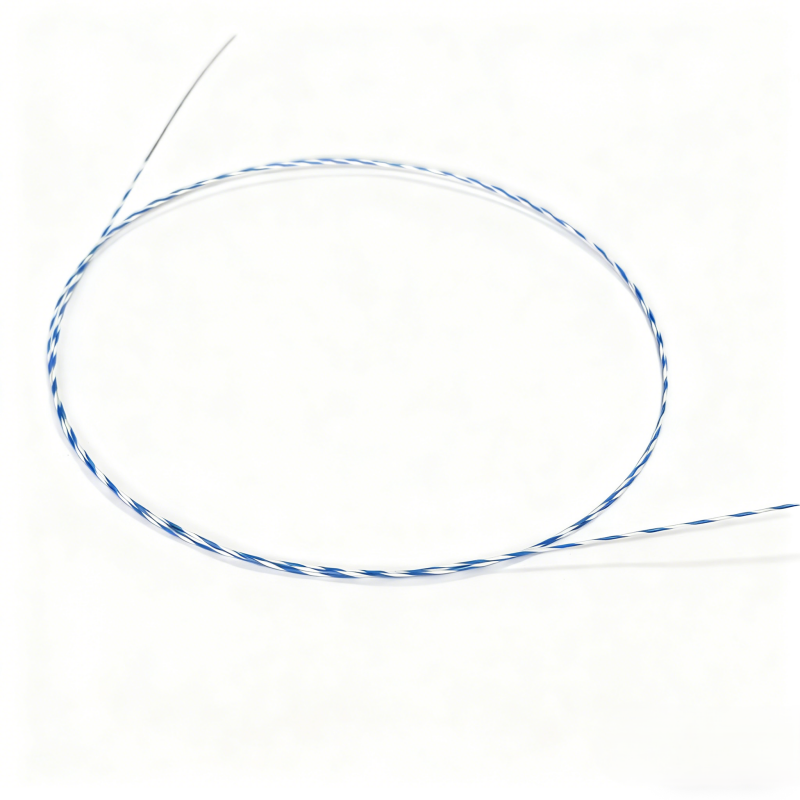
Revolutionary Shape Memory Effect Transforms Device Capabilities
The shape memory effect exhibited by shape memory alloy nitinol fundamentally changes how engineers approach design challenges in temperature-sensitive applications. This extraordinary characteristic allows the material to remember and return to a specific shape that was set during manufacturing, even after significant deformation at lower temperatures. When manufacturers process shape memory alloy nitinol, they establish a permanent shape through heat treatment, creating a memory within the material's crystallographic structure. After cooling, users can bend, twist, or compress the alloy into temporary configurations for storage or insertion. Upon heating above its transformation temperature, typically through body heat, electrical current, or environmental warming, the material spontaneously recovers its memorized shape with considerable force. This transformation occurs because the crystal structure shifts from martensite to austenite phase, releasing stored energy that drives the shape recovery. The practical implications for product development are immense, particularly in medical procedures where compact insertion and subsequent expansion prove essential. Cardiovascular stents manufactured from shape memory alloy nitinol exemplify this advantage perfectly, as surgeons compress these devices into small diameters for catheter delivery through blood vessels. Once positioned at the target site, body temperature triggers expansion to the predetermined diameter, providing structural support to vessel walls without requiring mechanical inflation. Orthodontic applications similarly benefit, with archwires exerting constant, gentle forces on teeth as they attempt to return to their programmed shape, accelerating tooth movement while improving patient comfort. Industrial applications leverage this effect in pipe coupling systems, where refrigerated shape memory alloy nitinol sleeves slide over connection points and then contract upon warming, creating secure, leak-proof joints without welding or fasteners. Temperature-activated valves, safety mechanisms, and deployment systems in aerospace applications utilize the shape memory effect to achieve reliable, automatic operation without electronic controls or batteries. The force generated during shape recovery can be substantial, enabling actuators to perform mechanical work in compact packages. This capability eliminates complex motor systems, reducing weight and power requirements while improving reliability through fewer moving parts.

 EN
EN