Ring in Matrix: Advanced Composite Solutions for Structural, Thermal, and Acoustic Performance

Get a Free Quote

Our representative will contact you soon.
Email
Name
Company Name
Message
0/1000

ring in matrix

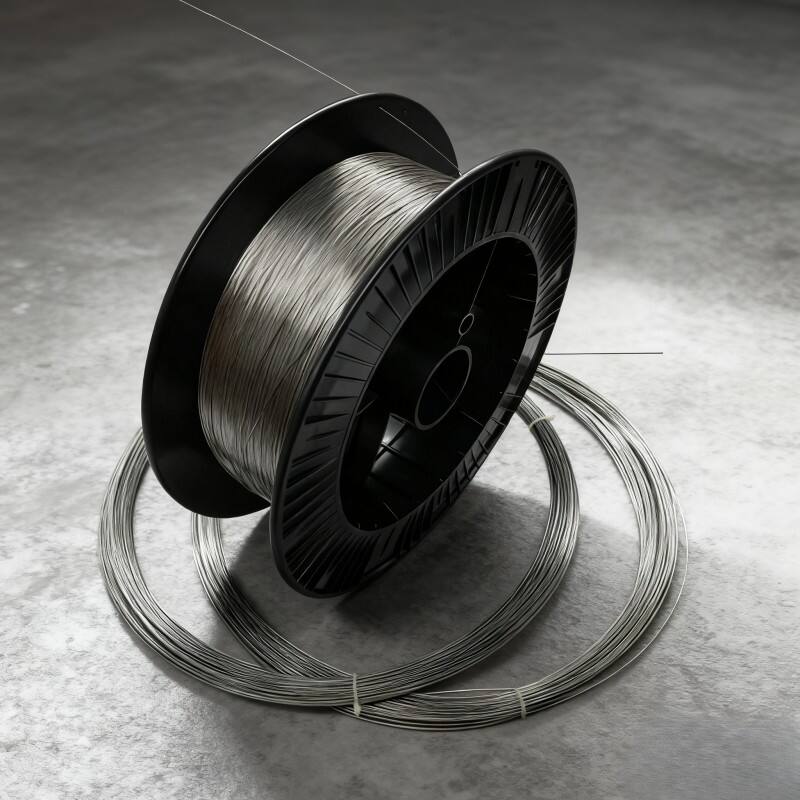
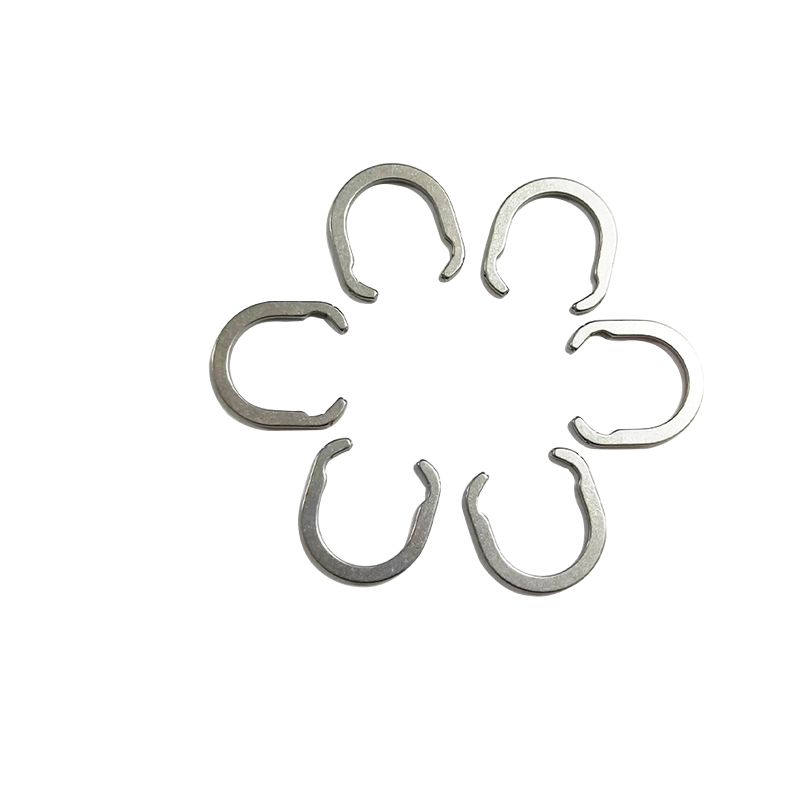
The ring in matrix is a sophisticated structural and functional element that has gained significant traction across engineering, materials science, and advanced manufacturing sectors. At its core, the ring in matrix refers to a ring-shaped component embedded within or integrated into a surrounding matrix material, creating a composite system that leverages the mechanical and physical properties of both the ring and the matrix to achieve performance levels that neither could reach independently. This design philosophy is rooted in the principles of composite engineering, where the synergy between dissimilar materials or geometries produces outcomes far superior to those of homogeneous structures. The ring in matrix configuration is widely used in applications ranging from aerospace structural panels and automotive brake systems to biomedical implants and advanced electronics packaging. The primary function of the ring in matrix is to provide localized reinforcement, stress distribution, and load transfer within a host material. The ring element acts as a stiffening or anchoring feature, while the surrounding matrix transmits forces, dampens vibrations, and protects the ring from environmental degradation. Together, they form a system capable of withstanding complex multi-axial loading conditions. Technologically, the ring in matrix benefits from advances in additive manufacturing, precision casting, and nano-composite processing. Modern fabrication techniques allow engineers to tailor the interface between the ring and the matrix at the microstructural level, optimizing bonding strength, thermal conductivity, and fatigue resistance. Surface treatments such as chemical vapor deposition and plasma spraying further enhance the compatibility between the ring and the surrounding matrix material. In terms of applications, the ring in matrix finds use in turbine blade cooling channels, orthopedic bone scaffolds, printed circuit board reinforcement, and sealing systems in high-pressure fluid environments. Its versatility makes it a preferred solution wherever designers need to combine structural integrity with functional performance in a compact, reliable form factor.

Popular Products

The ring in matrix delivers a set of practical benefits that make it a smart choice for engineers, product designers, and procurement teams who need reliable performance without unnecessary complexity. Here is a clear look at what the ring in matrix actually does for you and why it matters in real-world use. First, the ring in matrix dramatically improves load-bearing capacity. When you embed a ring into a matrix, the ring redistributes stress across a wider area instead of concentrating it at a single point. This means your component lasts longer under repeated loading, reducing the frequency of replacements and cutting maintenance costs over the product lifecycle. For industries like aerospace and heavy machinery, this translates directly into fewer unplanned shutdowns and lower total cost of ownership. Second, the ring in matrix gives you design flexibility that solid or single-material components simply cannot match. You can choose ring materials and matrix materials independently, mixing metals with polymers, ceramics with composites, or hard alloys with soft elastomers depending on what the application demands. This freedom lets your engineering team optimize weight, stiffness, thermal performance, and corrosion resistance all at once, without being locked into a one-size-fits-all material choice. Third, the ring in matrix improves vibration damping and noise reduction. The interface between the ring and the matrix acts as a natural energy absorber, converting mechanical vibrations into heat and dissipating them before they can propagate through the structure. This is especially valuable in automotive, consumer electronics, and precision instrumentation applications where vibration causes measurement errors, user discomfort, or premature component fatigue. Fourth, the ring in matrix supports miniaturization. Because the ring provides concentrated reinforcement exactly where it is needed, designers can reduce the overall wall thickness and mass of surrounding structures without sacrificing strength. This is a critical advantage in portable devices, medical implants, and satellite components where every gram counts. Fifth, the ring in matrix is compatible with modern manufacturing processes including injection molding, die casting, 3D printing, and filament winding. This compatibility means you do not need to invest in entirely new production lines to adopt the technology. You can integrate the ring in matrix approach into existing workflows with minimal retooling, keeping your time-to-market short and your capital expenditure under control. Sixth, the ring in matrix enhances thermal management. The ring can be made from a high-conductivity material that channels heat away from sensitive zones within the matrix, acting like an embedded heat spreader. This is particularly useful in power electronics and LED lighting assemblies where thermal hotspots shorten component life. Taken together, these advantages make the ring in matrix a practical, cost-effective, and technically superior solution for a wide range of demanding applications.

Latest News

Why is phase transition stability of nickel titanium wire key to actuator success?

13

May

Why is phase transition stability of nickel titanium wire key to actuator success?

In the world of precision actuators, the materials used to generate motion are not merely components — they are the foundation of reliability. nickel titanium wire has emerged as one of the most compelling active materials in modern actuator engineer...
View More
Why do orthodontists prefer using orthodontic wire with shape memory?

15

May

Why do orthodontists prefer using orthodontic wire with shape memory?

In modern orthodontic practice, the materials used to move teeth are just as important as the clinical techniques applied. Among the many innovations that have transformed the field, orthodontic wire with shape memory stands out as one of the most cl...
View More
How to ensure dimensional tolerances for precision Nitinol metal parts?

18

May

How to ensure dimensional tolerances for precision Nitinol metal parts?

Achieving tight dimensional tolerances in Nitinol metal components is one of the most demanding challenges in precision manufacturing. Unlike conventional metals, Nitinol — a nickel-titanium shape memory alloy — exhibits superelastic recovery and pha...
View More
How to utilize one-way and two-way memory in precision medical components?

21

May

How to utilize one-way and two-way memory in precision medical components?

In the development of precision medical components, material intelligence is no longer a concept reserved for science fiction. nitinol wire has fundamentally changed how engineers and medical device designers approach the challenge of building compon...
View More

Get a Free Quote

Our representative will contact you soon.
Email
Name
Company Name
Message
0/1000

ring in matrix

Superior Structural Reinforcement Through Ring in Matrix Integration

Superior Structural Reinforcement Through Ring in Matrix Integration

One of the most compelling reasons engineers and product developers turn to the ring in matrix is its ability to deliver superior structural reinforcement in a highly targeted and efficient manner. Traditional reinforcement strategies often involve adding bulk material uniformly across a component, which increases weight, raises material costs, and can introduce new failure modes at boundaries between thick and thin sections. The ring in matrix takes a fundamentally different approach. By placing a precisely shaped ring element within a surrounding matrix, the design concentrates reinforcement exactly where stress concentrations are highest, leaving the rest of the structure lean and optimized. This targeted reinforcement strategy works because the ring in matrix creates a load path that bypasses weak zones in the matrix material. When an external force is applied to the composite system, the stiffer ring element carries a disproportionately large share of the load, shielding the matrix from peak stresses that would otherwise initiate cracking or plastic deformation. The matrix, in turn, holds the ring in place, prevents buckling, and distributes the transferred load smoothly into the broader structure. The result is a component that behaves as though it were made from a much stronger material, without the weight or cost penalty that a fully dense high-strength material would impose. In fatigue-critical applications such as aircraft fuselage frames, wind turbine hubs, and orthopedic joint replacements, the ring in matrix has demonstrated fatigue life improvements of several orders of magnitude compared to unreinforced matrix components. The ring interrupts crack propagation paths, forcing cracks to deflect around the ring rather than propagating straight through the cross-section. This crack deflection mechanism is one of the key reasons the ring in matrix is trusted in safety-critical environments where failure is not an option. Furthermore, the ring in matrix allows engineers to tune the anisotropy of the composite system. By orienting multiple rings in different planes or at different angles within the matrix, designers can create components that are strong in multiple directions simultaneously, addressing the inherent weakness of many composite materials that perform well under one type of loading but poorly under another. This multi-directional reinforcement capability makes the ring in matrix an exceptionally versatile tool in the structural designer's toolkit, enabling solutions that are both lighter and stronger than conventional alternatives.
Advanced Thermal and Acoustic Performance Enabled by Ring in Matrix Design

Advanced Thermal and Acoustic Performance Enabled by Ring in Matrix Design

Beyond its structural advantages, the ring in matrix excels in managing two of the most persistent challenges in modern engineering: heat and noise. As electronic devices become more powerful and compact, and as mechanical systems operate at higher speeds and loads, the ability to control thermal gradients and acoustic emissions has become just as important as structural integrity. The ring in matrix addresses both challenges through a single integrated design feature, making it an exceptionally efficient solution for multifunctional component design. On the thermal side, the ring in matrix leverages the contrast in thermal conductivity between the ring and the matrix to create preferential heat flow pathways. When the ring is fabricated from a high-conductivity material such as copper, aluminum, or thermally enhanced ceramic, it acts as an embedded heat spreader within the lower-conductivity matrix. Heat generated at a localized source, such as a power transistor, a friction surface, or a chemical reaction zone, flows preferentially into the ring and is then conducted rapidly along the ring's circumference to cooler regions of the structure. This spreading action reduces peak temperatures, flattens thermal gradients, and extends the operational life of temperature-sensitive components. In LED lighting modules, for example, the ring in matrix configuration has been shown to reduce junction temperatures by up to 20 percent compared to conventional thermal interface solutions, directly translating into longer lamp life and more consistent light output over time. On the acoustic side, the ring in matrix exploits the impedance mismatch between the ring and the matrix to scatter and absorb sound waves and mechanical vibrations. When a vibration wave traveling through the matrix encounters the ring, a portion of the wave energy is reflected back, a portion is absorbed at the ring-matrix interface, and only a reduced fraction continues propagating. This scattering and absorption mechanism is particularly effective at mid-to-high frequencies, which are often the most annoying and damaging in consumer and industrial applications. Automotive cabin panels incorporating the ring in matrix concept have demonstrated noise reduction of 3 to 8 decibels across the frequency range most sensitive to human hearing, a perceptible and meaningful improvement in passenger comfort. The dual thermal and acoustic performance of the ring in matrix makes it a uniquely valuable component in any application where both heat management and noise control are priorities, delivering two critical engineering functions through a single elegant design solution.
Versatile Application Compatibility and Manufacturing Efficiency of Ring in Matrix Systems

Versatile Application Compatibility and Manufacturing Efficiency of Ring in Matrix Systems

A technology is only as valuable as its ability to be adopted and scaled in real production environments. The ring in matrix stands out not only for its performance characteristics but also for its remarkable compatibility with a broad spectrum of manufacturing processes and application domains. This versatility is one of the primary reasons the ring in matrix has moved from research laboratories into high-volume commercial production across multiple industries. From a manufacturing perspective, the ring in matrix is compatible with virtually every major fabrication method used in modern industry. In polymer processing, rings can be insert-molded directly into injection-molded or compression-molded matrix components, with the ring held in a mold fixture while the matrix material flows around it and solidifies. This process adds minimal cycle time and requires no secondary assembly operations, keeping per-unit costs low even at high production volumes. In metal casting, rings made from a different alloy can be placed in a die or sand mold before the matrix metal is poured, creating a metallurgically bonded ring in matrix composite with excellent interfacial strength. In additive manufacturing, the ring in matrix geometry can be printed layer by layer using multi-material 3D printing systems, giving designers unprecedented freedom to vary ring size, position, and material composition across a single component without any tooling changes. This additive approach is particularly valuable in prototyping and low-volume specialty production where tooling costs would otherwise make design iteration prohibitively expensive. The application range of the ring in matrix spans industries as diverse as aerospace, automotive, biomedical, consumer electronics, energy, and civil infrastructure. In aerospace, the ring in matrix reinforces composite panels and pressure vessel end caps. In automotive, it strengthens brake caliper housings and suspension bushings. In biomedical engineering, the ring in matrix forms the structural backbone of bone scaffolds and dental implants, where its porous matrix allows tissue ingrowth while the ring provides immediate mechanical stability. In consumer electronics, the ring in matrix reinforces connector housings and speaker diaphragms. In energy applications, it seals high-pressure pipelines and reinforces wind turbine blade roots. This breadth of application demonstrates that the ring in matrix is not a niche solution but a broadly applicable engineering principle that delivers consistent value wherever structural performance, thermal management, or acoustic control is required. Customers who adopt the ring in matrix gain access to a technology platform that grows with their product portfolio, reducing the need to develop entirely new solutions for each new application challenge.
Ring in Matrix: Advanced Composite Solutions for Structural, Thermal, and Acoustic Performance

Get a Free Quote

Our representative will contact you soon.
Email
Name
Company Name
Message
0/1000
Newsletter
Please Leave A Message With Us